

Everyone knows something about olive oil.
But the level of chaos in that information is surprisingly high. You hear complicated stuff, even contradictory. There are a lot of special terms. What does “first cold pressed” even mean? Is there something bad that happens if you fry in it? (lowers voice to a whisper) Is it...adulterated?
We’re going to go over that and make sure that you know everything you need to know. We spoke to experts in the field and tasted nearly three dozen premium extra-virgin olive oils from around the world to help you explore. We also tasted supermarket extra-virgin olive oil to find excellent everyday options.
What You Need to Know
Olive oil is simply oil pressed from fresh olives, with no added ingredients. The fresher, the better.
That said, olive oil is a lot like wine, coffee, and tea. Each starts with a simple ingredient, but the finished product is highly diverse. Olive oil has a broad range of flavor profiles depending on the type of olives, where they’re grown, how ripe they were when picked, and how carefully both the olives and oil are handled, among other factors.
Consider this: There are an estimated 1,000 to 1,500 different olive cultivars, according to Olive Oil: A Field Guide (2014) by Alexandra Kicenik Devarenne, director of the Extra Virgin Alliance, the specialty olive oil section of the North American Olive Oil Association (NAOOA).

And that’s not all: The color and flavor of any olive changes as it ripens. The color turns from green to purple to black, while its flavor changes from grassy, bitter, pungent, and peppery to mellow and mild, buttery, and nutty. So, even the same olive—when picked at a different ripeness—will yield a different style of oil.
Many people associate olive oil with Italy, but it comes from all over the planet. Spain is the largest producer by far, producing three times more than Italy, said Joanne Lacina, president of oliveoillovers.com, a retail site. “Sixty-six countries make olive oil,” said Joseph R. Profaci, executive director of NAOOA. In the United States, California leads, but Texas, Oregon, Georgia, Florida, and Arizona also produce some.
While there are a few styles that are typical of each country, none has a lock on “the best” olive oil; each offers a range of quality and flavors.
How Should Good Olive Oil Taste?
Olive oil will never improve with age. It should always smell and taste fresh and appealing. “Fruity aromas, a little bitterness on the tongue, a little tingling in the back of the throat; (flavors such as) apple, artichoke, fresh green grass; it should be nice and pleasant,” said Lacina. “You don’t want neutral flavor or oily residue on your tongue or in your mouth.”

You don’t want any defective flavors, either. Those are “a sign it was mishandled, either crushed from old, moldy rotting olives or was stored improperly,” Lacina said. When that happens, the oil can taste musty or rancid: “Like the smell of crayons, or candle wax—that’s rancidity,” she explained. “It’s not an aroma or flavor you want in oil. Don’t even cook with it; those flavors will transfer into your food. Throw it out. It won’t kill you, but it’s not going to be pleasant to taste.”
It can be helpful to know what rancid olive oil is like, since description only goes so far. Here’s a DIY test: “Pour a little olive oil into a jar, leaving lots of airspace. Close and put the jar in the sun for a few days, then give it a whiff. Olive oil goes rancid very quickly under those conditions. Once you know what it smells like, you won’t forget,” Devarenne said.
The Different Types of Olive Oil
One of the reasons there is so much confusion around olive oil may be because there are a few grades or quality levels, each with its own name. Here’s how to interpret labels:
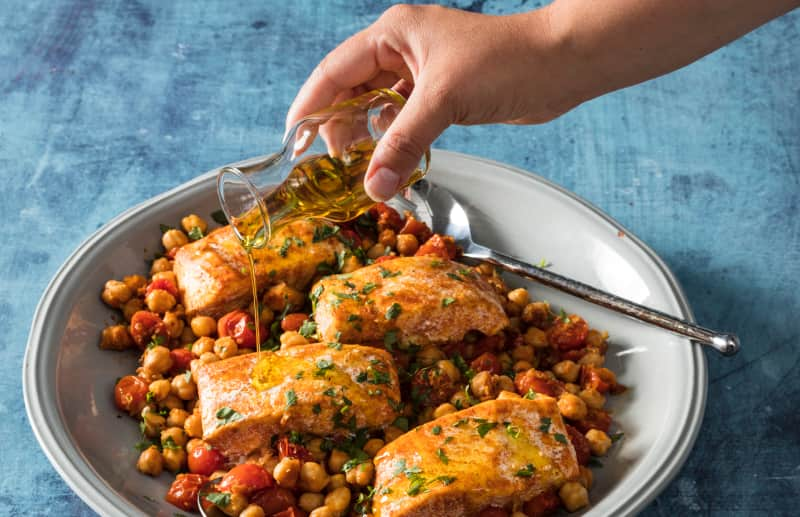
- Extra-Virgin Olive Oil: This is the highest grade and the best quality olive oil. It’s made only from olives where the oil is mechanically extracted without heat, which can change the oil’s quality, with no treatment other than washing, separation of water and solids from the oil, and filtration. Its flavor must have no defects and at least some olive fruitiness.
- Olive Oil: Plain olive oil (with no “virgin” on the label) has far less flavor than extra-virgin oil. This oil used to be labeled “pure” olive oil, but the industry recently switched away from that in favor of simply calling it olive oil, Profaci said. Regular olive oil is made from the lowest grade virgin olive oil—the stuff that doesn’t meet the grade for sale as extra virgin or virgin grade because of off-aromas and flavors—further processed, filtered, and treated to make its flavor neutral. (In the industry this is called refined oil to distinguish it from virgin oil. This refining process is common to all the major cooking oils.) A small amount of virgin oil is added back to enhance flavor.
- Light-Tasting Olive Oil: This used to be called “light olive oil,” but because it’s no “lighter” in calories or fat than regular oil, the industry recently shifted to labeling it “light-tasting” to avoid confusion. Like regular olive oil, this is a blend of refined oil and extra-virgin olive oil, with neutral flavor.
- Olive Pomace Oil: You may find this inexpensive olive oil for sale in stores or online. It’s usually sold to restaurants (and makers of beauty products). Made from the leftovers of olive-oil production, where solvent is used to get one last extraction from the leftover pits, pulp, and skins, this oil is processed and refined for neutral taste.When sold for use in food service, a small amount of virgin olive oil is added for flavor.
How to Shop for Great Olive Oil
In the test kitchen we keep it simple. We typically reach for a good-tasting supermarket extra-virgin olive oil for any application from frying and baking to dressing salads and drizzling over finished dishes. To step up the results of unheated uses such as dressings and drizzling, we also love the option of using premium extra-virgin olive oil, which lends extraordinary fresh flavor.


You can buy great olive oil at the supermarket, and you don't need to save it for special occasions. We use olive oil for everything from cooking vegetables to making a simple vinaigrette.
On the other end of the spectrum, if you want a neutral substitute for vegetable oil that still has the health benefits of olive oil’s monounsaturated fats, you could save money by choosing less-expensive regular (not extra virgin) olive oil or even “light-tasting” olive oil. The NAOOA recently surveyed American consumers about olive oil preferences and found that many gradually started seeking out more flavorful choices. “Maybe 40 percent started with lighter-tasting olive oils, but soon they were using extra virgin,” Profaci said. “It’s a gateway. We feel like, ‘Come in—jump into any depth of the pool and you will learn to swim. You’ll discover what you like and don’t.’”
No matter what type of olive oil you choose for your kitchen, here are some tips to help you shop.
What to Look For
- Opaque, Light-Blocking Bottles: Choose oils in dark or light-blocking containers. A new trend we’ve spotted: Many more products have recently switched to metal tins, or fully painted, opaque, or very dark glass bottles. Light spoils olive oil. When possible, choose glass bottles over plastic, since it’s more protective. If you do choose plastic, go for dark, light-blocking bottles. The clear glass bottle of one oil we tasted came in a box; keep the box.

- Harvest Dates or Best-By Dates: If you’re buying extra-virgin olive oil, remember that the best olive oil is fresh and seasonal, with a new crop arriving each year made from olives that are harvested annually. Check labels for the most recent harvest date: In the northern hemisphere, including Europe and the United States, olives are harvested and pressed in fall and winter (October through January) and oils released the following spring. In the Southern Hemisphere, such as in Australia and Chile, olives are harvested in May through June and the subsequent oils arrive in our Northern Hemisphere stores by fall. Failing that, check best-by dates. These are unregulated, so oils can be up to three years old and still within their best-by date—this is definitely not ideal in olive oil if you want fresh taste. The best retailers announce the latest harvest (and discount the previous year’s oil).
- Buy Usable Amounts: Don’t buy more olive oil than you’ll use in three or four months. An open bottle is a ticking clock; air and time spoil it. In that spirit, don’t hoard “the good oil” for special occasions: It’s a fresh product, so enjoy it.

Don’t hoard “the good oil” for special occasions: It’s a fresh product, so enjoy it.
What to Avoid
- Clear Bottles: Clear bottles aren’t a great way to keep olive oil in prime condition over time. Clear bottles let in light that quickly degrades olive oil quality. Sunlight and fluorescents are a recipe for olive oil rancidity.
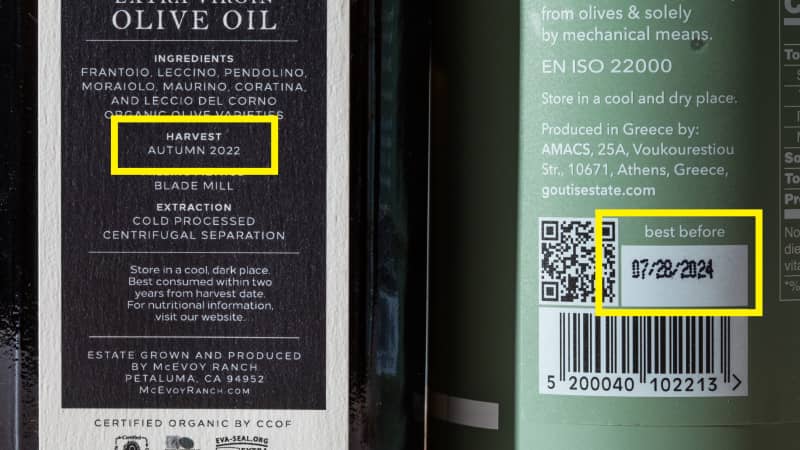
- Older Olive Oil: If you can’t find a recent harvest date (within the past year) or a distant best-by date, walk away. The general idea is to look for last year on the harvest date. So if it’s 2023, look for a harvest date of 2022. That means it was harvested in the fall/winter of 2022 and is fresh. A few brands will include two years with a hyphen to indicate it was harvested anywhere from October to January (if it was a northern-hemisphere oil), but if the first year listed is two years ago, it’s older than it should be. A hyphenated date can also mean that oil can be from both hemispheres and therefore contain two totally different harvests. So a date of 2021-22 could mean that it contains a blend of oils from the northern hemisphere in October 2021 and the southern hemisphere from June 2022. It’s confusing; that’s why harvest dating with the month and year is more useful to consumers.
- Bad Smell or Flavor: Olive oil should not taste sour, funky, or rancid, like crayons or sweaty socks. Avoid vinegary or winey, swampy, or musty notes. If your oil has these, take it back to the store.
Other Tips for Buying Olive Oil
- Taste the Oil Directly After Purchase: Olive oil should smell and taste fresh, not rancid or funky. Just as you would if you found you’d bought spoiled milk, don’t keep it. “If it doesn’t taste [good], you can take it back to the store,” said Profaci.
- Stock More Than One Kind of Olive Oil: We don’t drink only one wine, and the same goes for olive oil. You might want to think of breaking olive oil in two categories: cooking and condiment oils. Some olive oil companies have begun labeling their oils accordingly, using terms such as “Sizzle” and “Drizzle” or “For frying” and “For salads.” The idea is to have an affordable “everyday” extra-virgin olive oil for cooking and at least one extra-flavorful premium oil to use raw as a drizzle or sauce atop foods and in salad dressings. If you’re doing a lot of deep frying, stock up on cheaper regular olive oil. Contrary to popular belief, olive oil’s smoke point is as high as that of many vegetable oils.
FAQs and Mythbusting
This term appears on many olive-oil labels, but what does it signify? Not much, says Joseph R. Profaci, executive director of the North American Olive Oil Association. “I say this about ‘first cold pressed’—it’s three white lies. ‘First’ is not true: Anything that’s called extra virgin is first-pressed; there’s no second pressing. Next, it’s not really ‘cold’; the temperature is controlled at around 80 degrees. So it’s not hot, it’s not cold. And finally, olive oil is not pressed anymore. There have been many technological improvements, and today they use centrifuges. So I call it the statement of three white lies.” In sum, the promise of “first cold pressed” is that the oil is extracted without heat, using a mechanical method. All extra-virgin olive oil is made under these conditions, so the phrase “first cold pressed” doesn’t tell us anything we didn’t already know from the “extra virgin” designation.

Bitterness is part of olive oil, just as in coffee or chocolate. It’s one of three main desired characteristics (along with fruitiness and pungency) in premium extra-virgin olive oil—and all three of these can be present at different levels in any olive oil. “Bitterness can be a challenging aspect of olive oil,” admits Alexandra Kicenik Devarenne in her book, Olive Oil: A Field Guide (2014). “It is an acquired taste. Some bitterness is to be expected in the oil of fresh, green olives and it is essential to keep in mind that the bitterness (and pungency) of olive oil acts as a flavor enhancer when it is used in combination with the right foods.” Milder olive oils, made from riper olives, tend to be less bitter. It’s also a myth that the acidity percentage listed on many olive oil bottles is linked to bitter flavor; it has nothing to do with flavor but instead indicates free fatty acids that are present in poorly handled, defective oils. The acidity levels of all extra-virgin olive oils must be less than 0.8 percent.
The acronym "HALT" can remind you of the factors that spoil olive oil: heat, air, light, and time, says Alexandra Kicenik Devarenne in her book, Olive Oil: A Field Guide (2014). Translation: Don’t keep your bottle of olive oil next to the stove or in the window. Buy oil in dark, light-blocking bottles, and use it up within a few months to enjoy the flavor at its best.
This is “pungency,” a trait of earlier-harvested olives, and is often described as a “peppery” on labels and in marketing, says Alexandra Kicenik Devarenne in her book, Olive Oil: A Field Guide (2014). It’s considered a positive flavor attribute and comes from a phenolic compound in olives called oleocanthal, which scientists have linkedto anti-inflammatory properties of olive oil.
Color has no relationship to olive-oil quality, experts agree. It’s also unrelated to bitterness. In fact, professional tasters and judges typically taste olive oil from dark cobalt-blue glasses to hide distracting color. Great olive oil can range from bright green to golden yellow, says Alexandra Kicenik Devarenne, author of Olive Oil: A Field Guide (2014) and director of the Extra Virgin Alliance, the specialty olive oil section of the North American Olive Oil Association (NAOOA). The color is largely influenced by the variety of olive the oil is made from, and some contribute more to the color than others. The only color to steer clear of is brown, she says, which indicates spoilage. In sum: “Enjoy the color of oil and enjoy the contrasts, but don’t consider it an indicator of quality.”
The health benefits of olive oil have been attributed not just to its beneficial monounsaturated fats but also to its antioxidant and anti-inflammatory properties, according to an article published by Harvard Medical School. These are highest in extra-virgin oils pressed from olives that are less ripe, which have higher concentrations of phenols, which have a bitter taste. Olive oil is a key component in the Mediterranean diet. There’s a bonus to seeking out robust olive oils with plenty of bitter, pungent flavor, says Joseph R. Profaci, executive director of the North American Olive Oil Association: “As a general rule of thumb, the more flavor, the more health benefits.”
Yes. Olive oil is perfectly fine for cooking, including frying, baking, and roasting. Contrary to rumors, nothing dangerous happens when you heat olive oil, and its smoke point is above 400 degrees. The main reason you wouldn’t want to use a premium extra-virgin olive oil for cooking is because heat evaporates most of the delicious volatile aromatic compounds that give it the special flavor and aroma that you paid for when you bought a pricier, higher-quality oil. In the test kitchen, we sampled premium extra-virgin olive oil at room temperature and again after heating it to increasingly high temperatures. It quickly became neutral in flavor and aroma. With this in mind, it’s helpful to keep an everyday, less-expensive olive oil for cooking and save the premium type to use as a condiment to add flavor to food.
Just as winemakers can make wine from a single type of grape or blend them to achieve specific flavor profiles, makers of olive oils can use a single variety of olive or blend them to create an extraordinary oil. “That assumption [that blended oil is bad] is false and misleading,” says Joseph R. Profaci, executive director of the North American Olive Oil Association. “Many terrific olive oils have been blended from different varieties, groves, and/or regions into a single product. Whether those oils come from groves within the same country or different countries, this is a common and totally acceptable practice.” Blending can take place before or after pressing. Blended oil likely got a bad reputation because many inexpensive supermarket extra-virgin olive oils are made of oils from multiple countries and sources to create a consistent flavor profile and keep costs low. If these oils are mishandled during transport and blending, the oil will taste bad.
Yes, olive oil is a fresh, perishable product with a limited shelf life of one to three years, but realistically it can expire much sooner. How it’s stored and handled will influence its lifespan. Handled poorly, an oil can degrade in mere days. Think of the acronym “HALT”—heat, air, light, and time will all degrade quality. Store olive oil in a cool, dark place and once you’ve opened the bottle, use it up within three months, says Alexandra Kicenik Devarenne, author of Olive Oil: A Field Guide (2014) and director of the Extra Virgin Alliance, the specialty olive oil section of the North American Olive Oil Association (NAOOA).
Despite claims over many years, most olive oil sold in the United States has not been proven to contain oils from sources other than olives. Much more common is when inexpensive oil brands label lower-grade olive oils as “extra virgin,” which is the highest-quality olive oil.
“A company would have to be really shady to mix a known allergen like soy, nut oil, peanut into olive oil,” says Joanne Lacina, president of oliveoillovers.com. “It did happen 20, 30 years ago, people were getting sick, but today I don’t think a company would risk that kind of fraud. Most common now is knowing a batch of olive oil doesn’t meet the qualifications for flavor and quality and they’ll label it extra virgin anyway. Or mixing (lower-grade) refined olive oil with extra virgin. Most people don’t know; they think that’s what it’s supposed to taste like.
“It’s something I kind of wish more consumers thought about,” Lacina adds. “Everybody’s worried if their olive oil is real or fake, but if you’re not familiar with how olive oil is supposed to taste, or not taste, that is the ultimate test.”
The North American Olive Oil Association (NAOOA) is working to create enforceable standards for the United States. “Last year we did at long last come together with the American Olive Oil Producers Association and Deoleo (the world’s largest olive oil company) to petition the FDA to adopt a standard of identity based on our joint proposal,” says Joseph R. Profaci, executive director of NAOOA. “That will help us alleviate some of the confusion about different grades and what they mean, and also have a mandatory standard that will enable us to enforce quality.”
No. Contrary to some advice we’ve read out there, you don’t have to pay attention to that number when shopping. It’s a technical indicator for the olive oil industry. Extra-virgin olive oil must have a “free acidity limit” that’s less than 0.8 percent; higher numbers are an indication of poor handling and spoilage. This number has nothing to do with the level of bitterness in the oil’s taste. It’s industry code for grading that matches the label it’s given, and although lower is better, it is not very illuminating or found on all labels. Ignore it.
Some olive-oil brands tout their traceability, meaning that you can learn about when, where, and how it was produced. Others, including most supermarket olive oils, list multiple countries of origin for the oil on the label and also may indicate where that oil was bottled. This information is really most important when buying premium extra-virgin olive oil, says Alexandra Kicenik Devarenne, author of Olive Oil: A Field Guide (2014) and director of the Extra Virgin Alliance, the specialty olive oil section of the North American Olive Oil Association (NAOOA). “If I am paying top dollar, personally I want to know that this is estate production, an oil that I know was grown, harvested, and milled by the loving hands of the person whose name is on the company. That’s what I look for. If I’m paying $38 a bottle, I think I can ask for that.” This kind of traceability signifies that the oil was handled and produced carefully and expertly to be top-quality premium olive oil, with flavor to match.

Our Editors' Favorite Italian Recipes
These go-to Italian recipes are sure to be a hit.
Go to Collection