Here’s a fun project you can do at home if you have brown eggs. Holding a brown egg firmly to avoid breakage, rub it vigorously all over with coarse sandpaper. An electric sander can also be used. Voilà: a white egg!
This miraculous transformation is possible because the brown color of a brown egg resides mostly in a very thin coating on top of the shell, like a coat of paint, called the cuticle.

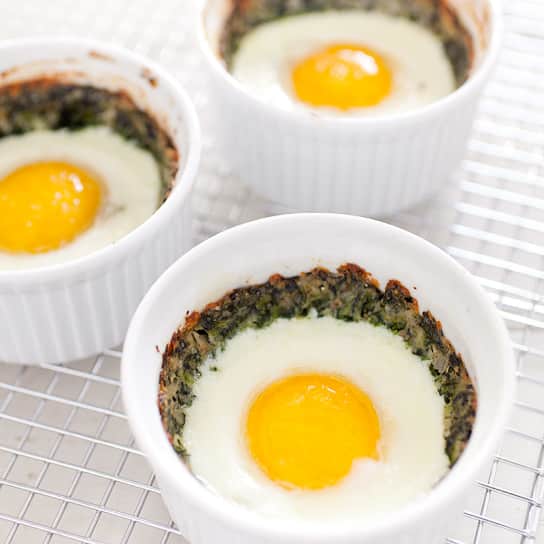
Perfect Fried Eggs
Whether from a white or brown shell, classic fried egg features a tender white with crisp, lacy, brown edges and a fluid but lightly thickened yolk.
Get the RecipeHow a Hen Forms an Egg
A hen takes about 25 hours to create a fully formed egg. It starts with the yolk, which is overlaid step by step with protective membranes, the egg white, and the hard white calcium shell. Finally, the last 90 minutes or so before laying are spent covering the shell with the cuticle.
The shell itself is porous, and does not prevent air and bacteria from getting into the egg. So the cuticle, which is made mostly of water-insoluble protein, serves as a protective sealant on top of the eggshell and vastly increases its shelf life. (For that reason, you should eat that egg you sanded within a few days.)
Sign up for the Cook's Insider newsletter
The latest recipes, tips, and tricks, plus behind-the-scenes stories from the Cook's Illustrated team.
So Why Are Some Eggs Brown and Some Eggs White?
White eggs have a cuticle too! But that cuticle doesn’t have the brown pigment, which is a type of porphyrin, a close relative of the pigment that gives blood its color.
It depends entirely on the breed of chicken that lays the egg. Some lay brown eggs and some breeds lay white eggs. Others, like the Araucana, lay lovely green-blue eggs, whose cuticle contains a pigment called biliverdin.
(This sounds like a myth, but it’s not: A hen lays eggs the same color as her earlobes! The pigmentation of the two parts are controlled by the same genes.)
Do Brown Eggs and White Eggs Taste the Same?
Yes. Beneath the shell, the eggs are just the same, cook up the same, taste the same, and contain the same nutritional value. Which one you buy depends on personal and cultural aesthetic preference. According to Stadelman and Cotterill’s classic book Egg Science and Technology, brown eggs are preferred in particular regions, such as New England (home of the brown-egg-laying Rhode Island Red and Plymouth Rock breeds of chicken).
As with white and brown mushrooms, the brown color carries with it a trendily natural, close-to-the-land vibe. But the reason brown eggs often cost a bit more than white eggs is just because fewer of them are laid. The nation’s most popular laying chicken is the White Leghorn, which has long been successfully bred to produce a lot of white eggs, quickly, cheaply, and reliably. Its ubiquity means that white eggs are the default; and the popularity of white-shelled eggs ensures the ubiquity of the Leghorn—a classic chicken-or-egg situation.
How to make hard-cooked eggs so easy to peel that the shells practically fall off
So What Should I Look For When Buying Eggs?
Shopping for eggs can be confusing and what you should buy depends on what you want size-wise and treatment-wise. There are so many labels and classifiers that seem to be synonyms so we've decoded the carton for you—calling out what to pay attention to and what things you can ignore.
Paul Adams is America's Test Kitchen's senior science research editor. He's a former restaurant cook, food journalist, and science reporter.
Have a question for Paul? Submit your inquiries about culinary ambiguities, terms of art, and useful distinctions at paul@americastestkitchen.com.