

This is Technique #51 from our 100 Techniques Every Home Cook Can Master.
Each technique is broken into three sections: why it works, key steps, and recipes that use it. Learn these recipe building blocks and you'll be set up for a lifetime of cooking success.
There are two primary ways to cook grains. The most common method is called the absorption method, and it’s used for rice and other smaller, lighter-textured grains like bulgur and quinoa: The grains are simmered undisturbed in a covered pot with a small, measured amount of water over low heat.
Once all the water has been absorbed, the grains are evenly cooked and tender—assuming, that is, you started with the right amount of water. (A related method is the pilaf method, in which the grains are first toasted in oil until lightly golden, then cooked in the measured water.)
Introducing: The Pasta Method
Here we focus on the second method, called the pasta method, and it’s what you’d guess: The grains are cooked, with frequent stirring, in an abundant amount of boiling salted water. This is the best technique for preparing larger, more densely textured grains that take a longer time to cook, like farro, wheat berries, and barley.

Benefits of the Pasta Method
The pasta method produces consistently foolproof results for a few reasons.
Since different brands and styles of these grains can absorb dramatically different amounts of water while cooking, it’s extremely difficult to reliably gauge how much water to use for the absorption method. If you use too much, the starchy grains will turn out gluey. If you use too little, the pot will run dry and they’ll scorch.
Boiling them in a big pot of salted water allows them to absorb just as much water as they need, ensuring even cooking and chewy yet tender texture. You can periodically taste the grains for doneness, just as you do when cooking pasta—something that’s not reliable when cooking grains using the absorption method. And when using the pasta method, all the excess surface starch simply drains away when you pour the grains into a colander.
Sign up for the Notes from the Test Kitchen newsletter
Our favorite tips and recipes, enjoyed by 2 million+ subscribers!
Step by Step: How to Use the Pasta Method
The name says it all: If you want perfectly tender grains, simply boil them after rinsing, drain, and let them cool and dry before adding them to a salad.
Depending on the grain, the cooking times will vary, so be sure to take into account how long your grain will need in the water to be chewy and not gluey. You can follow our steps below for reliable results, every time.
Step 1: Rinse Grains

If directed, rinse grains in colander or fine-mesh strainer under cold running water to remove surface starch or detritus; drain.
Step 2: Boil the Grains

For 1 1⁄2 cups grains, bring 4 quarts water to boil in Dutch oven. Add grains and salt and boil, stirring regularly, until grains are tender but still chewy. Cooking time will vary depending on grain.
Step 3: Drain the Grains

Drain in colander and rinse under running water. Drain again.
Step 4: Cool and Dry

For salads, spread onto rimmed baking sheet in even layer to let cool and dry out a bit to minimize stickiness.
Step 5: Mix

Combine cooled grains with remaining ingredients as directed.
Watch the pasta method in action in this video cookthrough for Barley With Lemon and Herbs.
Recipes That Use This Technique
So what recipes can you use this new technique on? There are plenty of delicious grain salads that would benefit from the pasta method, and we’ve collected a few of our favorites below.

Farro with Mushrooms and Thyme
Although we usually turn to the absorption method for quicker-cooking grains, farro takes better to the pasta method because the abundance of water cooks the grains more evenly.
Get the Recipe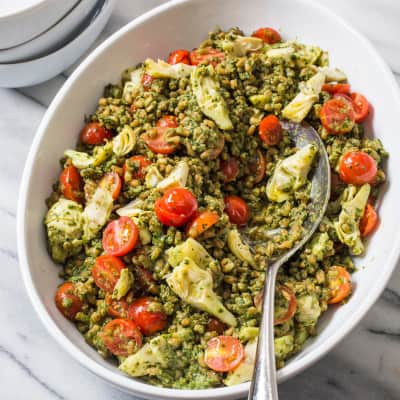
Pesto Farro Salad with Cherry Tomatoes and Artichokes
We replaced pasta with whole-grain farro in this nourishing update on pasta salad with pesto.
Get the Recipe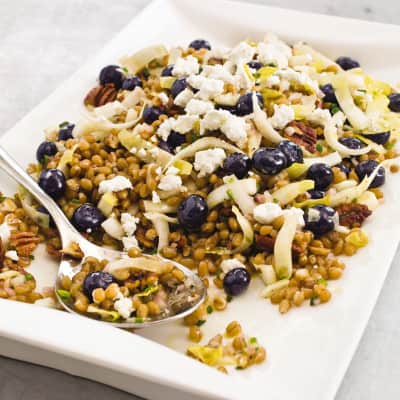
Wheat Berry Salad with Blueberries and Goat Cheese
A classic champagne vinaigrette ties together this salad of sweet blueberries, wheat berries, and endive.
Get the Recipe
Barley with Lemon and Herbs
Producing distinct, perfectly textured grains is as easy as boiling water.
Get the Recipe
Barley with Fennel, Dried Apricots, and Orange
Producing distinct, perfectly textured grains is as easy as boiling water.
Get the RecipeReady to learn another technique? Choose from our list of 100 Techniques Every Home Cook Can Master.