

This is Technique #36 from our 100 Techniques Every Home Cook Can Master.
Each technique is broken into three sections: why it works, key steps, and recipes that use it. Learn these recipe building blocks and you'll be set up for a lifetime of cooking success.
While crisp, crunchy cookies and soft, cakey bars each have their devotees, what’s truly irresistible to us are cookies and bars that are satisfyingly chewy, with delicate crackly tops.
And we know that making just-right versions of these humble baked goods is an accomplishment.
As we worked toward our goal of developing ideal—and to us that means chewy—bake-sale favorites, we discovered two important criteria to consider, both concerning fat: temperature and type.
Sign up for the Notes from the Test Kitchen newsletter
Our favorite tips and recipes, enjoyed by 2 million+ subscribers!
Why You Should Melt (or Brown) Your Butter
For chewier cookies and bars, we melt our butter instead of following the usual procedure of creaming softened butter with sugar. This simple switch frees up the water content of the butter so that it can freely interact with the flour in the dough or batter. This allows gluten—the protein that gives baked goods their chew—to develop.
While that free interaction is a good thing, too much water can compromise gluten development, so we also like to brown the melted butter, since this not only allows a little of the water to evaporate but also gives the butter a deeper flavor. We also choose unsalted butter, since it typically contains less water than salted butter.
For Extra Chew, Add Oil
For even more chew, both saturated and unsaturated fat are necessary. Their combination forms a sturdier crystalline structure that requires more force to bite through than the structure formed from saturated fat alone. Butter is predominantly (but not entirely) a saturated fat, and its great flavor makes it our preferred choice for baking.
In some instances, though, replacing some of the butter with vegetable oil (predominantly unsaturated) helps create chewier texture without sacrificing flavor.
Choose Brown Sugar
Sugar also plays a role in making bars and cookies that stay chewy. All sugar is hygroscopic, which means it pulls water from wherever it can be found—the best source is the air.
Brown sugar contains molasses, which is an invert sugar, a type of sugar that is especially hygroscopic. So cookies made with brown sugar more readily absorb moisture from the air after they are baked, which keeps them chewy.
Ditch the Stand Mixer
To boost the chew factor even further, stir the dough or batter by hand, which doesn’t incorporate nearly as much air as using a stand mixer does. Less air leads to denser, chewier cookies and bars rather than fluffier, cakey ones.

The Perfect Cookie
The definitive hardbound go-to resource for any cookie or bar you could imagine making, based on 25 years of experience in the pursuit of the perfect cookie recipes.
Buy NowStep by Step: How to Melt Butter for Chewy Cookies
Whether you're melting or browning your butter, follow these simple steps to learn how to do it.
Step 1: Whisk Dry Ingredients

Mix flour and other dry ingredients together in bowl.
Step 2A: If Melting Butter, Use a Microwave
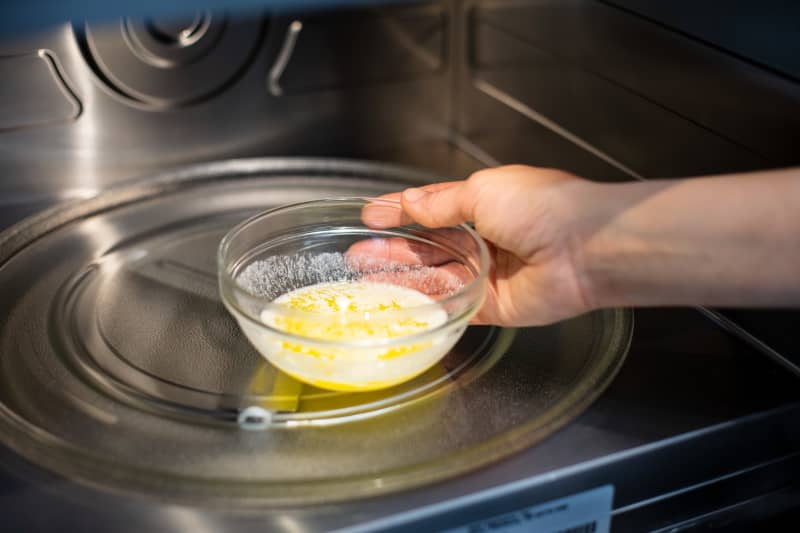
For melted butter: Melt butter in small bowl in microwave and let cool.
Step 2B: If Browning Butter, Use a Skillet

Or, if browning butter, melt in skillet over medium-high heat and cook until dark golden brown with nutty aroma.
Step 3: Whisk Butter into Wet Ingredients

Whisk melted browned butter together with sugar, other fats (if using), and eggs.
Step 4: Fold in Dry Ingredients

Fold in flour mixture until batter is just combined.
Watch Cook’s Illustrated’s Annie Petito demonstrate how to make Browned Butter Blondies.
Recipes That Use This Technique
Ready to melt butter for super chewy cookies and bars? Try this technique with one of these recipes.

Chewy Hazelnut Brown Butter Sugar Cookies
Everyone thinks it’s easy to make classic buttery-tasting sugar cookies that are crisp at the edges and chewy in the center. Everyone is wrong.
Get the Recipe
Browned Butter Blondies
Most blondies have a one-note sweetness and too many (and the wrong kind of) mix-ins. We wanted ours to be chewy, complex, and full of nutty, butterscotchy goodness.
Get the Recipe
Chewy Brownies
These chewy brownies boast gooey pockets of melted chocolate. They're richer and chewier than any boxed version.
Get the Recipe
Thick and Chewy Chocolate Chip Cookies
There are two types of people in the world: those who like chewy cookies and those who like crunchy ones. Chewy chocolate chip cookie lovers, this is your lucky day.
Get the Recipe
Congo Bars
Had a chewy, full-flavored blondie lately? Or one with coconut like this variation? No? Well, neither had we.
Get the RecipeReady to learn another technique? Choose from our list of 100 Techniques Every Home Cook Can Master.