

This is Technique #87 from our 100 Techniques Every Home Cook Can Master.
Each technique is broken into three sections: why it works, key steps, and recipes that use it. Learn these recipe building blocks and you'll be set up for a lifetime of cooking success.
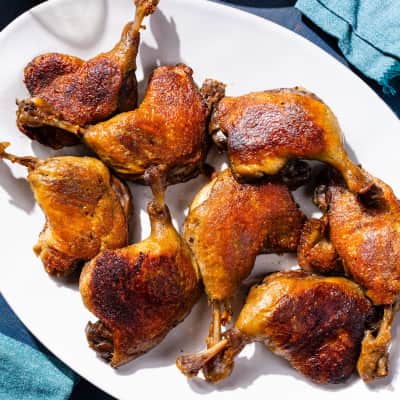
Food preservation has come a long way since the days of confit, so although we are still huge fans, there are much better reasons to make this specialty of Gascony—specifically, its delicious flavor.
And it’s surprisingly easy to make, given some time.
Sign up for the Notes from the Test Kitchen newsletter
Our favorite tips and recipes, enjoyed by 2 million+ subscribers!
Confit: A Brief History
Traditionally, the choice of duck (or goose) legs were given a long salt cure staved off bacteria growth. Then the meat was very slowly simmered in its own fat until meltingly tender.
From there it was packed in a special earthenware urn, the fat was poured over the meat to cover it (since bacteria cannot grow in fat), and the urn was buried deep in the ground for long periods of time to stay cool until the confit legs were plucked from the urn for a meal.
Nowadays, we've modernized our approach so there's no need to go digging an urn hole.
Modern Confit Methods
Our modern confit technique involves a much shorter cure before slow-cooking the food in abundant fat until completely tender.
Besides duck, foods such as turkey, garlic, mushrooms, and fennel take to the method like, well, a duck to water. In fact, vegetables are a great way to get started in the kitchen with this technique.
Learn how to make long-lasting, creamy, spreadable, garlic confit.
Salt, Fat, Dutch Oven, Heat
The salt used in modern duck confit not only gives flavor, but also helps the meat retain moisture. As we’ve learned, sprinkling food with salt draws water from inside the meat to the surface. Eventually the water flows back into the meat, carrying the salt with it. An overnight salt cure is the perfect amount of time to properly season the duck legs.
For the fat, there’s only one kind we recommend cooking the duck in: its own. It’s important to use enough fat to cover the legs in the cooking vessel.
The oven makes it easy to maintain a consistent moderately low temperature with zero hot spots. Cooking the legs for 3 hours at 300 degrees yields the perfect texture. We use a Dutch oven, which fits the legs in a single layer and allows headspace above the fat; a baking dish full of hot fat seems too risky to us.
For vegetables, we choose extra-virgin olive oil. Unlike meat, vegetables don’t have to be fully submerged in the fat, and in fact, the bits that remain above the fat turn irresistibly caramelized.

The America's Test Kitchen DIY Cookbook
Our editors, test cooks, and staffers share their favorite from-scratch projects in The America's Test Kitchen DIY Cookbook, walking you through every recipe so you can easily create store-bought staples and gourmet favorites at home.
Shop NowStep by Step: How to Make Duck Confit
Follow these instructive five steps to make silky and savory duck confit.
Step 1: Trim, Season, and Cover

Trim excess skin and fat from duck legs. Sprinkle with salt and pepper and toss with herbs. Cover tightly with plastic and refrigerate for 8 to 24 hours.
Step 2: Cover Pieces in Fat

Arrange legs, skin side up, in single layer in Dutch oven and arrange herbs over top. Pour melted duck fat over legs until just covered.
Step 3: Bake Until Tender and Cool

Bake duck until skin has rendered most of its fat, meat is completely tender, and leg bones twist easily away from meat (fat will be bubbling gently). Let duck and fat cool completely in pot.
Step 4: Cover Cooled Duck

Once cooled, entire pot can be wrapped in plastic wrap and refrigerated for up to 1 month. Or transfer cooled legs to smaller airtight container and pour cooled fat over top to cover completely.
Step 5: Crisp to Eat

When ready to use, remove duck legs from fat, scrape off as much fat as possible, and either shred meat or sear, skin side down, in nonstick skillet to crisp skin; serve whole.
Recipes That Use This Technique
Ready to try confit at home? All of these recipes deliver fantastic results and keep well.

Fennel Confit
The confit technique is most often used with duck, but it's also a versatile way of transforming vegetables.
Get the Recipe
Garlic Confit
Silky, nutty-tasting garlic confit is a faster, stovetop alternative to oven-roasted heads—without any of their mess or waste. And it yields a valuable byproduct.
Get the Recipe
Turkey Thigh Confit with Citrus Mustard Sauce
The hands-off, naturally make-ahead confit technique transforms turkey thighs into a silky, dense, and savory revelation.
Get the Recipe
Garlic Confit Butter
Silky, nutty-tasting garlic confit is a faster, stovetop alternative to oven-roasted heads—without any of their mess or waste. And it yields a valuable byproduct.
Get the RecipeReady to learn another technique? Choose from our list of 100 Techniques Every Home Cook Can Master.