Chicago’s famed Italian beef sandwich, steeped in both history and gravy (or jus, depending on who you’re talking with) is a point of pride for many Chicagoans. Fierce debates ensue about whose is the best. Is it Al’s? Johnnie’s?
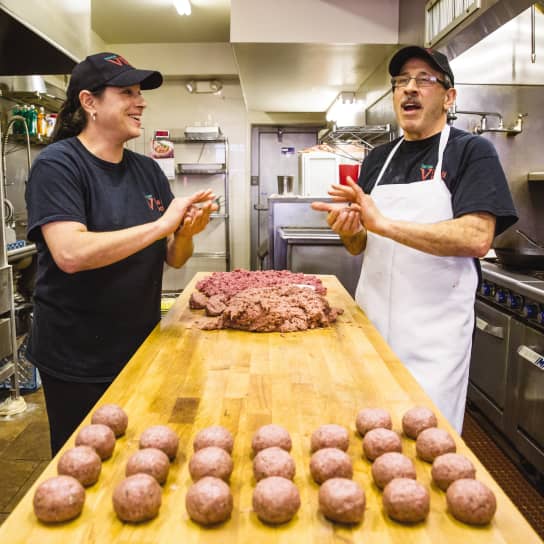
In November 2022, Sean and Arielle Hofherr of Hofherr Meat Co., a butcher shop in Northfield, just north of the city, took on the iconic sandwich with the goal of producing the best one ever made. It was a heck of a project.
Sign up for the Dinner Tonight newsletter!
Weeknight cooking inspiration, curated and written by longtime ATK author and editor (and avid home cook) Jack Bishop.
The Hofherrs and their team proceeded to break down and examine all elements of the sandwich—meat, braising liquid, seasoning, bread, garnish—precisely defining and refining each one until they finally presented a limited number of 100 sandwiches to the public that December, earning great praise from critics and sandwich enthusiasts alike.
Their focus on the specific cut of meat, the nuances of the gravy, the texture of the bread, and the intensity of the pickled giardiniera garnish had many customers declaring that it was indeed the best Italian beef sandwich they’d ever eaten.

Known simply as “a beef” in the local vernacular, the sandwich is said to have been born from budget-conscious Italian weddings in early 1920s Chicago. “Peanut weddings,” as they were called because roasted peanuts were also often served, were held in rented-out halls or basements, and the bride and groom (or their families) would often provide the food. Beef sandwiches offered an efficient way to feed more with less.
While each beef stand follows its own guiding light, the preparation of a proper beef is somewhat standard. Superthin slices of meat are essential, so the beef—typically one of the more flavorful-yet-lean cuts like top round or sirloin—is cooked in a heavily seasoned broth to the point of well-done (or close to it) and then fully chilled to make slicing easier.
When it’s time to assemble the sandwiches, the cooking liquid (the “gravy”) is strained and kept warm on the side. The chilled meat is shaved paper-thin on a meat slicer and then tossed briefly in the warm gravy before being loaded into a crusty French roll.

The sandwich is ordered one of three ways: dry, wet, or dipped. “Dry” means the meat is lifted from the gravy and allowed to drip dry for a few seconds before being placed in the roll. A “wet” sandwich is one where the meat goes directly from gravy to roll without hesitation, and then a few extra splashes of gravy are slooshed over the meat for good measure once it’s in the sandwich.
“Dipped” is for the true connoisseurs and indicates that the entire assembled sandwich is submerged in the gravy, a move that ensures maximum flavor and unrivaled sogginess. The garnish can be “hot” or “sweet” or both. “Hot” refers to a scoop of bracing, spicy giardiniera, and “sweet” to roasted or fried sweet bell peppers.
In a recent interview, Sean Hofherr offered pointers and inspiration for making my own version. For the meat, he suggested “something that has some visible fat content” and recommended chuck. I opted for a chuck-eye roast and tied it up to keep its shape during cooking.

For the braising liquid, Hofherr advised “lots of mirepoix, fresh herbs, red pepper flakes, and warm spices.” Instead of the homemade beef stock that Hofherr used for his braising liquid, I built mine on beef bouillon fortified with Worcestershire sauce and tomato paste—not enough to be identifiable but enough to round out the flavor and boost the savoriness.
For the giardinera (I like my sandwich “hot”), I settled on a mixture of vegetables, cider vinegar, and fresh serrano chiles that balances acidity and heat for a perfect, lively punch of flavor.
Hofherr couldn’t set me loose on the world without one final key piece of information: the Chicago Lean.

When it comes to the proper way to eat a beef, there’s a method to the madness, a tried-and-true technique that keeps the gravy that will inevitably run down your arm from staining your shirt, pants, and shoes. “Stand with your feet about shoulders’ width apart, bend slightly at the waist, lock your arms, reverse akimbo, hang your chin out away from your body.”
From this position, Hofherr recommends you move your face toward the sandwich, not the other way around.

Chicago Italian Beef Sandwiches
How do you beef? We like ours “wet,” with plenty of giardiniera on top.
Get the Recipe