


In Andalusia, July and August are hot and dry—the perfect weather for salmorejo, an ice-cold tomato soup that’s ripe with flavor.
When I contacted José Andrés, the world-renowned Spanish American restaurateur, cookbook author, and founder of the humanitarian aid group World Central Kitchen, he dubbed the lush soup “gazpacho’s richer, more sophisticated sibling.”
It’s a summertime staple in Cordoba, he said, where the “velvety-smooth puree of tomatoes, garlic, day-old bread, and a river of olive oil” originated.
Sign up for the Cook's Insider newsletter
The latest recipes, tips, and tricks, plus behind-the-scenes stories from the Cook's Illustrated team.
For a soup that exudes elegance, salmorejo was born of humble beginnings.
It’s a derivative of mazamorra, a dish that was originally made in the Middle Ages by pounding bread, garlic, oil, and vinegar in a mortar and pestle to a porridge-like consistency. When tomatoes began to be cultivated in the Iberian peninsula in the 16th century, the white, relatively neutral bread soup was transformed into the bright, punchy red salmorejo.
Despite having evolved so significantly, the dish with ancient roots “continues to honor the simplicity and freshness that characterize Andalusian cuisine,” said Paco Morales—chef-owner of the Cordovan restaurants Noor and El Bar de Paco Morales—in an interview.
Inspired, I ordered a few bushels of the best large round garden tomatoes I could find and packed a blender with 3 pounds of the fruit.
I buzzed them to a puree and then whizzed in chunks of sandwich bread (my placeholder for telera, the Andalusian sandwich roll that’s typically used) along with sherry vinegar, garlic, and salt. Finally, I streamed in a good amount of extra-virgin olive oil, taking care not to overmix. (The more olive oil is blended with water, such as that from the tomatoes, the more of its bitter-tasting polyphenols are dispersed into a liquid.)
Maximizing Tomato Flavor

Using all parts of the fruit in our soup delivers complex flavor.
To select a stand-in for teleras, which are difficult to source in the States, I asked Andrés for advice.
He noted that the bread’s tight crumb and low moisture content are what make it ideal for thickening the soup, so I tried every loaf I could think of with a similar structure, such as Italian bread and baguette. They all worked well, whether fresh or stale, except for rustic sourdough, whose flavor was too distinct.
The soup tasted absolutely fantastic—fruity and rich with hints of garlic and nutty sherry vinegar—but the texture was marred with flecks of skin and stray tomato seeds.
Peeling and seeding the tomatoes resulted in a smooth consistency, but at the cost of dull color and flavor. Without the pigments and aromatic compounds in the skin and the umami-packed jelly that surrounds the seeds, the soup looked and tasted flat.
I went back to whole tomatoes, but this time I passed the puree through a fine-mesh strainer, using the back of a ladle to expedite the process. Now the salmorejo had a lovely satiny consistency with nary a seed or speck of skin.
Satisfied, I popped the red-orange soup into the fridge to chill for a couple hours. At serving time, I topped each bowlful with the traditional garnishes of chopped hard-boiled eggs, paper-thin Serrano ham, and drizzles of extra-virgin olive oil.
When the summer sun sets and a warm breeze fills the air, let the luxurious salmorejo bring vibrant flavor and color to your table.
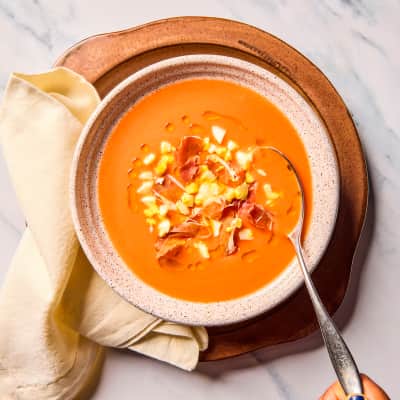
Salmorejo (Spanish Chilled Tomato Soup)
Salmorejo whirls peak summer tomatoes into a silky, refreshing chilled soup.
Get the Recipe