


For my late grandmother, Margarita Galindez Maisonet, the first order of the day was to brew coffee. The second was to start the rice and beans.
Those two foods are life in her native Puerto Rico, and Puerto Ricans everywhere can’t imagine not eating them at least once a day.
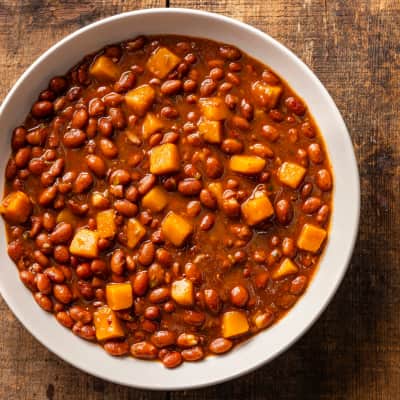
Her everyday beans were habichuelas guisadas (stewed beans), which she’d make by simmering pink or red varieties with sofrito and tomato sauce. Meanwhile she’d make a pot of rice, and when the beans were done, she’d plate the two side by side.
Inevitably there were leftovers, so the next day the rice and beans were cooked together, fusing into “riceandbeans.” Called arroz mamposteao (“mom-post-yeow”), this merger, often with additions such as meat and sweet plantains, created a whole new dish.
That’s what I’m presenting here: a twofer package that illustrates how Puerto Ricans like my grandmother and now me prefer to make their rice and beans, and how we make the most of them by spinning the leftovers into a different meal.
Sign up for the Cook's Insider newsletter
The latest recipes, tips, and tricks, plus behind-the-scenes stories from the Cook's Illustrated team.
Rice
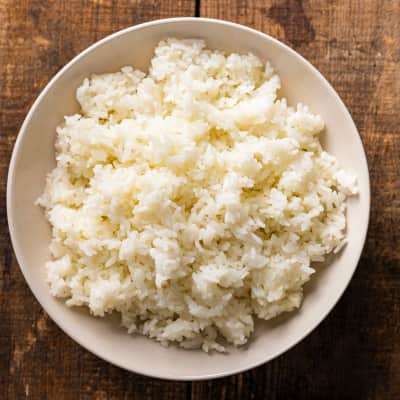
My grandmother made arroz blanco the way Puerto Rican women her age were taught to cook rice (initially on the fogón, the wood-fired stove, and later, once she’d emigrated to the States, on a gas stove), and she made it this way from the time she learned to cook in the 1940s until she departed this floating marble in 2015.
First, she’d fill a bowl with medium-grain rice (the preferred choice in Puerto Rico) and water and give it a vigorous shake to ensure the grains released their powdery residue.
Then, she’d pour the water out of the bowl, letting it flow over her hand, which acted as a sieve to catch any stray grains, and mount the little caldero on the grate as the staccato and whooshing of the gas range sounded off.
Water, olive oil, and salt—the common denominators for Puerto Rican arroz blanco—would go into the pot, which was brought up to a rolling boil. She’d let the rice cook uncovered until little burrows formed on the surface, cover the pot, and steam it until the grains were tender.
My own arroz blanco routine more or less mirrors hers.
Here in California, I use Calrose rice, the locally ubiquitous medium-grain variety, and I like to toast the grains in the oil before steaming them. It adds a slight nuttiness and a pleasurable mouthfeel to the final product and prevents the grains from clumping so that they’re easier to break up the next day for arroz mamposteao.

Beans
Much like people believe chicken soup has magical healing powers (it does), I think the same can be said about a pot of beans—particularly habichuelas guisadas. They’re flavorful, belly-warming, and tailor-made for soaking up with rice.
The starting point is always sofrito: the rough paste of onions, garlic, cilantro, culantro, sweet peppers, and tomatoes that is the bedrock of our cuisine.
After blitzing together a batch, I submerge dried pink beans in a large pot of water and bring it to a boil. (The Maisonet family doesn’t soak our beans; we find it’s not necessary.) Then, I add a halved onion, garlic, and a big scoop of the sofrito, and let it all bubble away for about an hour.
What I deliberately don’t add at the start is the tomato sauce, since its acid can prevent the beans from softening.
Delaying it until midway through cooking gives the beans a head start on turning tender, and the bright savor of the sauce still has ample time to diffuse throughout the pot.
Once the beans are soft, I stir in chunks of squash (calabaza is traditional, but butternut works fine), followed by a second dose of sofrito that livens up the beans with freshness and extra savor.

Double starch, meat, and avocado is the Puerto Rican gold standard.
Arroz Mamposteao
After the time investment of making the beans themselves, I love that you can spend about 20 minutes mixing up the rice and beans and end up with a completely different dish.
Some versions of arroz mamposteao are as simple as stirring together the rice and beans in the same pot, but I also like to bulk up the mixture with ground beef and ripe plantain for extra savor and sweetness. (When I was a kid my grandmother added ground beef, and its Hamburger Helper–like presence is what endeared me to arroz mamposteao.)
I cut up the starchy fruit into small pieces and brown it in a little oil, then sauté the meat with Worcestershire sauce in the same pan before working in the cold rice and beans and warming everything through.
You don’t need to add anything else besides salt and pepper; the habichuelas guisadas do most of the seasoning and moistening work for you.
The only other must on the plate is sliced avocado: Double starch, meat, and avocado is the Puerto Rican gold standard.
Illyanna Maisonet is a California-based writer, the first Puerto Rican food columnist in the United States, and the James Beard Award–winning author of Diasporican: A Puerto Rican Cookbook (2022).
Habichuelas Guisadas
Puerto Rico’s classic stewed beans are easy to throw together, belly-warming, and tailor-made for soaking up rice.
Get the Recipe