



 Buy at Amazon
 Buy at Williams Sonoma
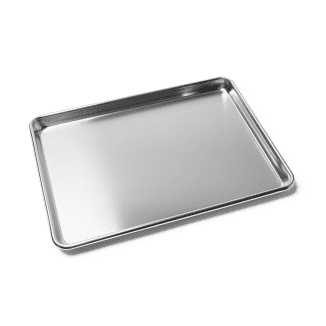
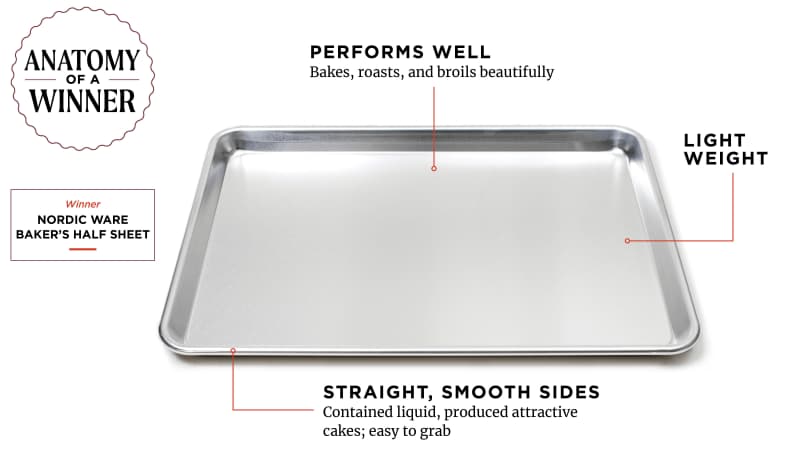
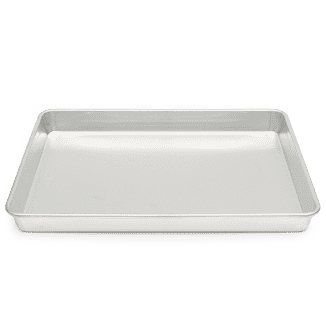
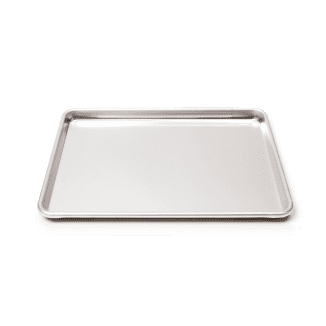
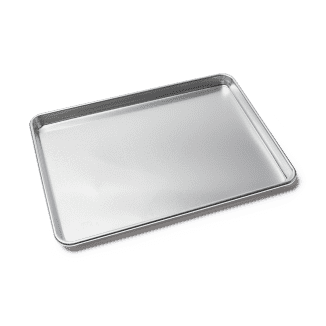
Our favorite rimmed baking sheet is the Nordic Ware Baker’s Half Sheet. It bakes and roasts food beautifully and is affordable, lightweight, and easy to handle. To maximize its use, we recommend getting a wire rack and a lid for it.
If you have less storage space or regularly cook for just one or two people, we also recommend the quarter-sheet pan and eighth-sheet pan versions of our winner. For larger jobs, we also recommend the Big and Big Batch versions of our winner.
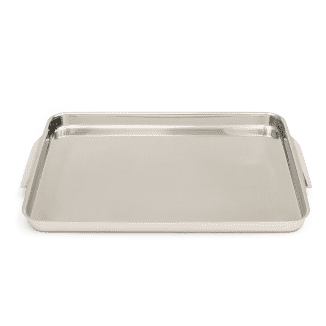
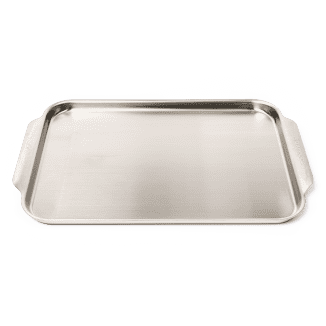
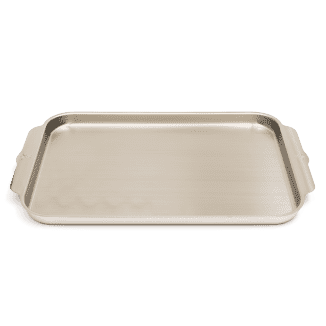
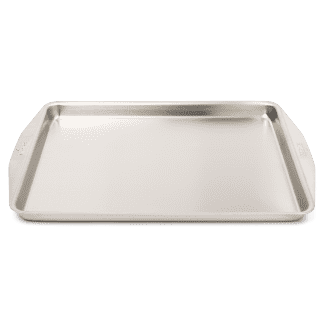
If you often use your baking sheet to cook acidic ingredients such as tomatoes or citrus, we recommend the Williams Sonoma Thermo-Clad Stainless-Steel Ovenware Half Sheet with Cooling Rack. Although it’s heavy, this stainless-steel baking sheet has comfortable handles and cooks food well.
You can also check out our review of nonstick baking sheets, which are great for people who want easy release when cooking delicate foods and low-effort clean-up. And if you bake a lot of cookies and don’t do much roasting or broiling, you might want to consider a cookie sheet instead.
Rimmed baking sheets, also called half-sheet pans, are true workhorses in the test kitchen. We have stacks of them that we use every day for tasks such as baking cookies or roasting oven fries or root vegetables. But we also use them for baking chicken or fish, toasting nuts and seeds, roasting vegetables such as green beans and asparagus, and baking jelly roll cakes. In a pinch, an inverted baking sheet can even stand in for a pizza peel or baking stone. And that’s just the start. Slipping a wire rack inside (to elevate food for increased air circulation and also to contain mess) makes these pans even more versatile—it’s our go-to setup for roasting and broiling meats, holding breaded foods before and after frying, and drizzling chocolate over desserts.

What Size Baking Sheet Should You Get?
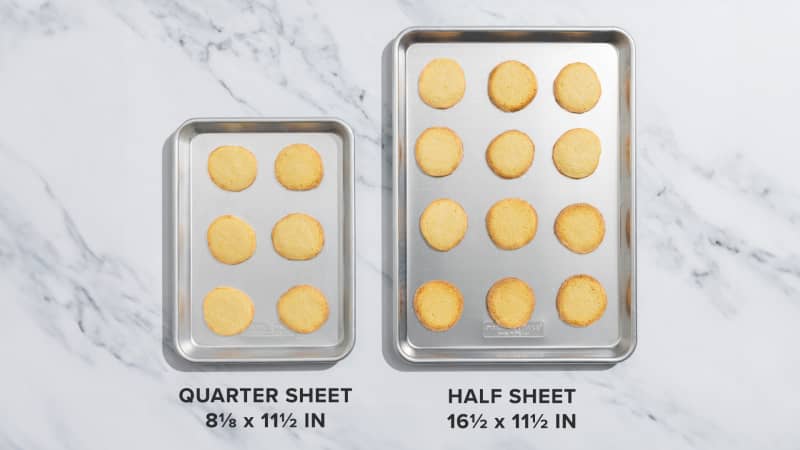
Baking sheets typically come in half, quarter, and eighth sizes. (Full-size baking sheets can be found in professional kitchens and bakeries but won’t fit in home ovens.) Half-sheet pans are the most useful all-purpose size for most cooks. We recommend that every cook have at least one, and ideally two, for baking full recipes of cookies at a time or large batches of roasted vegetables or meat. You’ll usually see the dimensions of a half-sheet pan listed as 18 by 13 inches, but in practice, the actual cooking surfaces measure closer to 16½ by 11½ inches.
Quarter-sheet pans, with a cooking surface measuring about 8½ by 11½ inches, and eighth-sheet pans, with a cooking surface of about 8¾ by 5½ inches, come in handy for smaller jobs such as toasting nuts or baking a few cookies at a time. These smaller sizes are also great for people with limited storage, compact ovens, and small households, and they’re useful for organizing mise en place or neatly arranging oil, salt, and pepper next to the stovetop.
Aluminum vs. Stainless-Steel Baking Sheets
There are two main types of baking sheets on the market. Aluminum baking sheets are our go-to in the kitchen because they’re affordable, lightweight, and can cook everything from large cuts of meat to cookies well. They do have two limitations, though. They’re notoriously prone to warping (see our FAQ below on the topic), and cooking acidic ingredients, such as tomatoes or vinegar, in uncoated aluminum can cause the metal to leach into food. Nonstick baking sheets are one way to avoid this issue, but they can’t be used at temperatures higher than 450 degrees or under the broiler, as their coatings can release harmful fumes when exposed to high temperatures.
Stainless-steel baking sheets offer another alternative. While plain stainless-steel baking sheets exist, for this review, we tested stainless models that are fully clad—built with a layer of aluminum sandwiched between stainless steel—hoping they would solve both the durability and reactivity problems we have with the aluminum sheet pans. The stainless-steel cooking surface of these pans doesn’t react with acids, so you can cook with tomatoes or lemons in them without altering the flavor of your food or damaging the baking sheet itself. And like aluminum baking sheets, all stainless-steel sheet pans can be used at high temperatures.
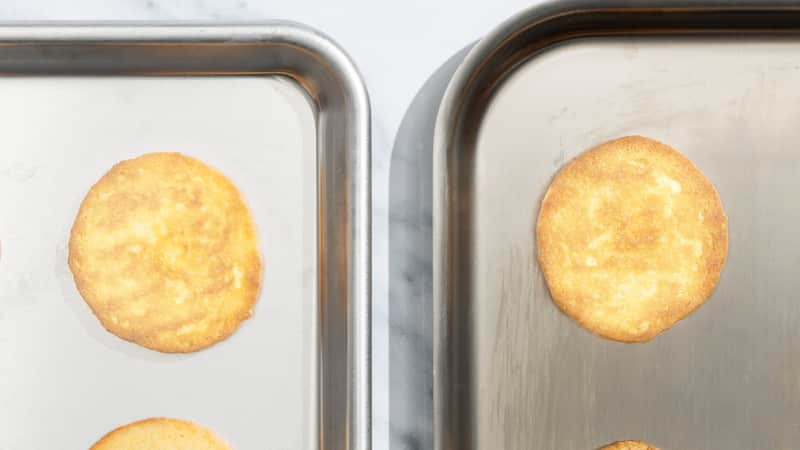
In our tests, we found that clad stainless-steel baking sheets performed similarly to our favorite aluminum baking sheets, letting us bake delicate lemon cookies and broil skin-on chicken thighs equally well. While their cladding makes stainless-steel baking sheets slower to heat up than aluminum alone, the aluminum core in these pans still conducts heat relatively quickly, and the steel on either side of it retains heat well. That said, because stainless-steel models retain more heat than aluminum pans do, they tend to brown food slightly more quickly, especially when preheated, as we sometimes do when roasting vegetables or chicken. When cooking with stainless-steel baking sheets, we recommend checking your food at the lower end of the recipe time range to avoid over-browning.
Harder than aluminum, clad stainless-steel baking sheets do resist scratching and denting a bit more than aluminum. But they proved to be just as prone to warping as the aluminum baking sheets, with two of the four clad models warping temporarily when preheated at high temperatures. If anything, clad baking sheets are more likely to warp than pure aluminum, our senior science research editor informed us, since as a clad baking sheet heats, the aluminum on the inside expands twice as much as the steel on either side of it, putting stress on those outer layers and causing the pan to deform. The total thickness of the baking sheet and the specific thickness of the stainless-steel layers likely played roles in determining which clad models warped—thicker steel being stronger and better able to resist bending when the aluminum layer expands.

Our takeaway is that ultimately, warping can occur with any rimmed baking sheet. Fortunately, we’ve found that in most cases, warping isn’t permanent and will reverse itself. (For more information, see the FAQ below on warping.) While we acknowledge that all pans can warp, we’ve noted in our chart those that warped more than others during testing.
There are a few other key differences between clad stainless and aluminum baking sheets. Cladding makes stainless-steel models weigh more than twice as much as our favorite aluminum baking sheets: 3 to 4.5 pounds versus just 1.5 pounds. Unlike aluminum baking sheets, all the stainless-steel baking sheets we tested have handles, perhaps to help cooks hold these heavier pans more easily. Clad stainless-steel baking sheets are much more expensive than aluminum models too. You’ll pay at least $100 for all that additional metal, compared with around $10 for our favorite aluminum option. (Stainless steel–only sheet pans are a bit less expensive, and we look forward to reviewing them soon.)

Another thing to keep in mind: Stainless-steel models don’t generally adhere to standard baking sheet sizes. While there’s some variation even within aluminum baking sheets, the cooking surfaces of the stainless-steel half sheets we tested were almost all significantly larger or smaller than the 16½ by 11½-inch dimensions that we’ve seen in most aluminum sheets. Some won’t accommodate a standard wire rack perfectly; in most cases, you’ll need to buy a rack made by the pan’s manufacturer in order to get one that fits these stainless-steel models snugly. If you buy a stainless-steel baking sheet, you’ll also need to take these size and shape differences into account when cooking: You may be able to fit more or less food on the sheet pans, and you may need to check on food earlier or later to ensure that it doesn’t over- or undercook.
Because clad stainless-steel sheet pans don’t offer advantages in performance or durability, we think that aluminum baking sheets remain the best option for most home cooks. If you regularly use your baking sheets to cook with acidic ingredients such as tomatoes, citrus, or vinegar, however, you might want to consider purchasing a stainless-steel model.
Whichever material you choose, here are some factors that separate the best baking sheets from the rest.
What to Look For
- Light Weight: In general, we preferred half-sheet baking pans that weighed under 2 pounds. They allowed us to grab a sheet out of the oven with one hand or carry something heavy such as a big roast without the total weight being unmanageable. With smaller pans, we similarly preferred lighter-weight models.
- Straight, Smooth Sides: We preferred models with straighter, smooth sides that were at least 1 inch tall in half baking sheets. These not only contained liquid and produced straight-sided cakes but also gave us something sizable to grip—especially important when carrying a hot pan using a bulky pot holder.
- For Stainless-Steel Baking Sheets, Large Handles: Because stainless-steel baking sheets are heavier, they’re harder to hold with just one hand, something we do occasionally when opening the oven door with one hand and pulling out a pan with the other. All of the stainless-steel models we tested had handles on the short ends, but we liked those with handles large enough to hold with oven mitts.

What to Avoid
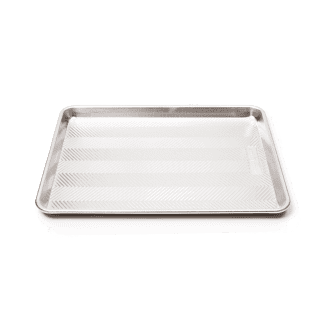
- Low, Sloped, or Textured Sides: Baking sheets with low, sloped sides were more prone to spilling liquidy ingredients. Another pan had unique ridged edges. The cakes that emerged from these pans tasted fine, but they looked odd.
Other Considerations
- Unconventional Sizing: Most of our recipes were developed with baking sheets measuring a standard 16½ by 11½ inches. Some baking sheets we tested had dimensions of up to 18 by 12 inches, so jelly roll cakes made in them were thin and baked more quickly. Baking sheets smaller or larger than the standard dimensions won’t necessarily accommodate our favorite wire rack snugly; you may need to buy racks made specifically for those pans. The specific size of a sheet pan isn’t a deal breaker, but it’s something to be aware of when you cook, as you may need to adjust the amount of food you use or the timing of your recipe accordingly.
The Tests
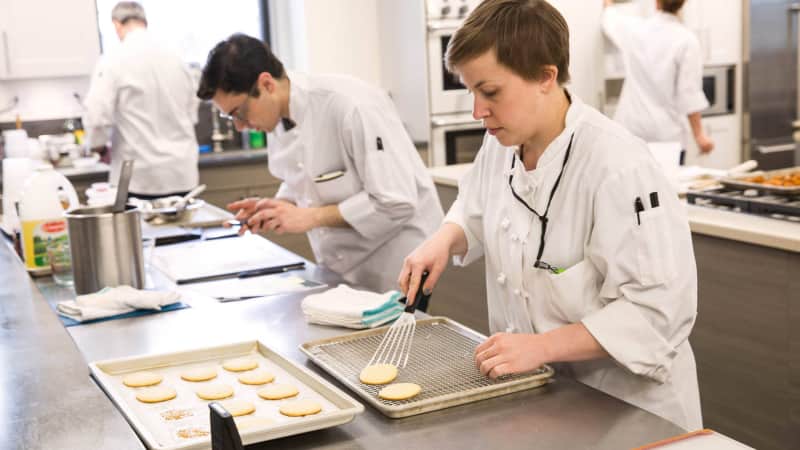
- Bake Jelly Roll Cake
- Bake Glazed Lemon Cookies
- Roast parsnips using Perfect Roasted Root Vegetables
- Make Oven-Roasted Chicken Thighs
- Evaluate design by adding ½ cup of water to the pans and walking around the kitchen
- Evaluate compatibility with wire racks
- Press down on wire rack and move it around with even pressure for 15 seconds to assess pan’s resistance to scratching
How We Rated
- Performance: We evaluated how well food browned, roasted, and broiled on the baking sheets.
- Warping: We noted whether the baking sheets warped and how extensively they did so.
- Handling: We rated the baking sheets on how easy they were to lift and maneuver and whether it was possible to fit a wire rack inside them snugly.



 Buy at Made In Cookware