America's Test Kitchen LogoCook's Country LogoCook's Illustrated Logo

Reviews You Can Trust.
See Why.

Must-Have Mustards

A single style simply won’t cut it. From sweet and spicy to bright and tangy, these are the five mustards we always have on hand. 

Headshot of Kate Shannon Levine
By Kate Shannon Levine

Published on December 17, 2021

What You Need To Know

Most of us have a favorite mayonnaise and are loyal to a certain brand of ketchup, but mustard is different. Our refrigerators are crowded with options, each of which adds something special to a sandwich or a bowl of potato salad. While it is traditional to use specific mustards for certain applications—Dijon in Caesar salad dressing, for example—you can have some fun experimenting at home. You might find that you love the pop of whole-grain mustard in a tuna salad or decide that you like the characteristic tang of yellow mustard on more than just hamburgers. Read on to learn about this incredible condiment and how to use it in new ways at home.

Bright, tangy mustard goes perfectly with all sorts of savory food, but we're especially partial to the combination of yellow mustard and hot dogs.

The Many Styles of Mustard

People have been crushing mustard seeds and combining them with liquid to form a potent paste—both for medicinal purposes and for use with food—for thousands of years, with the earliest recorded instances dating back to ancient Greece and Rome and medieval Cairo. They’ve also been experimenting with ingredients and flavorings. There remains a “constant evolution” of mustards, says Barry Levenson, the curator of the National Mustard Museum. The mustards entered each year into the World-Wide Mustard Competition, which Levenson helps organize, reflect the variety produced by manufacturers. The 2022 competition will include 17 categories, with entries ranging from whole-grain mustards—Levenson notes that manufacturers are producing more and more of these—to mustards with fruit or vegetables added. The U.S. Food and Drug Administration has no established regulations for specific styles of mustard. Instead, the distinctions are rooted in history and are dictated mostly by consumer expectations and manufacturers.

Different styles—and different brands—of mustard all bring something slightly different to the table. Here's a selection of some longtime favorites and mustards we sampled recently.

We narrowed this discussion of mustard to five categories that we use frequently in recipes and as condiments: Dijon, brown, yellow, whole grain, and honey mustard. The textures of these mustards range from supersmooth to coarsely ground, while their flavors range from mild and mellow to bold and punchy.

How Mustard Is Made

The production of most mustard begins with mustard seeds. Manufacturers typically crush the seeds and then combine them with liquid, salt, and other seasonings. With the exception of some whole-grain mustards, the mixture is then transferred to a stone mill, where it’s ground to a thick, cohesive consistency. To make different styles of mustard, manufacturers use different types of mustard seeds and customize each step of the process.

The mustard plant is part of the Brassicaceae family. Other members of this plant family include radishes, turnips, and horseradish. (Photo by Valter Jacinto/Getty Images)

Some names and classifications of the plants in the mustard family have changed over the years, explained Jim Davis of the Department of Plant Sciences at the University of Idaho, which makes things a little confusing. Mustard seeds vary in color and are harvested from the plants of three species: Brassica nigra (black), Sinapis alba (yellow and white), and Brassica juncea (brown). Each type of seed differs slightly in size and potency. Because black seeds are tiny and hard to harvest, they’re less commonly cultivated in North America, where most of the seeds used to make mustard are grown. Yellow and brown mustard seeds can be used both alone and in combination. Yellow mustard seeds are mild, so they’re used to make yellow mustard. (The sunny color is due to turmeric or other food colorings, not the seeds themselves.) Brown mustard seeds are more potent and are traditionally used in spicier mustards, including Dijon and brown mustard.

Most of the mustard available in American supermarkets is made with brown or yellow mustard seeds. Manufacturers can also use mustard flour, a finely ground powder that results in a supersmooth condiment.

To make Dijon and other very smooth mustards, the hulls are filtered out after the mustard seeds are cracked. For whole-grain mustards, brown mustards, and other preparations for which a mottled appearance and coarser texture are desirable, the hulls are left in.

Alternatively, manufacturers can skip the seeds and use mustard flour, a very fine powder made from ground mustard seeds (hulls removed). Mustards made with mustard flour are particularly thick, sticky, and almost satiny; many of the honey mustards we tasted are made with mustard flour.

The Science Behind Making—and Retaining—Mustard’s Heat

Although spiciness is a defining characteristic of many styles of mustard, whole mustard seeds don’t start off spicy. Instead, they’re bitter and a little nutty. When mustard seeds’ cell walls are crushed and liquid is added, an important chemical change takes place. A reaction converts bitter-tasting glucosinolates into spicy-tasting isothiocyanates, thus removing bitterness and creating heat. Accordingly, whole-grain mustards with seeds that are left whole or only lightly crushed are often considerably milder yet more bitter.

Controlling and retaining the heat in the condiment is where the art comes in."

—Jim Davis of the Department of Plant Sciences at the University of Idaho

Acidic ingredients such as vinegar or wine are key components of all mustards. But too much acid can prevent the formation of isothiocyanates and make a mustard mild. As a result, mustards that are very acidic are generally less spicy. Manufacturers must be careful about when and how they add acidic ingredients so that they can achieve the right balance of tanginess and heat for that particular style. “Controlling and retaining the heat in the condiment,” Davis says, “is where the art comes in.” Yellow mustards are known for being tangy and not especially hot, while Dijon mustards are often spicy, though we’ve sampled products over the years that have missed the mark.

Those pungent isothiocyanates will fade with time and exposure to air, so once opened, containers of mustard should be stored in the refrigerator. As Levenson says, there’s an old motto about horseradish that also holds true for mustard: “Keep it cold to keep it hot.”

From left to right, here are the five styles of mustard we use most frequently: Dijon, yellow, brown, whole grain, and honey mustard.

Our Favorite Mustards

We’ve compiled information and tasting notes for two top-scoring products from each of our reviews of Dijon, brown, yellow, whole-grain, and honey mustard. Each mustard highlighted here is typical of its style, but together, the pairs show some of the range you can find within each category. Whether you consider mustard a favorite condiment or use it only on occasion, we hope you’ll find something new to try at home.

Dijon Mustard

The earliest Dijon mustard—which gets its name from the city in eastern France where it was first made—dates back to the 13th century. The best versions have moderate acidity and lots of heat. The hulls of the seeds are removed, and the seeds are milled to a smooth, creamy consistency. It’s our go-to mustard for vinaigrettes and pan sauces. We also use it to “devil” pork chops, eggs, and chicken cutlets.

our winning dijon mustards by Three Little Pigs and maille

Yellow Mustard

If you’re serving a hot dog to a Chicagoan or making a Cuban sandwich, you need yellow mustard. And of course it’s also a must-have for backyard burgers and cookouts. This vibrantly colored mustard typically gets its characteristic hue from turmeric. It’s sweeter and less spicy than other styles.

Brown Mustard

We especially like brown mustard’s bright tang and mild heat with grilled hot dogs, sausages and onions, or deli-style sandwiches with ham or pastrami. Brown mustard is also great in baked beans or as a sweet-savory glaze for meatloaf. Because the hulls are typically left on the mustard seeds during processing, brown mustard has a speckled appearance.

Whole-Grain Mustard

The consistencies and flavors of whole-grain mustards vary greatly. Some resemble brown or Dijon mustard, with coarsely crushed seeds in a thick, spreadable mustard. These whole-grain mustards can generally be used in place of either product. Other versions contain whole mustard seeds that crunch and pop as you eat them. We recommend this style when you want the visual appeal of whole seeds and the benefit of textural contrast, such as in salad dressings or in a buttery sauce with seafood.

our winning whole-grain mustards by Grey Poupon and maille

Honey Mustard

The complexity of the best honey mustards makes them a welcome addition to any meat and cheese plate and a great dip for chicken nuggets or pretzels. Both sweet and tangy, honey mustard adds zip to breakfast sandwiches or a simple ham and cheese sandwich. When we evaluated several different kinds, they varied considerably in texture, from silky-smooth to coarsely ground.

Everything We Tested

Recommended - Dijon

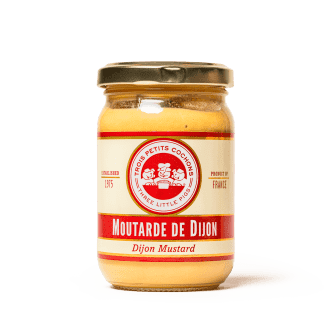
Three Little Pigs Dijon Mustard

The “nasal-clearing” heat of our top-scoring Dijon mustard makes it stand out among other mustards. Because its flavor is also bright and tangy, the bold heat doesn’t overwhelm.

Ingredients: Mustard seeds, distilled vinegar, water, sea salt

Price at Time of Testing: $6.99 for 7 oz ($1.00 per oz)

The “nasal-clearing” heat of our top-scoring Dijon mustard makes it stand out among other mustards. Because its flavor is also bright and tangy, the bold heat doesn’t overwhelm.

Ingredients: Mustard seeds, distilled vinegar, water, sea salt

Price at Time of Testing: $6.99 for 7 oz ($1.00 per oz)

Maille Dijon Originale

If you prefer a mustard with more moderate heat, look for our second-place Dijon mustard. It’s spicy and salty but not too sharp. We love its rich, thick, creamy consistency.

Ingredients: Water, mustard seed, distilled vinegar, salt, citric acid, sodium metabisulfite (used to protect quality)

Price at Time of Testing: $4.99 for 7.5 oz ($0.67 per oz)

If you prefer a mustard with more moderate heat, look for our second-place Dijon mustard. It’s spicy and salty but not too sharp. We love its rich, thick, creamy consistency.

Ingredients: Water, mustard seed, distilled vinegar, salt, citric acid, sodium metabisulfite (used to protect quality)

Price at Time of Testing: $4.99 for 7.5 oz ($0.67 per oz)

Recommended - Brown

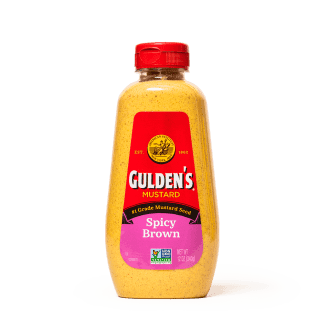
Gulden’s Spicy Brown Mustard

The bright, briny, and almost fruity flavor of this brown mustard made it our favorite. It’s supersmooth and easy to zigzag over a sausage or stir into a sauce.

Ingredients: Organic vinegar, water, mustard seed, salt, less than 2% of: spices, turmeric

Price at Time of Testing: $2.49 for 12 oz ($0.21 per oz)

The bright, briny, and almost fruity flavor of this brown mustard made it our favorite. It’s supersmooth and easy to zigzag over a sausage or stir into a sauce.

Ingredients: Organic vinegar, water, mustard seed, salt, less than 2% of: spices, turmeric

Price at Time of Testing: $2.49 for 12 oz ($0.21 per oz)

French’s Spicy Brown Mustard

Our second-place brown mustard is a good option for people who prefer a bit more heat. Its acidity makes it punchy, and it’s pleasantly thick and creamy.

Ingredients: Distilled vinegar, #1 grade mustard seed, water, salt, spices, turmeric and natural flavors

Price at Time of Testing: $2.49 for 12 oz ($0.21 per oz)

Our second-place brown mustard is a good option for people who prefer a bit more heat. Its acidity makes it punchy, and it’s pleasantly thick and creamy.

Ingredients: Distilled vinegar, #1 grade mustard seed, water, salt, spices, turmeric and natural flavors

Price at Time of Testing: $2.49 for 12 oz ($0.21 per oz)

Recommended - Yellow

Heinz Yellow Mustard

The combination of gentle sweetness and bright acidity makes our favorite yellow mustard a crowd-pleaser. Although it’s not spicy, it’s tangy and flavorful.

Ingredients: Distilled white vinegar, mustard seed, water, salt, turmeric, natural flavor and spices

Price at Time of Testing: $1.99 for 20 oz ($0.10 per oz)

The combination of gentle sweetness and bright acidity makes our favorite yellow mustard a crowd-pleaser. Although it’s not spicy, it’s tangy and flavorful.

Ingredients: Distilled white vinegar, mustard seed, water, salt, turmeric, natural flavor and spices

Price at Time of Testing: $1.99 for 20 oz ($0.10 per oz)

French’s Classic Yellow Mustard

We also love our runner-up, which strikes a sweet-tangy balance similar to that of our favorite yellow mustard. It’s smooth and creamy.

Ingredients: Distilled vinegar, water, #1 grade mustard seed, salt, turmeric, paprika, spice, natural flavor, garlic powder

Price at Time of Testing: $1.47 for 14 oz ($0.11 per oz)

We also love our runner-up, which strikes a sweet-tangy balance similar to that of our favorite yellow mustard. It’s smooth and creamy.

Ingredients: Distilled vinegar, water, #1 grade mustard seed, salt, turmeric, paprika, spice, natural flavor, garlic powder

Price at Time of Testing: $1.47 for 14 oz ($0.11 per oz)

Recommended - Whole Grain

Grey Poupon Harvest Coarse Ground Mustard

This coarsely ground mustard is thick and cohesive. It’s ideal for spreading on a sandwich or stirring into a sauce. We love the “tender pop of the seeds” and the tart, tangy flavor.

Ingredients: Distilled white vinegar, mustard seed, water, salt, white wine, fruit pectin, sugar, citric acid, tartaric acid, spices

Price at Time of Testing: $3.99 for 8 oz ($0.50 per oz)

This coarsely ground mustard is thick and cohesive. It’s ideal for spreading on a sandwich or stirring into a sauce. We love the “tender pop of the seeds” and the tart, tangy flavor.

Ingredients: Distilled white vinegar, mustard seed, water, salt, white wine, fruit pectin, sugar, citric acid, tartaric acid, spices

Price at Time of Testing: $3.99 for 8 oz ($0.50 per oz)

Maille Old Style Mustard

With lots of whole seeds, this is our top choice when we want to add pleasant pop and crunch to a dish. It’s especially good in vinaigrettes, atop roasted oysters, or simply spooned over roasted or grilled meats.

Ingredients: Water, mustard seeds, distilled vinegar, salt, white wine, sugar, lactic acid, natural flavor

Price at Time of Testing: $4.59 for 7.3 oz ($0.63 per oz)

With lots of whole seeds, this is our top choice when we want to add pleasant pop and crunch to a dish. It’s especially good in vinaigrettes, atop roasted oysters, or simply spooned over roasted or grilled meats.

Ingredients: Water, mustard seeds, distilled vinegar, salt, white wine, sugar, lactic acid, natural flavor

Price at Time of Testing: $4.59 for 7.3 oz ($0.63 per oz)

Recommended - Honey

Woeber's Simply Supreme Honey Mustard

The thick, almost sticky consistency of this honey mustard is typical of those made with mustard flour (instead of mustard seeds). Nevertheless, it spread easily and clung well to chicken nuggets. Its bold spice is tempered by a deep, rich sweetness.

Ingredients: Sugar, distilled white vinegar, honey, mustard flour, filtered water, soybean oil, salt

Price at Time of Testing: $2.65 for 13 oz ($0.20 per oz)

The thick, almost sticky consistency of this honey mustard is typical of those made with mustard flour (instead of mustard seeds). Nevertheless, it spread easily and clung well to chicken nuggets. Its bold spice is tempered by a deep, rich sweetness.

Ingredients: Sugar, distilled white vinegar, honey, mustard flour, filtered water, soybean oil, salt

Price at Time of Testing: $2.65 for 13 oz ($0.20 per oz)

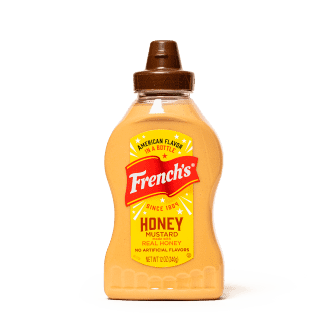
French’s Honey Mustard

This smooth, creamy mustard is easy to squeeze onto a sandwich or snack board. The punchy spice and straightforward sweetness reminded tasters of a classic fast-food dipping sauce—in a good way.

Ingredients: Distilled vinegar, water, sugar, #1 grade mustard seed, honey, salt, spices, garlic powder, carrot oleoresin (color), natural flavors

Price at Time of Testing: $2.18 for 12 oz ($0.18 per oz)

This smooth, creamy mustard is easy to squeeze onto a sandwich or snack board. The punchy spice and straightforward sweetness reminded tasters of a classic fast-food dipping sauce—in a good way.

Ingredients: Distilled vinegar, water, sugar, #1 grade mustard seed, honey, salt, spices, garlic powder, carrot oleoresin (color), natural flavors

Price at Time of Testing: $2.18 for 12 oz ($0.18 per oz)

Reviews You Can Trust

The mission of America’s Test Kitchen Reviews is to find the best equipment and ingredients for the home cook through rigorous, hands-on testing. Have a question or suggestion? Send us an email at atkreviews@americastestkitchen.com. We appreciate your feedback!

The Expert

Author: Kate Shannon Levine

Kate Shannon Levine

Editorial Director, ATK Reviews

Kate is the editorial director for ATK Reviews. She's a culinary school graduate and former line cook and cheesemonger.

Kate Shannon Levine is the editorial director for ATK Reviews. She’s covered a wide variety of topics at America’s Test Kitchen, but she especially loves writing about cheese, pantry staples such as anchovies and kosher salt, and cleaning products. One of her proudest accomplishments is finding a life-changing kitchen sponge (really) and proving once and for all that it's a bad idea to leave a soggy sponge in the bottom of your sink. Prior to joining America’s Test Kitchen, she attended Boston University’s culinary program and worked as both a line cook and a cheesemonger.

Appears In

This item is featured in the following. Click the links to dig in!

*All products reviewed by America’s Test Kitchen are independently chosen, researched, and reviewed by our editors. We buy products for testing at retail locations and do not accept unsolicited samples for testing. We list suggested sources for recommended products as a convenience to our readers but do not endorse specific retailers. When you choose to purchase our editorial recommendations from the links we provide, we may earn an affiliate commission. Prices are subject to change.

Reviews You Can Trust.
See Why.

This is a members' feature.
America's Test Kitchen LogoCook's Country LogoCook's Illustrated Logo