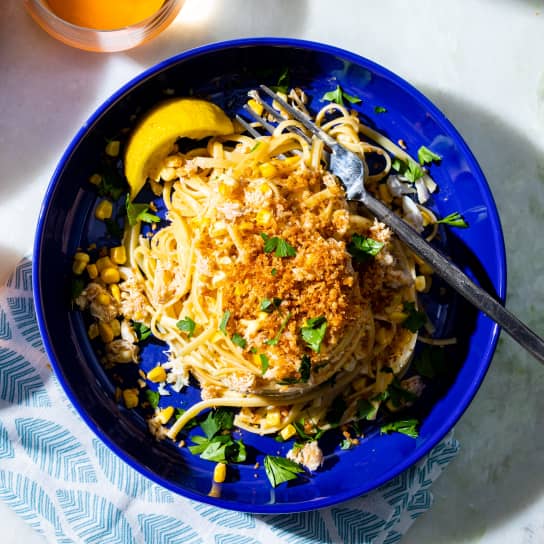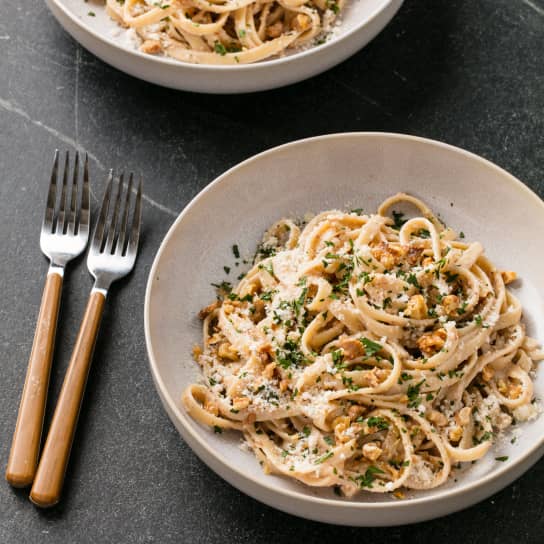

When Helene An first paired noodles with garlic and butter, she was only trying to help her family get by.
It was the 1970s: The first large-scale wave of refugees was just starting to enter the United States from communist-held Vietnam, and only a handful of Vietnamese restaurants dotted the country. Thanh Long, her family’s San Francisco restaurant that served burgers and club sandwiches alongside ch giò (fried spring rolls) and roast Dungeness crab, was one of them, and it wasn’t profitable.
What everyone around her really loved to eat, An noticed, was pasta, so she cobbled together a noodle dish that combined elements from the Vietnamese, Chinese, and French cooking she’d grown up with.
Sign up for the Cook's Insider newsletter
The latest recipes, tips, and tricks, plus behind-the-scenes stories from the Cook's Illustrated team.

I combined [food from] three of the best countries to create my own cuisine.
—Helene An
“I combined [food from] three of the best countries to create my own cuisine,” An said on a phone call from California.
Her “garlic noodles” were a wild success: The chewy, savory tangle drew round-the-block lines to Thanh Long and jump-started the Ans’ California restaurant dynasty, and it became a gateway dish that ushered Americans toward Vietnamese cuisine.
Decades later, An’s garlic noodles are still considered one of the all-time great fusion foods, but what exactly accounts for their magnetic quality is a tightly guarded secret known only to the An family and a few longtime kitchen staffers.
When I tried them for myself on a recent trip to the Bay Area, I could only guess at their precise inner workings. But I did come away with ideas for a take of my own—one that would draw upon the flavors, textures, and techniques of my native Vietnam and of my American upbringing.
The Ambassador of Vietnamese Cooking

Roughly 50 years have passed since Helene An put together her first plate of garlic noodles, but the impact of this dish continues to reverberate far beyond the walls of Thanh Long and her family’s other restaurants. Garlic noodle replicas and spin-offs abound from cooks of all different stripes, and the Smithsonian honored An in 2019 with a Pioneer Award in Culinary Arts, naming her “the mother of fusion cuisine.”
But An’s proudest accomplishment is knowing that her dish helped draw Americans to Vietnamese culture and cuisine.
“It warms my heart,” An said on a phone call from California, noting that one day she hopes Vietnamese food will be as mainstream in this country as Chinese cuisine or beloved immigrant preparations like tacos and sushi.
“I wish,” An said, “that Vietnamese food can become American.”
On the Strand
The many garlic noodle riffs out there are all quick and simple to make: Boil and drain noodles, toss them in a skillet with melted butter that’s been infused with garlic and other seasonings, and then top the glossy strands with bits of shredded Parmesan.
But the dish’s simplicity means that seemingly subtle shifts in ingredient choices and ratios as well as in preparation can alter its character.
For example: You can find garlic noodles made with a wide variety of strands—spaghetti, ramen, Chinese wheat noodles, and lo mein are all common. I distinctly preferred the lo mein: Its egg-enriched dough is tender and springy, and its thick diameter has a sturdy, satisfying chew. Also, since noodles can easily become bloated and slough off too much surface starch, rendering the sauce gummy, I made sure to simmer the lo mein very gently in water.

A Very Chinese Cookbook
Equally happy cooking American Chinese takeout or Sichuan banquet fare, James Beard Award–winning writer Kevin Pang and his father, Jeffrey, offer a wide-ranging and affectionately irreverent look at Chinese cooking.
Buy NowGarlic and Gold
My favorite feature of Thanh Long’s noodles might be how intense—but not harsh—the garlic flavor is and how deftly An balances it with butter and umami.
I got most of the way there by manipulating the flavor of the garlic itself: First, I sautéed 4 teaspoons of raw minced garlic in a stick of butter over very low heat, letting the garlic toast to a pale golden brown so that it mellowed and took on a nutty sweetness.
Then, I added another teaspoon of raw garlic as I pulled the pan off the stove so that the fading heat just barely tamed its bite.
Lastly, I added a paste of garlic powder mixed with water when I tossed the noodles in the infused butter, layering on the dried allium’s roasty complexity.
While there was marvelous depth to the garlic’s flavor, the butter itself was muddling it. Its milk solids were browning and turning assertively nutty as it heated with the garlic, so I clarified the butter before cooking the garlic.
Free of milk solids, pure butterfat has a higher smoke point than melted butter, so it can be heated to higher temperatures for longer with no flavor change.
I melted the butter in the microwave and let it sit briefly so the milk solids settled to the bottom. Then I decanted 3 tablespoons of the golden fat for sautéing the garlic and saved the rest to further enrich and lubricate the noodles at the end of cooking.
My Secret Sauce
Coarsely crumbled Parmesan cheese is showered over the noodles at Thanh Long, adding pops of savory, crystalline crunch. But it’s the dish’s umami depth that fans are always chasing, with varying combinations of soy sauce, fish sauce, oyster sauce, Maggi Seasoning, Shaoxing wine, bouillon or chicken powder, and other seasonings.
For me, the right move was Maggi plus a dash of sugar. The ultrasavory seasoning liquid has been part of Vietnamese cuisine since French colonizers introduced it around the late 19th century, and even though its prevalence in the cuisine seems to be fading, I like it because it reminds me of my grandmother’s cooking.
Garlic Trifecta

Depending on how it’s prepared, garlic can blitz your palate or pervade a dish with mellow, sweet savor. Here, we build up deeply complex flavor by infusing the butter sauce with three forms of garlic.
Raw: Pungent Bite
Raw minced garlic’s fiery burn can easily overwhelm a dish. But in concert with slow-cooked garlic, its bite adds balance. To soften rather than erase its sharp edge, we stir a small amount into the cooked garlic as it’s coming off the heat.
Slow-Cooked: Nutty-sweet depth
Gently sautéing most of the minced garlic mellows the sharp taste of its polysulfide compounds. Cooked low and slow, the garlic’s sugars and amino acids also undergo the Maillard reaction, turning complex and sweet.
Garlic Powder: Toasty Savor
Drying garlic to make powder develops its toasty, round taste and also destroys much of the enzyme responsible for the formation of its sharp bite. Mixing the powder with a little water reactivates the remaining enzyme, yielding fuller and richer garlic flavor.
I added a tablespoon along with the noodles and tossed them over the heat so they soaked up the Maggi. Then I stirred in the sugar, the remaining butter (milk solids and all), garlic powder paste, plenty of thin-sliced scallions, and salt and pepper.
The way the garlic’s nutty savor and faint sting swirl through the rich, sweet butter and inky Maggi is seamless, as if these flavors were always meant to live together.
But if you ask me, it’s really a testament to An’s ingenuity and shrewd instincts.

Why (and How) to Clarify Butter

Clarifying butter by removing its whey turns it into an all-purpose fat that can be heated longer and to a higher temperature without any changes in flavor.
If heated for too long, the milk solids in whey will brown (and eventually burn), and their nutty taste can distract in a dish like our garlic noodles, where you want to infuse the fat with pure allium savor.
All you do is melt butter (easiest in the microwave) and let it sit briefly so the whey separates from the pure butterfat, which can then be spooned off and used like cooking oil.

San Francisco–Style Garlic Noodles
The simplicity of San Francisco’s beloved chewy, garlicky, butter-glossed noodles belies the dish’s complex flavor—and backstory.
Get the Recipe