

For many, breakfast is a leisurely affair, a chance to brew a fresh cup of coffee and start the day with something nourishing and delicious.
For others, it’s a grab-and-go moment, fuel for dashing out the door into a whirlwind of errands, meetings, or carpools. Savory, nutritious foods that are suitable for the latter scenario are rare, but in the late 2010s, commercial egg bites surged in popularity, offering a convenient, satisfying solution.
Muffin-size and crustless, these portable eggy custards are sturdy enough to eat out of hand, with soft, delicate interiors and a high protein count to keep you full until lunchtime.

Why spend $5–$6 for coffee shop egg bites when you can make your own for a fraction of the cost?
Prepared egg bites are now a breakfast staple, easy to find at coffee shops and in the freezer aisle of big-box stores.
But there’s no need to overspend: These breakfast treats are easy to prep ahead at home, and they reheat in seconds—perfect for hectic mornings (or relaxed ones). They’re endlessly adaptable, too, with flavorful mix-ins such as meat, cheese, and vegetables.
In addition to eggs, egg bites lean on cottage cheese as a key ingredient.
It’s loaded with protein and relatively low in fat, so it makes the bites substantial without being overly rich. It also imparts a fresh dairy tang, as well as moisture and creaminess.
Finally, cottage cheese gets in between the egg proteins, so they can’t bond tightly together, helping to produce the tender, velvety texture that is a hallmark of this breakfast.
Cottage Cheese Does Double Duty

Cottage cheese can do something that extra eggs can’t: It adds protein while also interrupting the egg proteins, preventing them from tightly bonding together, so the egg bites have a lush, creamy consistency.
To make a dozen bites, I planned to use a dozen eggs and a cup of cottage cheese.
I began, as many recipes do, by smoothing out the cottage cheese curds in a blender to ensure a lush consistency in the finished bites.
Then, I cracked in the eggs, seasoned with salt, and let the blender rip until I had a frothy mix that I divided among the cups of a greased muffin tin.
But when these bites emerged from the oven, they were squat and sunken. Turns out that vigorous machine-blending separates the egg proteins from each other, creating a custard so delicate that it collapses under its own weight.
For my next batch, I began by adding only a single egg to the blender to help loosen the thick cheese. Then, I scraped the cheese mixture into a bowl and whisked in the remaining 11 eggs by hand to limit the amount of air that was incorporated.
These bites held a tidy shape, but they weren’t as plush and tender as I hoped, so I bumped up the cheese to 1 1/2 cups. This ratio of 1 egg to 1 ounce of cheese delivered a soft, silky custard, and now the bites were packed with even more protein.
Mix-ins give you an opportunity to customize the bites to your liking (or put whatever is lingering in your fridge to good use). I relied on classic morning combos such as bacon and Gruyère and feta, sun-dried tomatoes, and scallions to produce bites that were reminiscent of filled omelets.
To ensure even dispersal, I sprinkled the ingredients into the filled muffin tins and swirled them through the eggs with a chopstick.
Why Whisk by Hand?
Many egg bite recipes call for whizzing all the eggs in the blender. While this initially adds volume, the more voluminous the mixture becomes, the less stable it is (it’s only air, after all), and eventually the bites deflate. Instead, we whisk 11 of the dozen eggs by hand (another one goes into the blender to help smooth out the cottage cheese curds) to limit the amount of air that is incorporated and ensure that the bites bake up tall.
The bites turned out best when baked in a water bath in a 325-degree oven. This created a humid environment to keep the exposed tops soft and moist. The water also regulated the heat as it warmed up the muffin tin, so the eggs cooked gently, remaining tender.
Once the egg bites have briefly cooled, they’re ready to be popped out of the tin and enjoyed on the spot or stashed in the refrigerator or freezer for whenever you need to wake up and go.
Make-Ahead Guide

Because egg bites can be reheated without ruining their lush, custardy texture, you can make them ahead and refrigerate or even freeze them. Follow our strategies for best results.
- Prepare egg bites and let cool completely.
- Stack between squares of parchment paper and refrigerate in airtight container for up to 3 days or freeze for up to 1 month. (Thaw frozen egg bites in refrigerator overnight.)
- To reheat, arrange egg bite(s) on plate and microwave until warm, 30 to 45 seconds for one or 45 to 60 seconds for two.
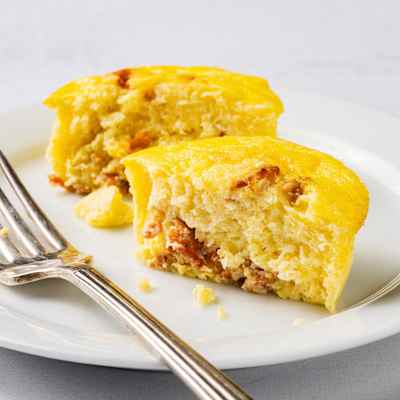
Bacon and Gruyère Egg Bites
Get the Recipe