


Crab rangoon’s rise from quirky experiment to slam-dunk crowd-pleaser is the kind of success story that most restaurateurs can only dream of.
In the late 1940s, Victor Bergeron was putting together a menu of snacks to complement the tropical rum cocktails served at Trader Vic’s, his faux tiki bar in Oakland, when he enlisted the help of his employee Joe Young.
Sign up for the Cook's Insider newsletter
The latest recipes, tips, and tricks, plus behind-the-scenes stories from the Cook's Illustrated team.
At some point along the way, the two tried mixing up fresh crabmeat with cream cheese and popular seasonings such as A.1. Steak Sauce and garlic powder, bundling the filling in wonton wrappers, and deep-frying the pockets until they were golden brown.
Their fried-wonton riff was brilliant: a crispy, creamy, savory, sweet merger of both novel and familiar ingredients and flavors that Americans devoured—and have yet to tire of.
Even now, decades after crab rangoon (confusingly named for Rangoon, now called Yangon, the largest city in Myanmar), shifted in the public eye from modern delicacy to comfort-food favorite, the dish is not only a pillar of American Chinese restaurant menus but also inspiration for an ever-growing collection of spin-offs: grilled cheese, mozzarella sticks, pizza, pasta, dips, and doughnuts—all topped, slathered, stuffed, or seasoned with that beloved creamy, savory-sweet filling.
The Imitation Game
I’m a proud devotee of the original fried wonton format and a big proponent of making crab rangoon yourself. It’s easy; it’s fun to do and impressive to serve, especially as a party snack with a dipping sauce; and filling and frying the parcels yourself is the best way to guarantee that you’ll get to enjoy them hot and fresh from the oil.
Imitation Crab Isn’t What You Think

In the food world especially, “imitation” signals a low-quality knockoff of a premium product. But here, the word “imitation” doesn’t just stigmatize the food; it completely mischaracterizes it.
A form of surimi, the Japanese paste of fish or meat developed hundreds of years ago to preserve perishable proteins, imitation crab is made from fresh mild white fish such as pollock or haddock that’s ground with starch, sometimes egg, and seasonings.
Producers then shape the sweet, springy paste into sticks and tint the surface with natural dyes to mimic the coral blush of fresh crab. Texturewise, it’s akin to fish cakes or sausages—and thanks to its neutral profile, widespread availability, and relatively low cost, it’s a prominent element in everything from California rolls, crab rangoon, and seafood salad to pizza, pasta, and creamy dips.
My filling is a classic take—by which I mean softened cream cheese cut with plenty of imitation crab.
Whether you use fresh crab or this processed fish product is a personal choice, and I will always choose imitation crab (also known as krab, surimi, or kanikama), not only because it’s much more affordable and convenient than the fresh kind, but also because it makes a more harmonious filling.
The goal here isn’t crab-forward flavor; the cream cheese and seafood should pull equal weight, each one complementing the savor and sweetness of the other.
I season the filling with a combination of minced scallions and garlic powder (fresh bite and pungency meets round, toasty allium depth), plus soy sauce, sesame oil, and sugar, since I like my rangoon filling as sweet as it is savory.
The Mythical Culture of Tiki Bars

Since the early 20th century, the word “tiki” has become synonymous with rum-based cocktails and a tropical aesthetic meant to invoke an idyllic South Pacific. Two California bars, Don the Beachcomber and Trader Vic’s, kick-started this form of romantic escapism in the 1930s, offering Depression-era Americans a domestic paradise complete with kitschy decor (including crude replicas of the sacred stone and wood carved figures known as tiki in the Ma¯ori language) and loosely Cantonese-inspired snacks like rumaki and crab rangoon. But the country’s appetite for “tiki” (also known as Polynesian pop or Poly-pop) really surged after World War II when troops returned with stories, souvenirs, and a fascination with the Pacific Islands. Though enthusiasm for the trend waned in the 1970s, retro nostalgia has somewhat revived public interest—but with a more craft-focused approach to cocktails and a growing awareness of the complicated cultural appropriation underpinning this particular slice of Americana.
On the Fold
Rangoon shapes can vary from straightforward triangular envelopes to sculptural pyramids to ornately pleated masterpieces.
I keep it basic: The triangular fold is as simple as it gets and distributes the filling evenly in the wrapper.
Plus, the triangles are sturdy and easy to manipulate while frying—and, thanks to their slim profile, they lay flat for compact storage (yes, you can make and freeze the rangoon ahead of time), don’t require a large volume of oil for frying, and crisp up in just a couple minutes.
The other great argument for DIY crab rangoon is riffing on the filling. My three variations—lemon and Old Bay, lime and jalapeño, and kimchi—preserve the requisite salty-sweet balance while adding some freshness and spice.
They taste familiar but a little more exciting, which circles back to the dish’s original appeal.
How to Fill and Shape Crab Rangoon
Sealing the wrapper airtight keeps the filling corralled during frying.

1. Use your fingertip to moisten border of 1 wrapper. Place 1 tablespoon filling in center.

2. Diagonally fold 1 corner of wrapper over filling until flush with opposite corner, creating triangle shape.
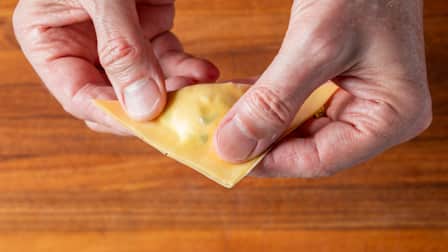
3. Press to seal edges, flattening filling to even layer and pressing out as much air as possible before sealing completely.


Crab Rangoon
The best version of this retro snack is the one you make yourself—which happens to be quick, easy, and fun.
Get the Recipe