


If I’m going to eat pasta, I want it to be packed with flavor—bold, bright, and deeply satisfying.
Two of my favorites, spaghetti al limone and cacio e pepe, are simple but effective: They’re creamy and endlessly comforting.
But as much as I love tradition, I also love playing with flavors—I’m a molecular biologist turned cookbook author with a passion for flavor science. So I wondered what would happen if, using these dishes as inspiration, I made a creamy sauce featuring sunny lemon and robust black pepper. Then, for something unexpected, I’d incorporate buzzy Sichuan peppercorns.
Sign up for the Cook's Insider newsletter
The latest recipes, tips, and tricks, plus behind-the-scenes stories from the Cook's Illustrated team.
Sichuan peppercorns are rarely used in Western pasta dishes, which made them all the more exciting to work with.
The tiny husks bring a citrusy, floral aroma and a unique tingling sensation that’s almost electric on the tongue, whereas woodsy black peppercorns contain a key chemical called piperine that makes food taste “hot.”
After putting a pot of water on to boil, I sautéed minced garlic in olive oil and then stirred in 2 teaspoons of toasted, ground Sichuan peppercorns.
When the pungent fragrance of the husks hit my nose, I poured in some chicken broth (vegetable broth works well too) and simmered until it reduced by half.
A Synergistic Triad

It may seem surprising to combine Sichuan peppercorns with lemon and black peppercorns, but the chemistry behind the triad makes sense. Lemon and the two peppercorns all abound in the same two volatile monoterpenes—refreshingly tangy limonene and floral, spicy linalool. Those overlapping flavors mean that the seasonings taste terrific together. Meanwhile, both peppercorns offer resinous-scented helpings of myrcene, and pinene gives piney notes to lemons and black pepper alike.
To turn the mixture into a cohesive sauce that could support all the bold flavors, I needed a creamy element.
Spaghetti al limone relies on heavy cream, but I took a different route, evaluating sour cream and crème fraîche in search of a richness and tang. Crème fraîche won out for its luxurious texture and balanced acidity.
For depth and umami, I turned to white miso. Italians often use anchovies to add a hit of savoriness to pasta sauces, but I wanted the option to keep the dish vegetarian. A few tablespoons of the thick paste, added with a teaspoon of freshly ground black pepper, brought rich complexity; plus, the starch in the soybeans helped thicken the sauce.
Next was the fresh punch of lemon juice and zest, which proved to be so effective that I did a little research.
Turns out that lemons belong to the same plant family as Sichuan peppercorns. They also share the aromatic molecules limonene and linalool. No wonder the flavors worked so beautifully together.
After boiling and draining a pound of spaghetti, I reserved some of the starchy cooking water to help the sauce coat every strand. Parsley for color and grated Parmesan for salty, nutty contrast rounded things out, and an extra sprinkle of Sichuan peppercorns amplified their numbing effect.
This pasta is invigorating and unexpected—just the kind of twist I love to add to the classics.
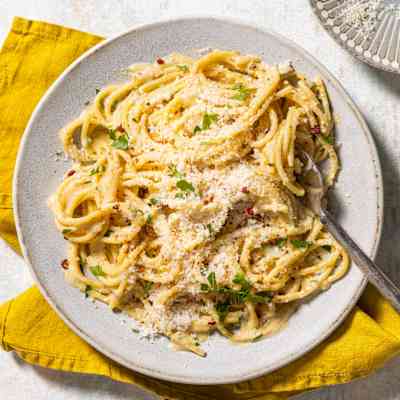
Pasta with Creamy Lemon–Sichuan Peppercorn Sauce
Add this bright and buzzy dish to your weeknight rotation.
Get the Recipe