
 Buy at Amazon

Parchment paper is a kitchen essential, especially for baking. All brands we tested performed similarly, keeping baked goods from sticking to pans and letting food brown evenly. However, not all were equally easy to handle. We have nearly identical co-winners, both from the same manufacturer; the only choice is whether you prefer unbleached or bleached parchment. King Arthur Baking Company Natural Half-Sheet Baking Parchment Paper is an unbleached precut sheet; it joins our longtime favorite, traditional bleached King Arthur Baking Company Half-Sheet Baking Parchment Paper.
Interested in reusable silicone baking mats, which can replace some functions of parchment paper? Check out our review of silicone baking mats.
Parchment paper is an excellent tool whose main function is to keep food from sticking to baking pans. Because it’s heat-, water-, and grease-resistant, parchment paper also handles a multitude of additional tasks. We use parchment for rolling out cookie dough, lining pie shells when using pie weights, transferring pizza or bread dough into a hot oven, catching drips when glazing and decorating food, for candymaking, and for cooking en papillote, the classic French technique in which food steams in a parchment pouch.
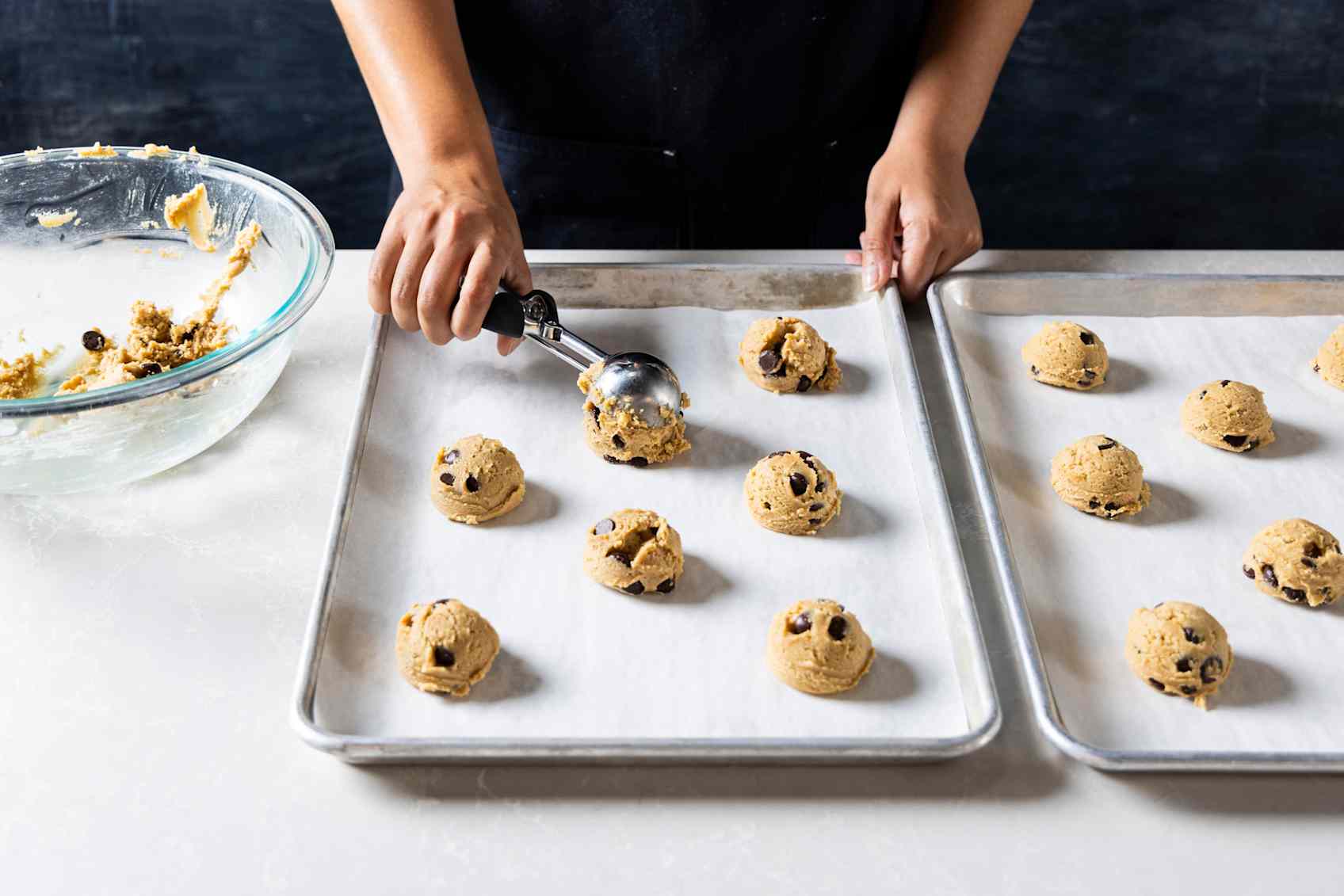


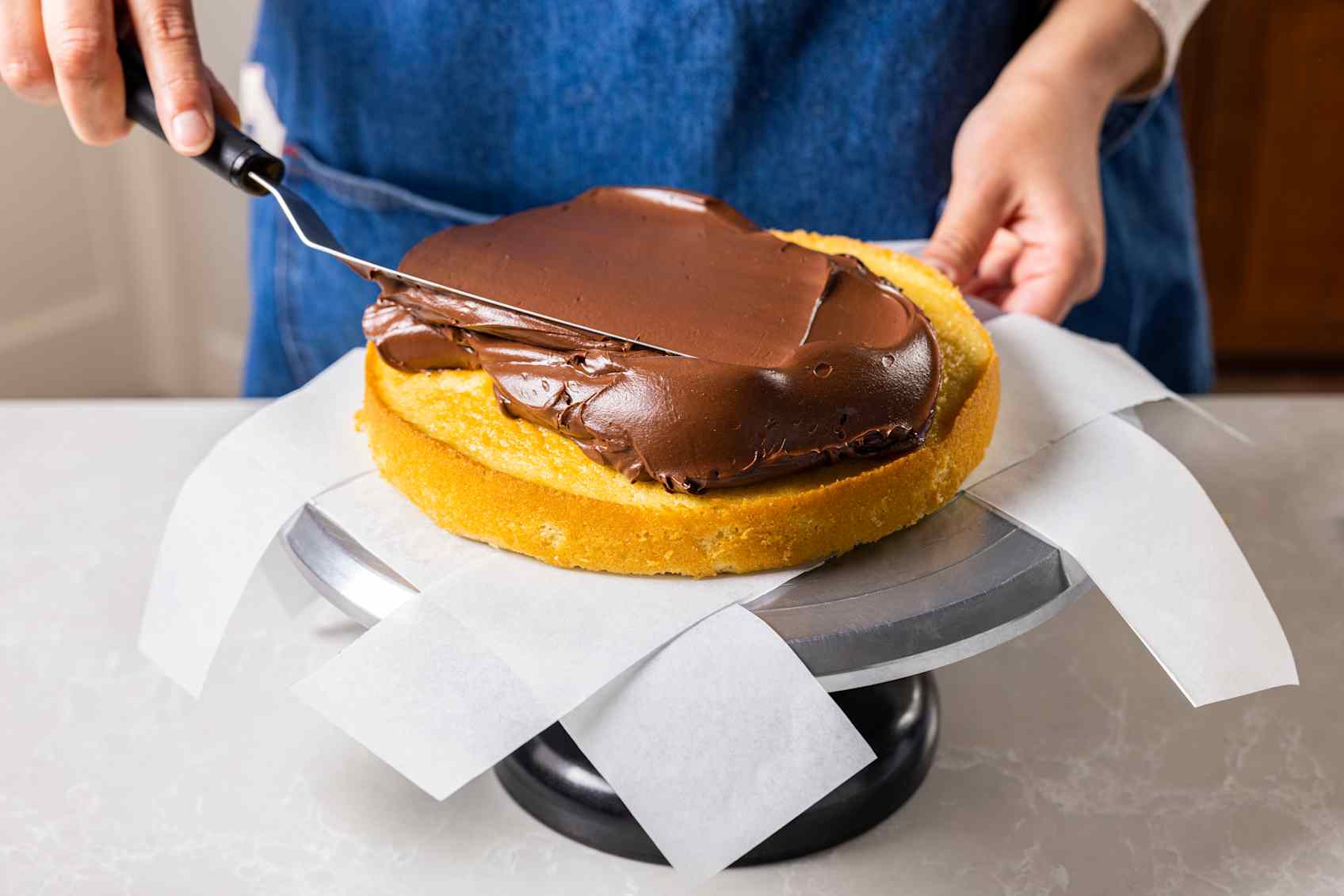
It also serves in roles as diverse as makeshift funnels or muffin-tin liners, as layers between frozen foods such as burger patties, or even as a way to keep an induction stove spotless while cooking—the list goes on.
In exhaustive testing, we have used every type of parchment to roll and bake glazed lemon and gingerbread cookies; bake and roll up jelly roll cake; line tart shells under pie weights while blind baking, and carry hot weights on that parchment to test its strength. We’ve also cooked pizzas on parchment-lined baking stones in 500-degree ovens, examining the parchment for burning or brittleness.

Our conclusion? All passed every test. We also checked the quality and performance of the multitude of new options on the market, rolling out cookies between two sheets of each parchment and baking them on parchment to compare how evenly they browned. Our results remain the same: With minor variations, every parchment performed well.
But just as we’ve always found, their ease of use was anything but equal. This made the difference between simple success and frustrating struggle.
Two Main Parchment Styles: Rolls and Sheets
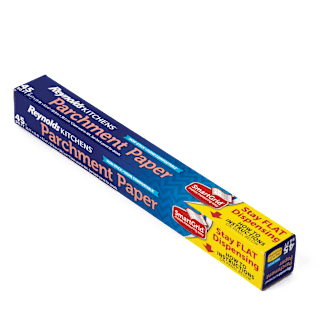
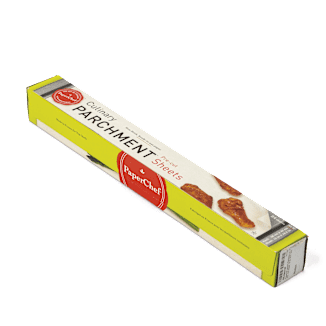
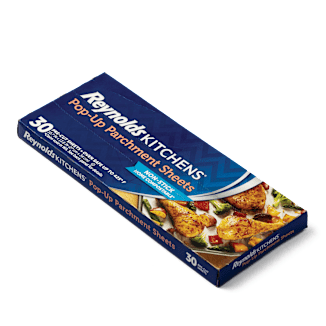
Parchment is typically sold in two formats: rolls or precut sheets. You can buy parchment rolls in supermarkets, stocked alongside the foil and cling wrap. More manufacturers have begun selling parchment sheets, cut to fit standard half-sheet pans—parchment’s most common use. These are mostly available online. Increasingly we’ve also seen specialty shapes, precut for popular sizes of baking pans (see below).


Precut sheets (left) drop neatly into standard rimmed half-sheet pans. By contrast, rolled parchment (right) typically is too big or too small to fit standard half-sheet pans and must be trimmed extensively to fit. It also tends to roll up and spring back into a cylindrical shape.
We prefer the ease of precut sheets. They need little to no trimming, saving time and preventing waste. And unlike rolled parchment, which needs to be wrestled out of its box and smoothed, our top-ranked parchment sheets store completely flat, so they also lie flat in the pan. In addition to rolls’ annoying springiness, most rolls only come in 15-inch widths, which doesn’t match either dimension of a standard half-sheet pan’s inner cooking surface of 16¼ by 11½ inches.
Do You Need Specialty Parchment Shapes?
You may come across specialty parchment shapes precut to fit cake, loaf, rectangular, and square baking pans. But do you need them?

- Rounds: These come in multiple sizes, including 6-, 8-, 9-, 10- and 12-inch circles, some with easy-lift tabs, in bleached and unbleached parchment. We tested four typical brands in the 9-inch size, baking yellow layer cakes using our usual cake-pan prep technique. We coated the pan with nonstick cooking spray, placed and sprayed the parchment round, and then lightly floured the pan. All cake layers baked well and released easily on rounds with or without tabs, so we don’t find tabs necessary. Precut rounds are convenient and save time if you frequently bake cakes. Otherwise, you don’t need them; it’s easy to trace your pan on a piece of regular parchment and cut to fit into the pan bottom.
- Squares: We tested an 8-inch precut parchment square with easy-lift tabs by making a batch of brownies. (Typically we’d use an aluminum foil sling for instantly lifting brownies, bar cookies, or some snack cakes out of both square and rectangular pans.) First, we had to use a butter knife to release the sides of the brownies, since unlike our foil sling, the precut square only covered the pan bottom. Then, the parchment’s tabs were flimsy and couldn’t lift the whole slab of brownies; the brownies began to rip apart on either side of the tabs. Eventually they emerged from the pan intact—but we’ll stick to the foil sling. If you’re out of foil, it’s also easy to create a sling from, you guessed it, sheets of regular parchment.
- Loaf Pan Liners: Loaf pans vary slightly in width and length, so you have to shop carefully to ensure that precut parchment liners will fit your pan. We’ve also rarely had a problem removing loaves and quick breads from loaf pans.
- 13 by 9-inch Baking Pan Liners: As with square baking pans, we prefer a foil sling with the heft to lift out larger baked goods intact. We also noted that many loaf and rectangular pan liners were preshaped with rounded corners, which are compatible with glass pans but do not fit well in metal bakeware that has very sharp corners.
Bleached versus Unbleached Parchment: What’s the Difference?
Parchment is made from wood pulp that’s treated with sulfuric acid to reduce it to simple cellulose, then bleached and formed into paper; it’s then coated with silicone to improve strength, heat-resistance, and nonstick qualities. Though all bleach is rinsed away, this wastewater has an environmental impact. Unbleached parchment omits the bleaching step. White, bleached parchment is traditional, but more brands now also offer brown, unbleached parchment.
Aside from color, the main difference between bleached and unbleached parchment is their oven-safe temperature rating. Manufacturers usually list about 425 degrees as the maximum for unbleached parchment, compared to about 450 degrees for bleached (manufacturers confirmed that using parchment at higher-than-recommended temperatures does not release noxious chemicals and that the paper won’t ignite). We tested to learn whether this mattered, cutting one bleached and one unbleached sheet in half and putting halves on a baking sheet in the oven at 425 degrees for 20 minutes, then another 20 minutes at 450 degrees, and 20 more minutes at 500 degrees. Both bleached and unbleached sheets darkened, but neither burned, emitted fumes, or became overly brittle after an hour at increasing temperatures. We concluded that both can safely go in 500-degree ovens. (Of course, keep parchment paper away from direct contact with heating elements or open flames.)

Furthermore, the sheets’ color didn’t change baking times or outcomes. We baked Easy Holiday Sugar Cookies on every bleached and unbleached parchment in our lineup. All baked evenly; cookies had the same coloring across each sheet, top and bottom, no matter whether the parchment was bleached or unbleached. We concluded that you can use bleached and unbleached parchment interchangeably. For more information, see our guide to using parchment at high temperatures.

We also noted that it doesn’t matter which side of a sheet of parchment you use: While you can detect slight textural differences in some products from one side of the paper to the other, it doesn’t affect how the parchment performs.
Why is it called parchment paper?
The word “parchment” originally referred to high-quality, durable writing material made from animal skin (usually goat, sheep, or cow). Animal parchment has been in use since the time of the ancient Greeks for important documents, including the U.S. Constitution and Declaration of Independence. It’s also called “vellum,” a term originating in France, where it was made from the skin of young cows, or veau. Parchment paper as we know it today was invented in the 19th century. Wood pulp was immersed in water and sulfuric acid, which created a type of paper that mimicked the durability, flexibility, and water resistance of animal parchment. To this day, parchment paper made for the kitchen is often called vegetable parchment to distinguish it from the original animal type. You’ll also see it referred to as “genuine vegetable parchment,” or GVP, “baking paper,” and “culinary parchment paper.”
What to Look for
- Precut Sheets: We prefer parchment sold precut to fit a standard half-sheet baking pan without trimming. Dispensing the right size from a roll or adjusting oversized parchment takes more patience than we have when we’re busy baking. Untrimmed parchment that’s bunched up, creased or folded, or hung over the sides of a pan mars the appearance of delicate baked goods. Oversize parchment can also get in the way when you’re handling pans.

- Easy-to-Use Packaging: Retrieving parchment from a flimsy, broken, or too-rigid package can damage the paper you need. Flat packaging that opens fully for easy dispensing makes lining a pan supersimple
What to Avoid
- Rolls: Rolled paper usually didn’t lie flat in pans. And most rolls were far too wide to fit pans without adjustments; we would be forced to choose between orienting the paper in a way that leaves naked sections on each side of the baking sheet or trimming the paper, leaving us with scraps that are too small to use for anything else.

- Flimsy, Awkward Boxes: Shoddy boxes with dull cutting edges made it impossible to dispense or cut paper to our desired length without ragged edges. One brand’s precut sheets came in a poorly designed box that bent the paper’s edges as we retrieved each sheet. Another came in a small box with folded sheets. It was easy to store, but the folds left creases in the parchment that imprinted on baked goods. This is not a deal-breaker for cookies if you’ll never see their undersides, but it’s undesirable when rolling out cookie dough between sheets of parchment or when making delicate baked goods such as tuiles, where surface texture matters.

Minor Flaws
- Slick Texture: Since silicone can be made in different formulations and applied to parchment thinly or more thickly, parchment paper’s texture and finish can vary. Some parchments had such a slippery texture that they were harder to handle. When we tried to roll dough between two sheets, our rolling pin spun in place at first instead of pushing forward.
The Tests
- Roll cookie dough between two sheets of parchment paper
- Line cookie sheets, then bake cookies
- Bake jelly roll cake on rimmed baking sheet, then roll cake using fresh sheet of parchment
- Transfer pizza on parchment to 500-degree oven and bake
- Line tart shell with parchment, then fill with pie weights for blind baking
- Evaluate strength and durability of product packaging
- Compare heat resistance of bleached versus unbleached parchment at 425 degrees, 450 degrees, and 500 degrees
- For rolls: Tear off roughly 16 by 12-inch sheets and note ease of achieving appropriate size and neat edge
- For precut squares: Bake brownies in 8-inch square baking pan
- For precut rounds: Bake yellow cake in 9-inch baking pan
How We Rated
- Performance: We considered how easy it was to prepare a variety of baked goods and pizza with each parchment. We noted the quality of the food and the condition of paper after baking.
- Size: We noted if the parchment paper fit in standard rimmed baking streets straight from the package or with minimal trimming and whether they laid flat.
- Handling: We considered how easy it was to manipulate the parchment and use it to line cookie sheets and rimmed baking sheets.
- Packaging: We evaluated the design and construction of the packaging.


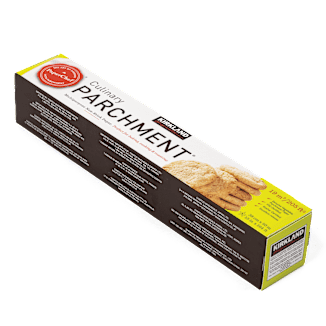
 Buy at Costco