
 Buy at Amazon
The best muddlers are durable and relatively long, and they have dedicated handles that make them easy to grip. Our longtime favorite is the Fletcher’s Mill Maple Muddler. At 11 inches long, it stood tall in every vessel we tried it with. It was moderately heavy, with an indented, unvarnished wood body that was especially easy to grip. Testers particularly liked that it was double-ended, with one big head and one small head. These allowed us to muddle in different-size vessels and to muddle different drinks with each head while keeping the flavors separate.

If you like making mojitos, mint juleps, or old-fashioneds at home, you might want to consider getting a muddler. This essential bar tool is used to crush fruit and herbs to express their juices and/or oils, which give your drinks the full, complex, vibrant flavor they should have.

Muddlers come in different sizes and materials. But after extensive testing, we’re happy to report all the muddlers we’ve tried are capable of making decent drinks. That said, some factors made certain models more durable, easier to use, and better performers overall.
How to Use a Muddler

- Add your citrus and/or herbs to the vessel in which you want to muddle—usually this is the cocktail shaker itself, but in some cases (such as when making a caipirinha or an old-fashioned), this can be the glassware in which you intend to serve the drink.
- Grip the muddler securely and then press firmly into the citrus and/or herbs, rotating the handle slightly as you do, until all the juice has been expressed from the fruit or until the herbs are fragrant. This can take between 20 and 30 seconds, depending on the muddler you’re using and the freshness of your ingredients.
What to Look for
- Moderate Length: It’s important that your muddler is tall enough to work with the cocktail shaker or mixing glass you’re using it with. Because the mixing cups of most cocktail shakers (including our winners) are 6 or 7 inches tall, we preferred muddlers that were at least 9.5 inches long, and longer was better. The longer the model, the taller it stood in the shaker, and the more of it there was to grip as we pounded limes and mint.

- Grippy Material: Models made from unvarnished wood or bamboo were a bit easier to hold securely than models made from smooth plastic or varnished wood, especially with wet hands. Wood and bamboo must be dried after cleaning or they can crack, but we think a little care is a small price to pay for superior handling. We also liked one model with a metal body and a rubbery handle; it was also easy to hold and even more durable than the wood and bamboo models.
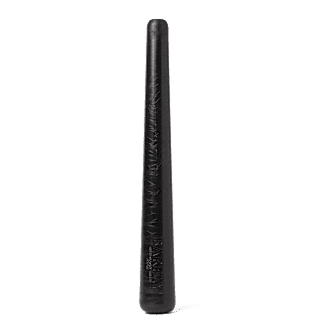
- Discrete Handle: We also liked muddlers that had clear, distinct handles or at least a bit of a taper or indentation between the muddling end and the end meant to be held. With no indentations, cylindrical models were a bit harder to grasp for longer periods since they didn’t provide a natural resting place for our hands.
We liked muddlers with indentations that formed clear handles. These were easier to grip securely during use than cylindrical muddlers with no discrete handles.
- Broad Heads: We preferred muddlers with heads that were at least 1.5 inches in diameter. Smaller heads couldn’t cover as much territory as quickly and took longer to get all the juice out of the limes.
- Moderate Weight: We preferred models with a little heft; 5 to 7 ounces was ideal, allowing gravity to do some of the work for us without making the muddler tiresome to use. Lighter models required us to use a bit more force, and much heavier models (including one that weighed nearly a pound) fatigued our arms during longer sessions and felt cumbersome and a little dangerous in the old-fashioned glass.
What to Avoid
- Short Length: Shorter models worked well enough when we muddled sugar cubes in a squat old-fashioned glass. But when we used them with our favorite cocktail shakers, they left only a stubby inch or so to grab on to, making them hard to use.
- Lacquered Wood: We’ve found that the lacquered coating on certain wood muddlers can erode or dissolve entirely after repeated use and washing. While at least one of the manufacturers claims that this lacquer is food-safe, we’d prefer to limit our drink ingredients to the ones in our recipes.

Other Considerations
- Textured versus Smooth Heads: The style of the head itself can make a small difference in the flavor of a finished drink. Some professional bartenders claim that muddlers with textured heads—heads covered with a nubbly grid or bumps—make bitter or muddy-tasting drinks because they dig too deeply into citrus pith and tear up herbs, promoting undesirable chemical reactions. We did not find this to be the case: While the textured muddlers shredded the herbs and abraded the citrus peel more extensively than smooth muddlers did, the drinks made with these more aggressively muddled ingredients were still perfectly acceptable. Some tasters even preferred drinks made by textured muddlers, since their grinding action may have helped extract more oils and flavor compounds from the ingredients, resulting in somewhat more fragrant, complex drinks than those made by the smooth muddlers. In the long run, we found differences fairly negligible: You can’t go wrong with either style of head; both types made good drinks.

The Tests
- Muddle limes in top Easiest to Use cocktail shaker
- Muddle mint leaves in top cobbler shaker
- Muddle sugar cubes with bitters in old-fashioned glass
- Make mojitos in top Boston shaker
- Leave in mixture of gin, water, and lime juice overnight
- Wash 10 times by hand or in dishwasher
How We Rated
- Ease of Use: We evaluated how comfortable the models were to grip, muddle, and maneuver.
- Durability: We evaluated how well the muddlers stood up to staining and moisture.
- Performance: We rated how well and how quickly the models muddled different ingredients.



 Buy at Cocktail Kingdom