America's Test Kitchen LogoCook's Country LogoCook's Illustrated LogoAmerica's Test Kitchen LogoCook's Country LogoCook's Illustrated Logo

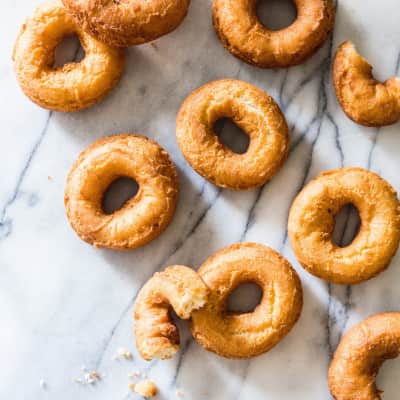
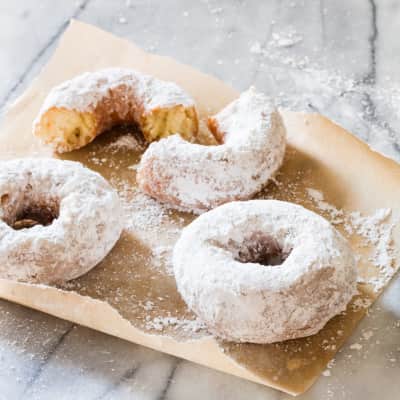
Cinnamon-Sugared Buttermilk Doughnuts

By America's Test Kitchen

Published on October 8, 2012

Time

50 minutes

Yield

Makes 15 to 17 doughnuts

Cinnamon-Sugared Buttermilk Doughnuts

Ingredients

3 ½ cups (17 ½ ounces/496 grams) unbleached all-purpose flour, divided2 cups (14 ounces/397 grams) sugar, divided½ teaspoon baking soda 2 teaspoons baking powder 1 teaspoon table salt 1 ½ teaspoons fresh grated nutmeg ¾ cup buttermilk 4 tablespoons unsalted butter, melted2 large eggs 1 egg yolk 6 cups vegetable shortening for frying1 ½ tablespoons ground cinnamon

Before You Begin

For a bit more flavor, add two ounces of lard to every cup of shortening. You can also add one-quarter cup of flour to the recipe, which will produce a chewier doughnut with a less crispy exterior. Regardless, these doughnuts are best eaten very warm, as soon out of the pot as possible. The dough can be made by hand, using a large bowl with a wooden spoon, or in a mixer as directed. If you don’t have a donut cutter, you can use a 3-inch and 1-inch round cutter to cut out the dough. Like cookies, doughnuts rolled from scraps will be a little drier and less crisp than those cut from the first roll.

Instructions

  1. Stir 1 cup flour, 1 cup sugar, baking powder, baking soda, nutmeg, and salt together in bowl of stand mixer. Whisk buttermilk, butter, eggs, and yolk together in 2-cup liquid measuring cup.
  2. Fit stand mixer with paddle attachment, add wet ingredients to dry and mix on medium speed until smooth, about 30 seconds. Decrease speed to low, add remaining 2 ½ cups flour and mix until just combined, about 30 seconds. Stir batter once or twice with wooden spoon or rubber spatula to ensure that all liquid is incorporated. (The dough will be moist and tacky, a cross between cake batter and cookie dough.)
  3. Heat shortening in large Dutch oven over medium-low heat to 375 degrees. While oil is heating, line rimmed baking sheet with parchment paper and lightly dust with flour. Turn dough onto well-floured work surface. Roll with heavily floured rolling pin to 1/2-inch thick. Stamp out dough rings with heavily floured doughnut cutter, reflouring between cuts. Transfer dough rounds and holes to prepared baking sheet. Gather scraps and gently press into disk; repeat rolling and stamping process until all dough is used. (Cut doughnuts can be covered with plastic wrap and stored at room temperature up to 2 hours.)
  4. Set wire rack in second rimmed baking sheet and line with triple layer of paper towels. Using your hands, carefully place dough rings into hot fat four or five at a time, depending on kettle size, adjusting burner as necessary to maintain oil temperature between 360 to 365 degrees. Using spider skimmer, turn doughnuts as they rise to surface. Fry doughnuts until golden brown, 50 to 60 seconds per side. Drain on prepared baking sheet. Return oil to 375 degrees and repeat with remaining doughnuts. For doughnut holes, transfer all to hot oil and stir gently and constantly until golden brown, about 2 minutes.
  5. Mix remaining 1 cup sugar with cinnamon in small bowl. Cool doughnuts about 1 minute and toss with cinnamon sugar to coat.
Cinnamon-Sugared Buttermilk Doughnuts

Cinnamon-Sugared Buttermilk Doughnuts

Headshot of America's Test Kitchen
By America's Test Kitchen
Save

Time

50 minutes

Yield

Makes 15 to 17 doughnuts

Ingredients

3 ½ cups (17 ½ ounces/496 grams) unbleached all-purpose flour, divided
2 cups (14 ounces/397 grams) sugar, divided
½ teaspoon baking soda
2 teaspoons baking powder
1 teaspoon table salt
1 ½ teaspoons fresh grated nutmeg
¾ cup buttermilk
4 tablespoons unsalted butter, melted
2 large eggs
1 egg yolk
6 cups vegetable shortening for frying
1 ½ tablespoons ground cinnamon

Test Kitchen Techniques

Ingredients

3 ½ cups (17 ½ ounces/496 grams) unbleached all-purpose flour, divided
2 cups (14 ounces/397 grams) sugar, divided
½ teaspoon baking soda
2 teaspoons baking powder
1 teaspoon table salt
1 ½ teaspoons fresh grated nutmeg
¾ cup buttermilk
4 tablespoons unsalted butter, melted
2 large eggs
1 egg yolk
6 cups vegetable shortening for frying
1 ½ tablespoons ground cinnamon

Test Kitchen Techniques

Ingredients

3 ½ cups (17 ½ ounces/496 grams) unbleached all-purpose flour, divided
2 cups (14 ounces/397 grams) sugar, divided
½ teaspoon baking soda
2 teaspoons baking powder
1 teaspoon table salt
1 ½ teaspoons fresh grated nutmeg
¾ cup buttermilk
4 tablespoons unsalted butter, melted
2 large eggs
1 egg yolk
6 cups vegetable shortening for frying
1 ½ tablespoons ground cinnamon

Test Kitchen Techniques

Why This Recipe Works

One of the secrets to the best buttermilk doughnut recipe was the right frying medium. Vegetable shortening in the form of Crisco produced a much less greasy doughnut than vegetable oil or peanut oil. Temperature was important, too, for our buttermilk doughnut recipe. At 350 degrees, the dough absorbed too much oil; at 385 degrees the outside started to burn before the inside could cook through. We got our best results by bringing the oil up to 375 degrees before adding the doughnuts; it would fall back to 360-365 degrees once the doughnuts were dropped in.

Before You Begin

For a bit more flavor, add two ounces of lard to every cup of shortening. You can also add one-quarter cup of flour to the recipe, which will produce a chewier doughnut with a less crispy exterior. Regardless, these doughnuts are best eaten very warm, as soon out of the pot as possible. The dough can be made by hand, using a large bowl with a wooden spoon, or in a mixer as directed. If you don’t have a donut cutter, you can use a 3-inch and 1-inch round cutter to cut out the dough. Like cookies, doughnuts rolled from scraps will be a little drier and less crisp than those cut from the first roll.

Instructions

  1. Stir 1 cup flour, 1 cup sugar, baking powder, baking soda, nutmeg, and salt together in bowl of stand mixer. Whisk buttermilk, butter, eggs, and yolk together in 2-cup liquid measuring cup.
  2. Fit stand mixer with paddle attachment, add wet ingredients to dry and mix on medium speed until smooth, about 30 seconds. Decrease speed to low, add remaining 2 ½ cups flour and mix until just combined, about 30 seconds. Stir batter once or twice with wooden spoon or rubber spatula to ensure that all liquid is incorporated. (The dough will be moist and tacky, a cross between cake batter and cookie dough.)
  3. Heat shortening in large Dutch oven over medium-low heat to 375 degrees. While oil is heating, line rimmed baking sheet with parchment paper and lightly dust with flour. Turn dough onto well-floured work surface. Roll with heavily floured rolling pin to 1/2-inch thick. Stamp out dough rings with heavily floured doughnut cutter, reflouring between cuts. Transfer dough rounds and holes to prepared baking sheet. Gather scraps and gently press into disk; repeat rolling and stamping process until all dough is used. (Cut doughnuts can be covered with plastic wrap and stored at room temperature up to 2 hours.)
  4. Set wire rack in second rimmed baking sheet and line with triple layer of paper towels. Using your hands, carefully place dough rings into hot fat four or five at a time, depending on kettle size, adjusting burner as necessary to maintain oil temperature between 360 to 365 degrees. Using spider skimmer, turn doughnuts as they rise to surface. Fry doughnuts until golden brown, 50 to 60 seconds per side. Drain on prepared baking sheet. Return oil to 375 degrees and repeat with remaining doughnuts. For doughnut holes, transfer all to hot oil and stir gently and constantly until golden brown, about 2 minutes.
  5. Mix remaining 1 cup sugar with cinnamon in small bowl. Cool doughnuts about 1 minute and toss with cinnamon sugar to coat.


Gift This Recipe

Enjoyed this dish? Let others know by sharing it as a gift recipe.

This is a members' feature.