Cacio e Pepe
By Steve DunnPublished on April 1, 2025
Time
40 minutes
Yield
Serves 4
Ingredients
Before You Begin
We like thick spaghetti here as it most closely resembles tonnarelli, the traditional pasta used in Rome, but regular spaghetti can be used. Warming the serving bowls helps keep the pasta hotter longer, ensuring that the sauce stays fluid. In step 2, use a bowl that’s large enough to sit over the Dutch oven. Try to work quickly when removing the pasta from the Dutch oven, since the sauce will tighten as the pasta cools.
Instructions
- Toast 4 teaspoons black peppercorns in Dutch oven over medium heat, stirring occasionally, until fragrant, 3 to 4 minutes.
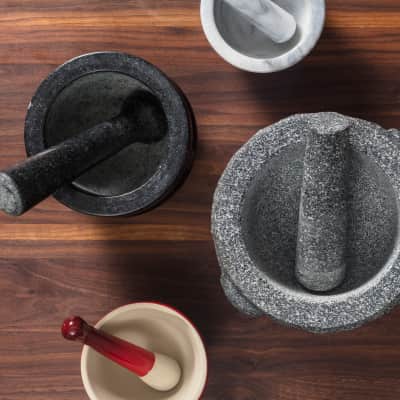
- Transfer peppercorns to spice grinder or mortar and pestle and grind until coarsely ground. Transfer 1½ teaspoons of pepper to large heatproof bowl and set aside. Reserve remaining pepper for serving.
- In food processor, process 7 ounces of Pecorino Romano cheese cut into ½-inch pieces until finely ground, about 2 minutes.
- With processor running, slowly add ¼ cup hot water and process until spoonable, homogeneous paste forms (consistency should resemble thick yogurt or sour cream), about 1 minute. (If paste has stiff, cream cheese–like consistency, continue processing, adding up to an additional ¼ cup hot water, 2 teaspoons at a time.) Scrape down sides of bowl and continue to process until smooth (paste will still look slightly grainy), 1 minute longer. Transfer cheese paste to bowl.
- Bring 2 quarts water to boil in now-empty Dutch oven. Add 12 ounces thick spaghetti and ½ teaspoon table salt and cook, stirring often, until al dente.
- Just before pasta finishes cooking, reserve 1 cup cooking water. Add 2 tablespoons of reserved cooking water to pepper in large bowl.
- When pasta is al dente, use tongs to quickly transfer pasta to bowl with pepper (do not drain water in Dutch oven). Add ¼ cup reserved cooking water and half of cheese paste and vigorously toss and stir pasta with tongs until paste is melted, 1 to 2 minutes.
- Add remaining paste and continue to toss and stir until paste is melted and pasta is coated in glossy, lightly thickened sauce, 1 to 2 minutes longer, adjusting consistency with remaining reserved cooking water as needed. (If pasta cools and sauce seems stiff, set bowl over Dutch oven and use residual heat from pasta water to gently rewarm while stirring, no longer than 30 to 60 seconds.)
- Serve immediately in warmed bowls, passing reserved pepper and grated cheese separately.


Time
40 minutesYield
Serves 4Ingredients
Test Kitchen Techniques
Ingredients
Test Kitchen Techniques
Ingredients
Test Kitchen Techniques
Why This Recipe Works
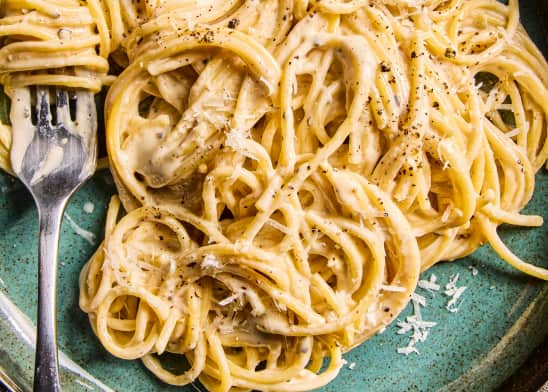
Traditional cacio e pepe, made with just strand pasta, its starchy cooking water, black pepper, and Pecorino cheese, is simple yet savory, bright, and complex. We wanted a recipe for cacio e pepe that hewed to tradition without relying on any oil, cream, or butter to facilitate the formation of the emulsified sauce, as this distracted from the pasta’s titular ingredients. To achieve a smooth sauce without any added ingredients, we used a food processor to prehydrate and pulverize the cheese into a smooth paste that easily melted into the freshly cooked pasta. We cooked the pasta in only half as much water as we would normally use so that the water got superstarchy (starch is an excellent stabilizer of emulsions). Then, we tossed the pasta with the cheese paste and pasta water off the heat and added the ingredients in stages, which ensured that the cheese wouldn’t get too hot and form clumps.
Want more? Read the whole story






86 Comments