

 Buy at Amazon
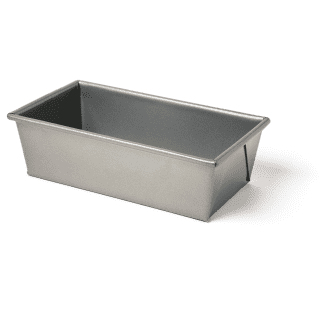
Our favorite loaf pans are inexpensive and make great cakes and loaves of bread. We chose two co-winners. If you want a loaf pan that makes especially attractive baked goods, with crisp, professional-looking edges, we recommend the USA Pan 1 lb Small Loaf Pan. For those who want a loaf pan that’s especially easy to clean, we recommend the USA Pan 1 lb Seamless Loaf Pan. While some folks found that its rounded edges made slightly less impressive-looking loaves, it was a breeze to clean.

Loaf pans are a must‑have for zucchini breads and banana breads, sandwich loaves, and pound cake. We also use loaf pans for more intricate baked goods, such as brioche and babka.
All the loaf pans we tested turned out nice cakes and breads; our preferences came down to small differences in shape, material, and dimensions that affected the appearance of the foods we made and how easy the pans were to use. Given that a number of models we tested performed equally well, we chose winners based on price.


A great loaf pan is a must-have to make attractive baked goods like brioche and pound cake.
What’s the Best Material for a Loaf Pan?
Loaf pans are available in metal, glass, ceramic, and occasionally silicone. The exact type of material can affect how your treats bake and how easy the pans are to handle and clean.
- Metal: We generally prefer baking in metal loaf pans. All the metal models we tested were made from thin steel which heats quickly, thanks to its light weight, (our favorite pans weigh 1 pound or less). In general, this means that loaves made in metal pans will bake faster than those made in glass and ceramic, though the capacity and dimensions of the pan can also factor into timing. Unlike glass or ceramic models, metal pans won’t break if accidentally dropped. Most metal loaf pans have a nonstick coating, which helps them to release baked goods easily; the specific type of nonstick coating varies and may be silicone, ceramic, or may contain polytetrafluoroethylene (PTFE). Metal loaf pans with nonstick coatings shouldn’t be used at temperatures above 450 degrees (although bread and cake recipes don’t typically call for higher temperatures anyway). You also can’t use metal utensils to cut directly in pans with nonstick coatings, as this can damage the coating. All nonstick coatings degrade with use, so bakeware made with them will eventually need to be replaced. You can extend the life of your nonstick-coated loaf pan if you avoid cutting in it with a metal utensil and wash it by hand. They are fairly affordable; our top-ranked metal loaf pans cost around $20 or less.
- Glass: Glass loaf pans can also perform well. They’re heavier than metal pans, closer to 2 pounds, and they conduct heat more slowly than metal, so food can take longer to bake. Because of the way glass pans are constructed, they produce baked goods with rounded edges, which some folks found to be a bit less attractive. They’re transparent, so it’s easier to monitor browning in glass loaf pans. Although glass pans are heavier, they’re more likely to have handles, which makes them easier to maneuver. Of course, glass pans are more susceptible to breaking if dropped. Baked goods stick to glass more easily, so you’ll need to grease the pans well in order to get the loaves to release. Glass loaf pans are relatively inexpensive—our recommended glass model is less than $20. We find them a tad harder to use, but a good glass pan can last a lifetime and is a solid option if you want to avoid nonstick coatings.
- Ceramic: Ceramic loaf pans are pretty, often coming in beautiful patterns and colors. These pans are on the heavy side—well over 2 pounds—and they conduct heat more slowly than both glass and metal pans. As a result, cakes and breads may take longer to bake. Ceramic loaf pans typically produce baked goods with rounded edges, which we found to be a little less visually appealing. The ceramic pans we tested had handles, which helped us move these heavy pans in and out of the oven. They’re susceptible to breaking when dropped, and as with glass, baked goods can sometimes stick to them a little more readily than with metal pans. Ceramic pans can be pricey; both models we tested were over $50.
- Silicone: Silicone loaf pans are less common, but some people are drawn to this lightweight material. While they mostly made acceptable baked goods, we don’t recommend them. Because they’re intrinsically flexible, they’re just more difficult to use—we were constantly worried that we’d bend them and spill some liquidy batter. They also retained odors and stains after cleaning.

What Are the Different Types of Metal Loaf Pans?
Metal baking pans are constructed in two ways—folding and molding. On folded pans, the metal is folded together at the ends, like wrapping paper at the end of a box, forming right angles.Those sharp edges produced the best-looking loaves with crisp, professional edges. The main downside is that these pans are trickier to clean, as the folded edges can catch crumbs and residue. They can also trap water, which makes these pans more prone to rusting.

Molded pans are typically made by pressing a hot, pliable sheet of metal into a loaf-shaped form and then pressing it tight against the walls and corners, which creates pans with gently curved corners similar to those you’ll see in glass and ceramic pans. As a result, molded pans create loaves with rounded edges. Baked goods made in them still taste great, but some people find them to look a little less polished and professional. The molded pans that we tested had a rim, which made them a little easier to grab. These pans are also easier to clean because there are no nooks and crannies.
Both types of pans can make great loaves. If your priority is professional-looking cakes with crisp edges, a folded metal pan is your best bet. For the easiest cleanup, look for a molded pan with rounded edges.
Other Considerations
- Dark vs. Light Pans: Metal and ceramic loaf pans vary in color. Regardless of material, dark pans absorb more heat than light ones, so cakes baked in them will bake more quickly and may brown a little more deeply. Both dark and light pans can make great baked goods; you may just have to bake them a little longer or shorter depending on the color of the pan.
- Pan Dimensions: Pan size affects the shape of baked goods and the speed at which they bake. Our favorite pans measured 8.5 x 4.5 x 2.75 inches and created cakes and breads that rose straight up and had rounded tops. They looked like they had come straight out of a bakery case. Pans that measured closer to 9 x 5 x 3 inches made acceptable cakes and breads that tasted great; they just turned out shorter and wider. Because the batter was spread in a thinner layer, loaves baked more quickly; if your pan has dimensions similar to the 9-inch versions we tested, you may need to check the doneness of your baked goods earlier than indicated in recipes.

- Handles: Heavier pans, like those made of glass or ceramic, often have handles. We found these to be particularly helpful when lifting pans in and out of the oven. Metal pans typically don’t have handles, but this didn’t bother us because they were so lightweight.

How We Tested
- Bake pound cake, then run a plastic knife around the edges to loosen it
- Bake sandwich bread, then run a plastic knife around the edges to loosen it
- Bake lasagna, then run a paring knife around the edges to loosen it
- Wash 10 times, by hand or in a dishwasher, according to manufacturer recommendations
How We Rated
- Performance: We evaluated whether the loaf pans produced attractive, high-quality breads and cakes.
- Ease of Use: We considered how heavy the pans were and whether their handles made them easier to maneuver in and out of the oven.
- Cleanup/Durability: We evaluated how easy the pans were to wash and whether they scratched or sustained other damage throughout testing.

 Buy at Williams Sonoma