
 Buy at Amazon

The best tart pans are easy to use and yield professional-looking tarts. After baking different styles of crusts and tarts, we can recommend most of the pans in our lineup. We chose two co-winners due to their wide availability and lower price point. The Fox Run 9" Loose Bottom Tart/Quiche Pan produced evenly browned crusts, and it was easy to remove the bottom and outer ring. The USA Pan 10-Inch Tart Pan produced similarly crisp, professional-looking tarts that were a touch wider but equally appealing.

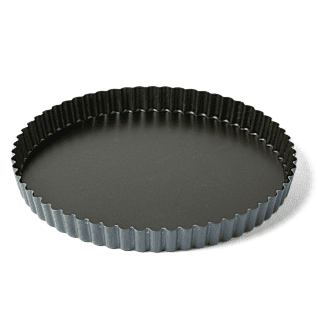
If you make a lot of tarts, a great tart pan should be part of your bakeware arsenal. Tart pans give these baked goods an attractive, fluted crust with no freehand crimping required. Unlike a classic pie plate, which is a continuous piece of glass, ceramic, or metal, tart pans typically consist of two parts: a thin, flat metal bottom and a fluted ring that you remove after baking and cooling the tart. They’re typically made of aluminum, stainless steel, or carbon steel, and almost always have a nonstick coating. There are some single-piece ceramic “tart pans” on the market, but we chose to include only metal tart pans with removable bottoms in this review because this format makes it easier to create neat, tidy slices.


Metal tart pans with removable bottoms can be used to bake both pat-in-the-pan crusts and rolled-out tart doughs.
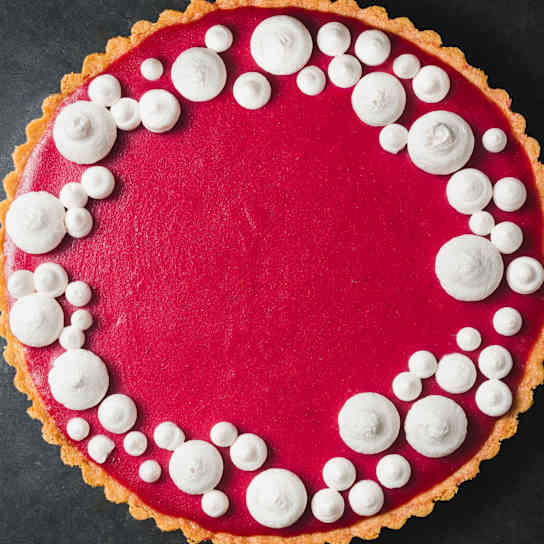
We put our tart pans to the test with two types of classic tart crusts: pat-in-the-pan (a simple dough that is pressed directly into the pan) and a more traditional pâte sucrée that is rolled out and then placed in the pan. We then used the blind-baked pâte sucrée crusts to make Classic Lemon Tarts with each pan.
What to Look for
- Stainless Steel or Carbon Steel: Most of the pans we tested were made of stainless steel or carbon steel, which we preferred. These materials conduct heat more slowly than aluminum. Because the sides and bottom don’t heat up significantly faster than the center of the tarts, the filling of our lemon tarts was silky and evenly baked.
- Shallow Flutes: All of the tart pans in our lineup had removable fluted rings, but the number of flutes and their depth varied from model to model. We preferred models with fairly shallow flutes, which were easier to place crusts into. These pans produced tarts with crisp-edged crusts, and they were also quicker to clean.

- Nonstick Coating: No one wants to go through the effort of baking a picture-perfect tart only to have it stick to the pan. Almost all the tart pans in our lineup had a nonstick coating, which helped both baked tart crusts and filled tarts to release effortlessly.
What to Avoid
- Aluminum: Aluminum has a higher thermal conductivity than steel, which means it heats up more quickly. While this is a positive for baking sheets when we’re looking for deeply browned chicken skin or crispy potatoes, it’s problematic for tart pans. Lemon tart filling quickly bubbled on the outside before the inside could set up, due to the heat from the bottom and sides of the pan.

- Deep Flutes: One of the pans in our lineup had deep flutes to produce crusts that more closely resembled a classic pie than a tart. While we didn’t mind the appearance of the crust this pan yielded, it was trickier to gently push a delicate pâte sucrée dough into the deep flutes without tearing it. It was also more difficult to reach into its crevices with a sponge in order to clean it.
Other Considerations
- Dimensions: Standard tart pans can be anywhere from 8 to 10 inches in diameter. Although most of our tart recipes were developed using a 9-inch pan, 8-inch and 10-inch models will work just fine. Just know that tarts may be slightly thicker and taller or thinner and shorter, respectively. It’s also a good idea to pay attention to visual cues and check for doneness sooner than indicated in the recipe instructions.
The Tests
- Bake pat-in-the-pan crust from French Apple Tart
- Bake pâte sucrée from Classic Lemon Tart
- Bake Classic Lemon Tart with filling
How We Rated
- Performance: We evaluated the evenness of browning on the crust, the crispness of the fluted edges, and the quality of curd filling.
- Ease of Use: We assessed how easy it was to place different types of crusts in the pan and to release them after baking, as well as how easy the pans were to clean.


 Buy at Williams Sonoma