

 Buy at Amazon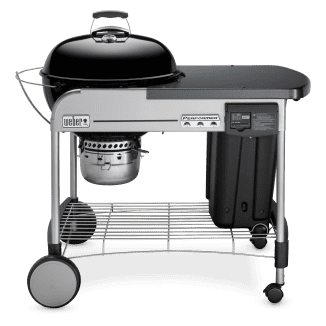
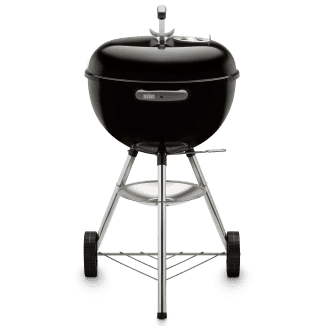
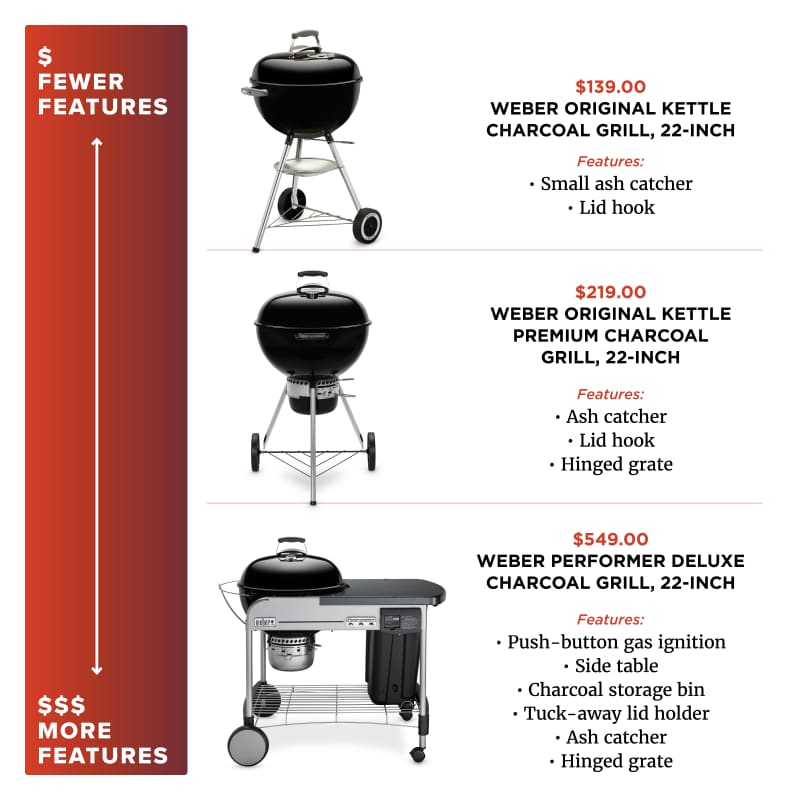
The best charcoal grills are easy to use and make it a cinch to grill, roast, and make barbecue. Our favorite is the Weber Original Kettle Premium Charcoal Grill, 22-Inch. This durable, moderately priced model is an American classic, with all of the basic features that we value most, including a roomy removable ash catcher and a hinged grate that lets you add charcoal to your fire during long cooks.
If you want to save a little money, the Weber Original Kettle Charcoal Grill, 22-Inch is our favorite’s stripped-down sibling. It has a smaller open ash catcher, making cleanup a bit messier, and its cooking grate lacks a hinge, but it performs just as well otherwise and is just as durable.
Conversely, if you’d like a grill with a lot of useful extra features, we love the Weber Performer Deluxe Charcoal Grill, 22-Inch. It takes our favorite model and surrounds it with a cart, making it especially stable and providing a handy side table for stashing trays or bowls of food. Better still, it has a built-in charcoal storage bin and a gas ignition system, so you’ll never have to fuss with a chimney starter to light your charcoal.
When it comes to grilling, there are two camps. Some people love gas grills, touting their convenience and ease of use: Just press the ignition button, set your grill to the temperature you want, and you’re ready to grill in just a short time. But others—perhaps the more rabid, fervent, and highly vocal fanbase—swear by charcoal grills. And for good reason: Charcoal makes great-tasting food, as it burns hotter than gas and produces lots of radiant heat, ensuring that everything you cook gets beautifully, deliciously browned. With the best charcoal grills, you can also throttle that heat and cook foods low and slow, roasting or smoking large cuts of meat with ease. Charcoal also produces some smoke of its own, so everything you cook on it tastes extra-savory, smoky, and “grilled.” Those who love charcoal grills say that gas grills just can’t compete, at least where flavor is concerned.

Charcoal grills have other advantages too. Fans like how much control over the cooking process you have with a charcoal grill. Using its vent system (see below), you can fine-tune exactly how much heat your food gets and direct the flow of smoke much more carefully when making barbecue than you can in a gas grill.
In addition, many charcoal grills are relatively simple machines, so they’re easy to assemble, clean, and maintain. And they generally tend to be less expensive than gas grills, though you can certainly find fancy high-end versions with lots of extra features (see below). For this review, we stuck to models that cost less than about $600.
The downsides? Sooty, ashy charcoal is messier than gas. And unlike gas, you can’t use it to cook right away—it takes at least 20 minutes to light the charcoal and get it to the right temperature. (You’ll need to wait longer for the charcoal to cool down after you’ve cooked in order to clean your grill too.)
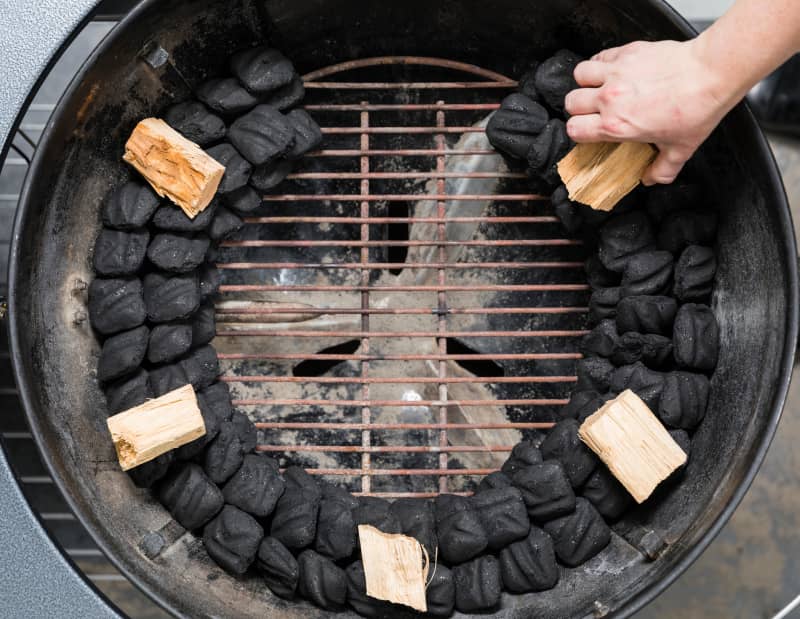
There’s also a much bigger learning curve to using and cooking on charcoal. For best results, you need to know not only how to light the charcoal but also how to gauge when it’s at the right temperature and how best to configure the charcoal for the type of cooking you’re trying to do, whether it’s quickly cooking some shrimp or smoking a turkey. You also need to learn how to extinguish the fire and dispose of the resulting ash.
If you love great-tasting food, these are all minor obstacles. For many, the challenges involved in learning to cook with charcoal are actually part of the charm—and overcoming them can be a mark of accomplishment.
And here’s the good news: at least in our experience, once you've got the hang of using charcoal, pretty much any grill you buy will let you make fantastic simple meals, turning out perfect burgers or asparagus or shrimp. But the best grills are more versatile, letting you smoke and roast foods as well. They're also durable and easier to use and clean too. We’ve tested dozens of charcoal grills over the decades. Here’s what we’ve learned.
What Are the Different Types of Charcoal Grills?
There are several types of charcoal grills.

All share the same essential construction. A base holds the charcoal, which often sits on top of a removable grate, rack, or tray. A cooking grate—where you’ll put any food—goes inside the base and over the charcoal. And a grill lid sits on top of the whole shebang, allowing you to use your grill as an enclosed cooking space for barbecue or roasting foods.
You control the heat of the grill through a system of vents. The base has an intake vent or set of vents that allows you to control the amount of air taken into the unit with an adjustable gate. The more air you let in, the hotter your fire will be; if you close the vent(s) completely, you’ll extinguish the fire. The lid typically has at least one exhaust vent too. This lets heat and smoke escape and helps draw oxygen through the intake vent as well. You can also position the exhaust vent so that it’s directly over your food, ensuring that the heat and smoke wash over the food as they exit.
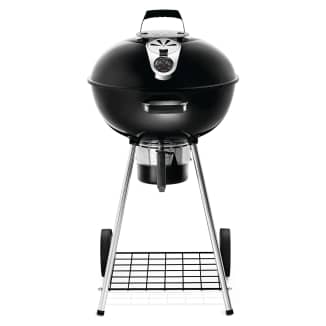
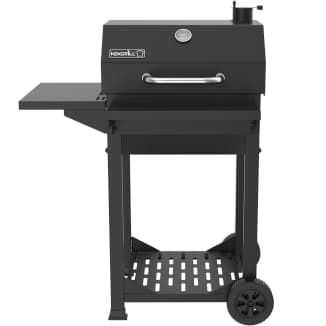
At their most basic, charcoal grill types are often named after the shapes they take. Kettle grills—the kind of grill that is most common at the lower end of the price spectrum—have bodies that are roughly spherical, with rounded bases and lids that resemble an old-fashioned kettle. Barrel grills resemble horizontal barrels. And cart-style grills resemble, well, carts. (There are also a number of other charcoal grills that fall outside the scope of this review, including yakitori grills, ceramic grills, and more—we hope to review these soon.)
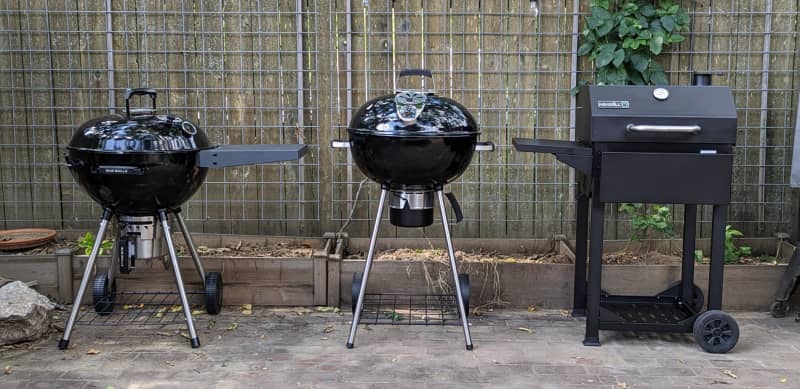
While our top picks are all kettle grills, in our experience, the type of the grill is ultimately less important than many other factors, including durability, design, and special features that affect ease of use.
What Size Charcoal Grill Should You Get?
It depends on how big your outdoor space is, how many people you regularly cook for, and also how you intend to use your grill. Generally speaking, we think charcoal grills that have a cooking surface area of at least 350 square inches are the best all-purpose size, allowing you to cook a few chicken skewers for two or feed a dozen people with a whole brisket comfortably. In practice, this translates to about a 22-inch kettle grill or a cart- or barrel-style grill with a cooking grate width of at least 19 inches.
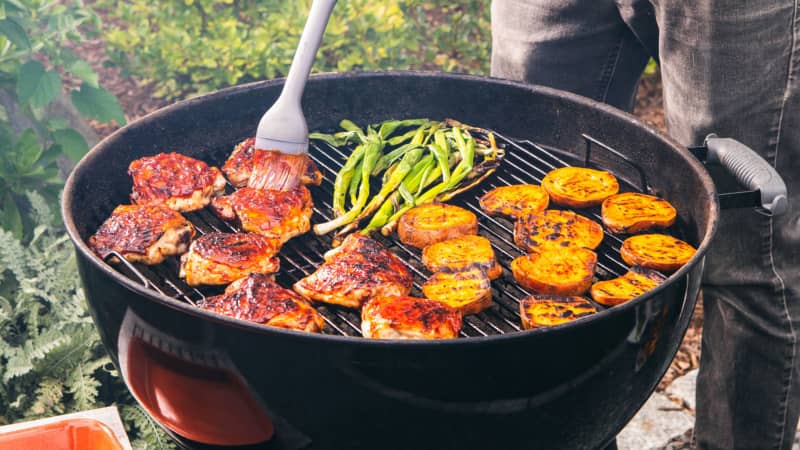
If you’ve got lots of outdoor space and often cook for a crowd, you might want to invest in an even larger grill. Conversely, if your space is small, you only cook for a few people, or you don’t plan on cooking large cuts of meat regularly, you can save some money by buying a smaller grill. And if you want a much smaller grill that you can take on a picnic or to a tailgate party, check out our review of portable charcoal grills.
Are Expensive Charcoal Grills Worth the Money?
Again, it depends. You don’t have to spend a ton to get a great grill—our winner is actually one of the less expensive models we’ve tested, and our Best Buy is even easier on the wallet. But there are a few things to consider when thinking about a grill’s price.
In our experience, the very cheapest grills tend to be less durable. They’re made from thinner, lighter-weight metal that is prone to damage (rusting, warping, or denting), lasting a year or three at the most. Spending more money usually gets you better-quality construction, ensuring greater longevity for your grill.
Often, the more you spend on a charcoal grill, the more extra features it will also have—side tables, warming racks, built-in thermometers, charcoal storage bins, etc. Our upgrade pick even has an ignition system that lets you light your charcoal without using a chimney starter. Just keep in mind that not only will you pay more for these features, you’ll sometimes have to put in a little more work to assemble, clean, and maintain them as well.

What to Look For
- Solid Construction: The best grills are made of relatively thick, sturdy, stain- and rust-resistant metal. This makes them durable, so they’re less likely to corrode, warp, or get banged up easily during normal use, promising a longer lifespan.
- Sturdy Legs: The best grills had thick, solid legs that fit tightly into the base and wheels, allowing the grills to stand securely and roll easily, even over bumpy terrain. We preferred grills with four legs to those with three, as they were slightly more stable, but the construction quality of the legs themselves was more important than the exact number.
- Off-Center Exhaust Vents: These vents encourage heat and smoke to be pulled across food when it’s cooking indirectly, on the cooler side of a half-grill or banked fire. In the past, we’ve tested grills that had exhaust vents at the very top of the lid; these were not ideal, as they let heat and smoke go straight up and out.
- Easily Adjusted Intake Vents: We preferred models that had vents that were easy and safe to control, keeping our hands far from the hot coals as we adjusted the airflow.

- A Large, Enclosed, Removable Ash Catcher: Most of the grills we’ve tested have some sort of removable tray, dish, or bowl that collects all the ash from the spent coals so that you can easily get rid of it when you’re done cooking. We preferred ash catchers that were large enough to accommodate plenty of ash at a time and those that were completely enclosed, as they prevented the ash from flying everywhere as it fell and making for a slightly messier cleanup.


We preferred large, bucket-shaped ash catchers (left), which did a better job of containing more ash than smaller, dish-shaped trays (right).
- An Inset, Hinged Cooking Grate: We liked cooking grates that sat slightly inside the base, as cooking grates that sat flush with the rim of the base sometimes allowed burgers or vegetables to slide onto the ground as we tried to flip them or scoop them up. We also liked cooking grates with hinged sections. For longer-cooking barbecue, we sometimes need to add charcoal to keep the fire going. Grates with hinged sections let us do this without disturbing the food cooking nearby. (Few things are as frustrating as having to remove the food and wrestle a hot grate to the ground mid-cook.) If you don’t roast or make barbecue on your grill often, you can probably do without the hinge, but we think this feature is worth paying for, as it makes your grill easier to use and more versatile.

- A Tight-Fitting Lid: Gaps between the lid and the base of the grill can allow heat to escape. A lid that fits securely helps ensure that your heat stays where you need it during long cooks, so you won’t have to keep adding charcoal to keep the proper temperature when you’re smoking a pork shoulder or roasting a turkey.
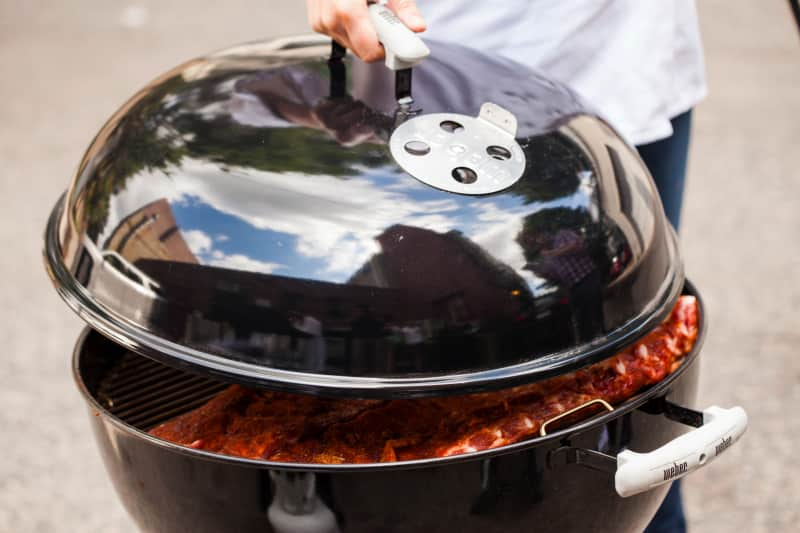
- A Hinged Lid or a Built-In Lid Holder: We liked models with lids that were attached to the base of the grill with a hinge. These hinges made it easy to open the grill without having to find a spot for the lid to rest on; the lids just swung backward. For models with unattached lids, we liked those with features that let us hook the lid onto the side of the grill or insert the lid into a built-in holder. These features kept our grilling space compact and tidy too.
Nice to Have
- A Side Table: Many of the grills we tested came with at least one side table. These tables proved quite useful, giving the grills built-in landing spots for trays of vegetables, fish, or meat.
- Ports for Probes: If you do a lot of roasting or barbecue on your grill, it’s handy to have a port in the grill that will let you snake a clip-on probe thermometer or remote-probe thermometer inside so that you can track the temperature of your roast or the grill. (Without a port, you can still insert a probe through the exhaust vent or under the lid, though the first method can get messy and the second can create a little more of a gap through which heat can escape.)

- An Ignition System: Our upgrade pick comes with a gas ignition system that lets you light the charcoal without using a chimney starter, helping to speed up the cooking process and consolidate some of your gear.
- Adjustable Charcoal Grates: Some models came with the ability to lift and lower the charcoal as it sat on its rack or tray. We loved this feature, as it gave us extra control over the cooking temperature, letting us move the charcoal closer to the food for an extra-intense sear or farther away for lower and slower cooking.
- For Kettle Grills, Intake Vents with Blades: Many kettle grills have intake vents that use blades sitting inside the grill to either cover or expose the vent openings. These blades have an additional advantage: You can also use them to help channel ash from spent charcoal into the ash catcher below. Kettle grills that lack this feature force you to use a separate brush or a scoop to move the ashes into the catcher.
What to Avoid
- Poor Construction: Cheap grills made from thin, flimsy metal are usually more vulnerable to damage and less likely to last more than a few summers without rusting or warping.
- Poorly Designed, Hard-to-Adjust Vents: Considering how important vents are to heat regulation, you’d think they would demand careful design attention. But we’ve struggled to adjust the vents on some grills in the past, and one model’s vents never fully aligned to shut off airflow. That was minor compared to another grill we tested, which featured oversize vents that slid open directly under hot coals and ash, inviting burns and dropping soot on the shelf below—unfortunate if you’re storing food there.

- Models with No Removable Ash Catcher: With these models, ash and partially spent charcoal just sit inside the grill when you’re done cooking. You’ll have to scoop or vacuum them out by hand, making for a messier and more difficult cleanup.
Other Considerations
- Ease of Assembly: While charcoal grills are typically easier to assemble than gas grills, some are more challenging than others. But there are a few good reasons to buy a grill that has a more involved setup. If you want extra features such as a side table, for example, you may be looking at a slightly longer assembly time. And sometimes seemingly simple grills require extra parts or care to make them sturdier and more durable. We’ve rated all the grills on ease of assembly but mostly in order to help you make informed decisions when choosing a grill. If you’re handy and want those extra features or durability, a more complicated grill assembly might be more doable. Alternatively, if you’re not handy but still want those features, you might find it worthwhile to get a friend or hire someone to assemble the grill for you.

- Cooking Grate Material: Grates made from heavy, thick rods of cast iron can put a better sear on your foods than grates made from thinner rods of stainless steel. But they’re also a bit harder to maintain, as they’re prone to rusting. Ultimately, other factors proved more important to our rankings than the material of the grates.
The Tests
- Grill burgers
- Grill Beef Satay
- Make Grilled Salmon
- Smoke Kansas City-Style Barbecue Ribs, track grill temperature throughout
How We Rated
- Assembly: We rated the grills on how easy they were to put together and how solid the grills were once assembled.
- Performance: We rated the grills on the quality of the food they produced.
- Ease of Use: We rated the grills on how easy they were to use for different tasks and how easy they were to clean.
- Durability: We evaluated the grills on how well they stood up to damage over the course of testing.

 Buy at SNS Grills