
 Buy at Amazon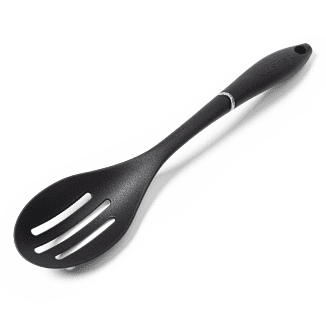
 Buy at GIR
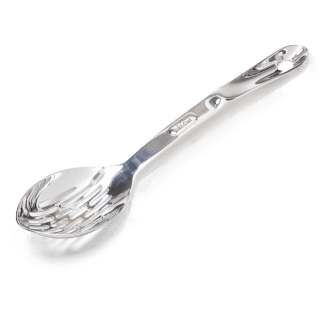
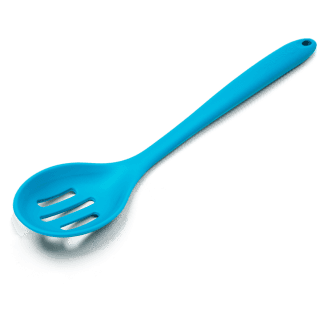
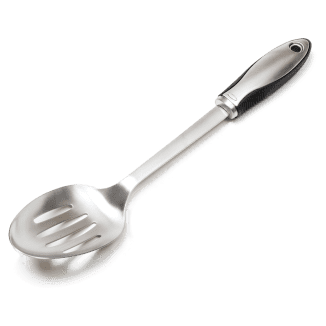
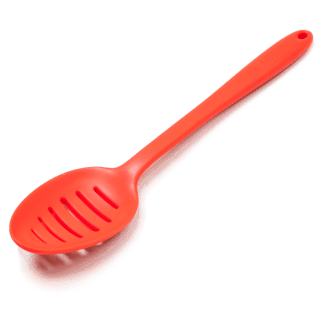
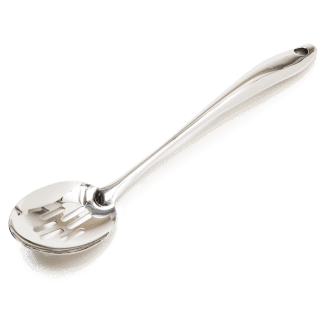
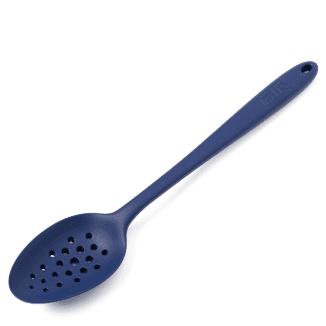
The best slotted spoons are able to scoop and drain plenty of food easily. Our long-reigning top choice is the Cuisinart Stainless Steel Slotted Spoon. This thin-rimmed, seamless stainless-steel model is a pleasure to use, getting up and under delicate foods nimbly. If you’d like a slotted spoon that will be gentler on nonstick-coated or enameled cast-iron cookware, our top plastic option is the Cuisinart Curve Handle Line Curve Nylon Slotted Spoon. It’s got a slightly thicker bowl than our top option, so it feels a little less agile. But it performs well otherwise and has a long, comfortable handle. If you’d prefer to avoid plastic, our top silicone slotted spoon is the GIR Perforated Spoon. Its bowl is big (if a bit thick) and its long handle is easy for hands of all sizes to hold.

A good slotted spoon is an essential kitchen tool: We use it to remove and drain small or delicate foods from boiling water, hot oil, or sauce. Slotted spoons come in a range of materials. Metal slotted spoons are usually our first choice. They’re sturdy, durable, and so thin that they get up under food easily, though their metal construction sometimes makes them a little heavier than models made from other materials. If you’re careful, you can use them with any type of pot or pan.


We use slotted spoons for many tasks, including draining cooked bacon and boiled eggs.
But if you’re concerned about scratching your enameled or nonstick cookware, we recommend getting a spoon made from silicone or plastic. These materials will be gentler on any surfaces they touch. The tradeoffs? Spoons made from both plastic and silicone are often thicker and less nimble than metal options, and plastic versions can melt if exposed to high heat. Because silicone has a grippy, rubbery texture, models made from it can also drag on cooking surfaces in a way that makes them feel sluggish in hand; dry ingredients can also stick to the silicone unpleasantly. And of course, both silicone and plastic spoons retain stains and odors, unlike stainless-steel options.
What to Look for
- Relatively Thin Bowl Edges: We preferred slotted spoons with bowls that had thin edges. The thinner the edges were, the more easily the spoons slid under delicate food such as poached eggs or ravioli without denting or poking holes in them. Note that the thinness of the edges is relative here, since, in general, stainless-steel spoons have much thinner edges than those made from plastic or silicone. (Plastic spoons have to be thick in order to be rigid enough to use without bending; silicone spoons are made using metal or plastic frames that provide that same rigidity, with even greater thickness as a result.) Our top stainless-steel spoon has a bowl that measures slightly less than 0.05 in thick; our top plastic and silicone options are twice as thick.

- Fairly Large, Shallow Bowls: The best spoons had bowls that were reasonably large, capable of holding big ravioli or jumbo shrimp easily. Small bowls held less food or only small pieces of food securely, and big bowls felt clumsy and imprecise. We also liked spoons with relatively shallow bowls, as these got up and under food particularly nimbly. Bowls that were too deep were more cumbersome to maneuver under food.


Shallow bowls sometimes held less food but slid under foods more easily. Deep bowls struggled to get up and under food.
- Moderate Weight: We liked spoons that were relatively lightweight, as these were easier to lift and maneuver. For plastic and silicone spoons, this meant a weight of about 3 to 5 ounces. Stainless-steel models ran heavier; we preferred those on the lighter end of the spectrum, weighing about 4.5 to 6 ounces.
- Medium-Length, Grippy, Moderately Offset Handles: Spoons with handles measuring about 9 to 10 inches were best, keeping hands at a safer distance from the hot pots and pans as we scooped food up. They also were best for accommodating hands both large and small. We also appreciated models that had rubbery or textured handles; these were easier to grip even when the spoons were wet. And we liked models with handles that were offset at a relatively low angle from their bowls. These were easier to use without contorting our hands into odd positions, as was sometimes the case with handles that rose at a steeper angle.
Other Considerations
- Drainage Holes and Slots: The size, shape, and distribution of holes or slots on the slotted spoons we tested didn’t have a significant impact on drainage. All the models we tested drained water equally well, though a few had holes large enough that small peas got stuck in them or occasionally passed through.

The Tests
- Remove peas from stockpot of simmering water
- Remove poached eggs from skillet of simmering water
- Remove meatballs from saucepan
- Remove jumbo shrimp from skillet
- Recruit additional testers to use with a variety of cookware
- Submerge in pasta sauce with chopped onion for two hours, then run through 10 dishwasher cycles
How We Tested
- Ease of Use: We considered how easy it was to maneuver the spoons in an assortment of cookware, remove food, and quickly drain away liquid or sauce.
- Durability: We noted whether spoons scratched, stained, or retained odors.



 Buy at Williams Sonoma