

 Buy at Amazon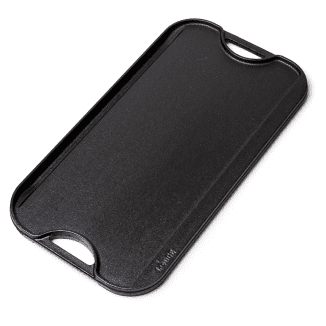
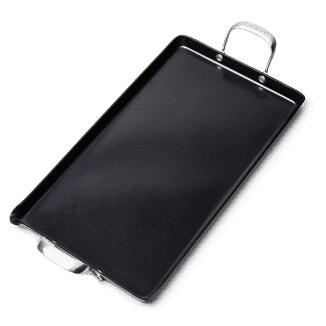
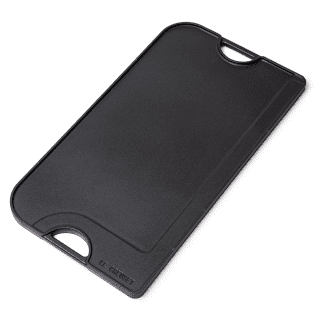
The best stovetop griddles cook lots of pancakes, eggs, and burgers perfectly. Our top choice is the Cuisinart Multiclad Pro Tri-Ply Stainless Double Burner Griddle. It’s got a large nonstick cooking surface that makes it a breeze to clean and maintain; big, easy-to-grip handles; and tall walls that keep in grease splatters. We also love the Lodge Pro Grid Iron Reversible Griddle. This cast-iron model is quite heavy and lacks the tall walls and easy-grip handles of our top choice. But it’s an excellent alternative to our favorite nonstick model and does a particularly great job of searing burgers and steaks. It’s also incredibly durable and can be used on the grill or over an open fire.

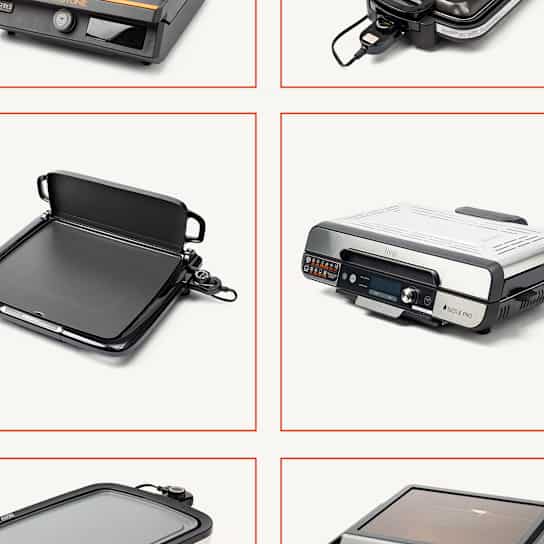
When we’re cooking for a crowd, we love using our favorite electric griddle, the BroilKing Professional Griddle with Backsplash. But it’s quite large, making it a less appealing option for cooks with limited storage or counter space. Stovetop griddles are more compact and easy to store and still give you the extra space you need to make lots of pancakes, eggs, bacon, grilled cheese, and even steaks or burgers on top of your range and in relatively few batches.
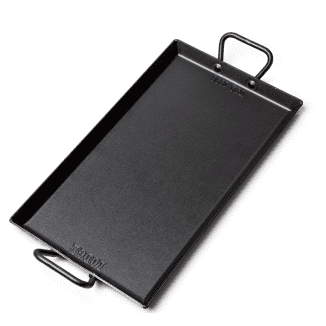
For this review, we chose models designed to straddle two burners, as single-burner griddles don’t offer much of a size advantage over our favorite skillets. And we looked at models made from different materials, including nonstick-coated hard-anodized aluminum, stainless steel, carbon steel, and cast iron.
All the griddles performed well, browning pancakes evenly, cooking eggs consistently, and searing the burgers respectably. But a few factors made some models more durable and easier to use, clean, and maintain than others.
Which Material Is Best for Stovetop Griddles?
Many people prefer griddles with nonstick coatings: either conventional nonstick made with polytetrafluoroethylene (PTFE) or ceramic nonstick. The griddles themselves are made from either aluminum or aluminum sandwiched between layers of stainless steel. As a result, they’re lightweight—usually weighing about 3 to 6 pounds—and they heat up quickly. They don’t require seasoning or additional maintenance, which makes them especially easy to use and clean. There are a few caveats to keep in mind if you’re considering a nonstick griddle, though. Nonstick models are less durable than their cast-iron or carbon steel counterparts: They’re thinner and more prone to warping, especially if heated unevenly. Over time, their nonstick coatings will crack, scratch, and become less nonstick; they’ll have to be replaced more frequently than other types of griddles. (You can slow this deterioration by avoiding using metal tools on them.) In addition, nonstick griddles that are made from plain aluminum are not induction-compatible, though those that have stainless-steel cladding or bases, including our winner, are.
There are also tradeoffs between the two types of nonstick. Conventional nonstick cookware can’t be heated above 500 degrees F, or it’ll emit toxic fumes. Ceramic nonstick doesn’t have the same issue and can be heated to slightly higher temperatures. Ceramic conducts heat to food more quickly than conventional nonstick, so food may brown faster than you’re used to. Ceramic coatings are also more brittle than conventional nonstick—though they’re getting stronger as manufacturers work on new formulations—so ceramic griddles may scratch and crack faster.

What to Look For
- Large, Wide Cooking Surfaces: Not surprisingly, since we use these griddles to cook large batches of food, we liked models that gave us as much space as possible to cook on, preferring those that had a usable surface area of at least 160 square inches. More specifically, we preferred griddles with cooking surfaces that were fairly wide. Those with widths smaller than 9.25 inches were a bit more narrow than we prefer, requiring us to stagger and squeeze in just six pancakes at a time, instead of the eight we could make on wider models.
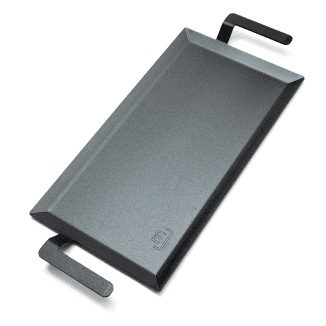
- Walls: We preferred griddles with walls on their sides that were at least 1 inch high. While these walls occasionally got in the way when we flipped pancakes or eggs, they proved their value when we seared burgers, helping to contain any grease that was released. Griddles with no walls often allowed that grease to spatter or flow over their edges—even when the models had dedicated grease troughs—causing dangerous flare-ups as the fat hit the flame.
- Discrete, Moderately Sized Metal Handles: We also liked griddles with handles that extended up and out from the cooking surface, as they were easier to grab and lift than were griddles with flat handles that were simply cut out of the base. We preferred plain metal handles; the handles of one griddle were coated with silicone, which melted a little during a flare-up. We also preferred moderately large handles, which were big enough for hands of all sizes to grip. That said, it was possible for handles to be too big or to extend upward in awkward ways—one model’s large, offset handles stuck out so much that we couldn’t position it properly over two burners without bumping into the stove’s control panel.
- Good Durability: We preferred models that didn’t warp, have parts that melt, or develop other damage during testing. From experience, we know that models with nonstick coatings need to be replaced periodically, as that coating can degrade over time. This isn’t a deal-breaker, but if you want a model that will last forever with good care, choose cast iron.
Other Considerations
- Grease Troughs: In general, we didn’t love these; they didn’t actually collect all that much grease (about a tablespoon or two at most) and subtracted from the available cooking surface, giving us less room to cook on. They were also a pain to clean. While we wouldn’t rule out models that have grease troughs, we’d prefer those with cooking surfaces that were completely flat.
The Tests
- Use to make pancakes
- Use to make eggs over easy
- Use to make Pub Burgers
- Scratch 25 times with a metal spatula
- Wash by hand 5 times
How We Rated
- Performance: We evaluated how evenly the griddles cooked pancakes and eggs and how well they seared burgers.
- Ease of Use: We evaluated how easy it was to lift the griddles, to maneuver different foods and utensils within the griddles while cooking, and to avoid flare-ups. We also rated how quickly the griddles heated up and cooled down and how large the cooking surfaces of the griddles were.
- Durability: We evaluated how well the griddles withstood damage.


 Buy at Made In Cookware