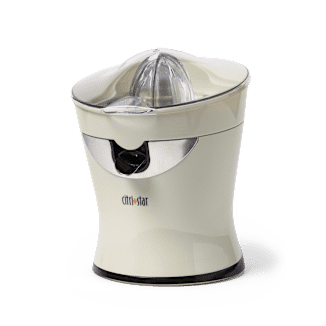


The best electric citrus juicers are straightforward to use, process citrus efficiently, and are easy to clean and store. Our favorite, the Breville Citrus Press, juiced citrus of every size with ease. We also recommend the Dash Dual Citrus Juicer as our Best Buy. This inexpensive model took a couple of minutes longer to juice lemons but it was easy to use and produced just as much juice.

A good electric citrus juicer can process citrus fruits with great efficiency, leaving no juice behind. They’re just as adept at small limes as they are with big grapefruit. Although they’re bigger than manual citrus juicers and come with more parts to clean, they promise to be easier to use. Instead of twisting your wrist or using arm strength to press down hard on the fruit, the machines do much of the work for you. Especially when you’re making a pitcher of lemonade or big-batch margaritas, a good electric machine is a welcome break from twisting and squeezing by hand.


The Different Types of Electric Citrus Juicers
All the electric citrus juicers we tested have reamers with ribs designed to bore into the flesh of halved citrus; these reamers (sometimes called “cones”) spin automatically, breaking the citrus segments and extracting the juice. For many models, you hold the fruit in place as the reamer spins. You can generally feel when the reamer has extracted all the juice and the ridges start pressing against the peel under your palm.
With many electric citrus juicers, you press a halved fruit against the reamer and it spins automatically until you lift your hand.
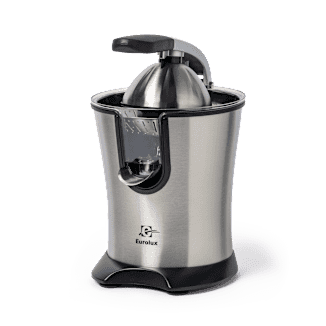
Some models have a lever. When you lower the lever, it brings down an upside down bowl (also known as a “dome”) that holds the citrus in place and presses it against the reamer. We were intrigued by the levers, which promised to spare our hands from getting messy and make juicing more effortless. But there are some tradeoffs. The dome gets splattered with citrus oils and juice and is an additional piece to clean. The levers make these juicers taller and bulkier and therefore harder to store. It can also be harder to tell when juice has been fully extracted because there’s no tactile clue that the reamer is pressing up against the spent citrus peel.
Some models have a lever, promising to make juicing easier and tidier.
One model was different from others. Once the fruit is nestled on top of the reamer, you snap a lid into place and then a platform lifts up and presses the fruit and reamer against the lid. The actual juicing process is entirely hands-free.
We also tested one “automatic” juicer that promised hands-free juicing.
With every type of electric citrus juicer, there’s a system for straining, collecting, and dispensing the juice. As the reamer spins, the juice flows through a strainer positioned below the reamer. The juice then travels into an integrated juice catcher or a built-in carafe. For models with juice catchers, you then flip open the spout to let the juice drain into a glass or measuring cup of your choice. For models with carafes, you can pick up the carafe and pour directly from it.
Are Electric Citrus Juicers Better Than Manual Juicers?
We were curious about what you gain when you use an electric juicer, so we compared the speed and average yield of our lineup with that of manual citrus juicers when juicing 10 lemons each. To our surprise, the best electric juicer and our favorite manual juicer nearly tied for speed; the electric model was less than a minute faster. But their yields differed significantly. On average, lemons contain 40 to 45 percent juice by weight. The yield of our top-scoring electric juicers was about 36 to 38 percent, whereas our winning manual model was about 23 percent. (Some other manual models yielded more juice but failed in other tests.) If you regularly make fresh juice and want to be sure you’re squeezing every drop from your limes and lemons, an electric juicer might be the way to go—as long as you get a good one.

What to Look for
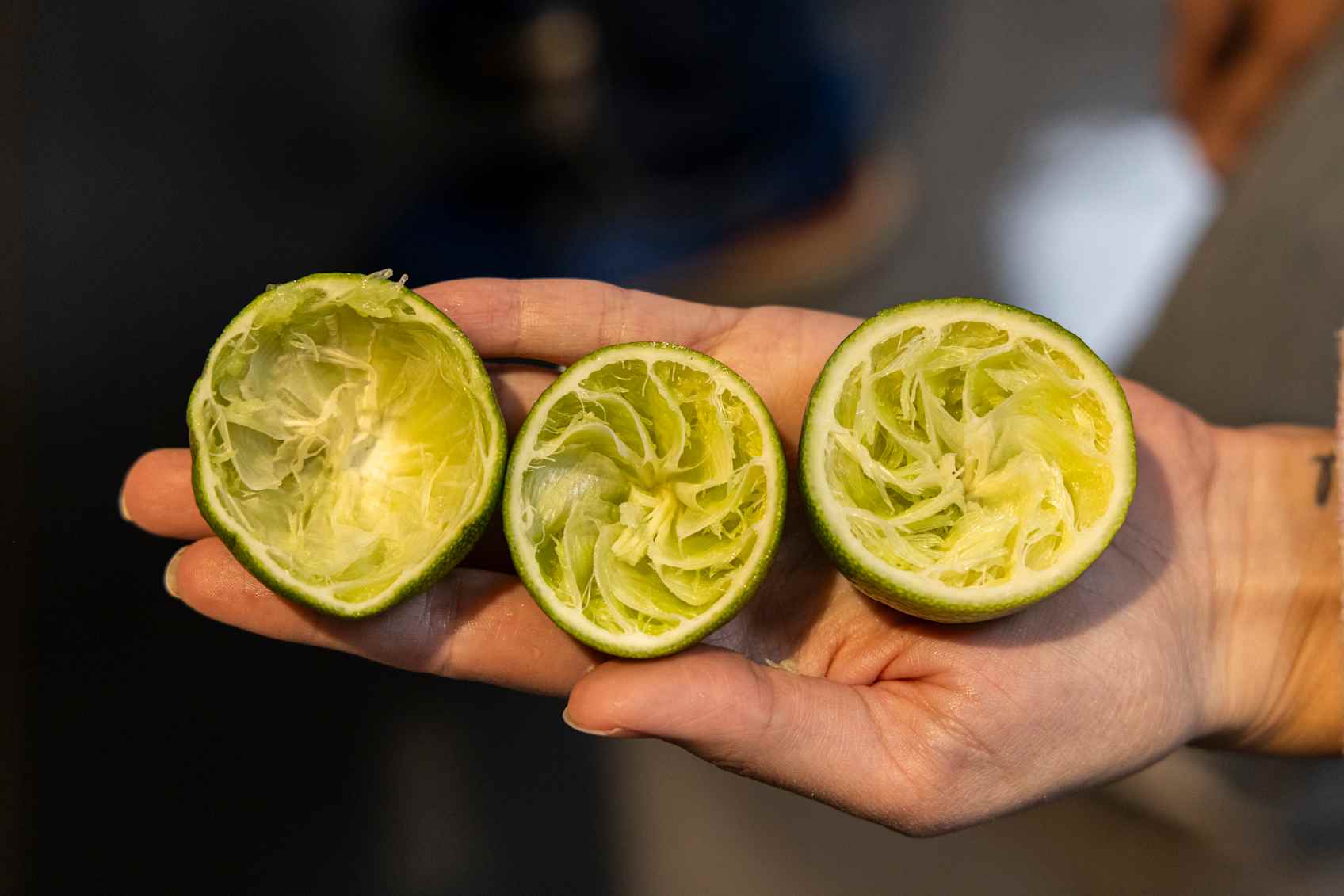
- A Reamer with Sharp Ridges: The ribs running up and down the reamers are a key part of a quick, efficient juicer. We liked sharp ridges that bit into the flesh and hollowed out the halved citrus completely, leaving no juice behind.
- A Wide, Tall Reamer: Bigger reamers with larger diameters were a better match for the shape of overturned citrus halves. They pressed up against the walls of the fruit, squeezing out more juice.


Wide reamers worked better than narrow reamers when it came to juicing citrus fruits of all sizes.
- Tall Walls to Contain Pulp: All models had integrated strainers intended to catch the seeds and some pulp. Some strainers were almost entirely flat. Others were curved up on the edges, forming walls that contained the pulp and seeds. Those tall walls were especially important when handling big, pulpy oranges and grapefruits.


When juicing pulpy fruits, strainers with tall walls managed to contain all the excess pulp. When pulp accumulated on flat strainers, some of it was pushed overboard and into the pitcher of juice.
- Effective Juice Catchers: Some models had built-in carafes that juice drained directly into, a very easy and tidy way of collecting and later dispensing the juice. Others had juice catchers with a spout that you can open and close. We appreciated catchers that had a gentle slope that directed juice toward the spout so that it drained quickly and completely. It was essential that spouts had responsive closures. We liked the ones that stopped dripping immediately once closed and were easy and smooth to open.

What to Avoid
- Hands-Free Juicers: One juicer was marketed as “hands-free,” meaning you don’t have to continuously press a citrus half down against the machine to juice. It was a bust. Not only did it juice slowly, but it also didn’t fully extract juice from the fruit, and much of the halved citrus was left intact. Although it was marketed as compatible with all types of citrus, we struggled to fit anything larger than a lemon. The lid couldn’t fully close when juicing oranges or grapefruits, so we held it down to keep it shut. While in theory it provided an accessible way to juice, the reality was a far cry from what it claimed to be.
- A Narrow, Small Reamer: Some reamers didn’t match the size of the fruits; despite our best effort positioning our hands at different angles to press against all parts of the fruit, small reamers left areas of the fruit intact. As a result, good juice was wasted.
- Shallow Strainer Walls: Pulp and seeds accumulated on flat strainers with low walls and were pushed over the edges and onto the counter, creating a mess.
- A Flat Juice Catcher: A slightly angled juice catcher helps encourage juice to flow toward the spout. Level juice catchers retained little puddles of juice, and we had to awkwardly lift and tilt the entire machine to make sure none of our freshly squeezed juice was left behind.

- Hard-to-Clean Designs: Some models had lots of nooks and crannies that were hard to reach into to clean and dry. Others had too many small parts, which were finicky to wash and hard to keep track of.

- Abrupt Spinning: With most juicers, the reamer only spins when you assertively and continuously put pressure on it. Some models’ reamers started spinning as soon as the citrus touched them, which startled us and made us rush to finish pulling down the lever before the fruit fell off the reamer or juice started flying at us.
Other Considerations
- Reverse Rotation: Some reamers always spin clockwise. Others spin in both directions, reversing each time you pick up the fruit and place it down again, ostensibly because that more effectively ruptures the membranes and produces more juice. In our experience, reverse rotation doesn’t make a difference. It’s the size and shape of the reamer that matters most.
- Pulp Management: Two juicers came with a pair of strainers, one underneath the other. When you slide them back and forth, the perforations widen and narrow, changing how much pulp or seeds pass through. When on the finest setting, so much pulp accumulated on the strainer that it blocked the juice and slowed down the process. On the widest setting, it worked fine but some pulp went through. Neither model with a two-part strainer effectively collected pulp; a fine-mesh strainer would be considerably better.
The Tests
- Juice 10 limes, recording how long it takes
- Juice 10 lemons, recording how long it takes
- Juice 10 oranges, recording how long it takes
- Juice 10 grapefruits, recording how long it takes
- Calculate extraction percentage of lime, lemon, orange, and grapefruit juice
- Recruit colleagues to juice an assortment of citrus fruits
- Wash each juicer by hand after each use
- Taste lime, lemon, orange, and grapefruit juice produced by each model and evaluate flavor differences
- Juice an additional 10 oranges to evaluate durability
How We Rated
- Performance: We rated how effectively each model extracted juice from an assortment of fruits. To quantify their performance, we weighed batches of strained juice and calculated the average percentage of juice yielded. We listed the extraction percentage for lemon juice.
- Ease of Use: We evaluated how easy it was to operate each citrus juicer. We also noted how durable each model was.
- Speed: We recorded how long it took to process 10 small, 10 medium, and 10 large fruits. To show the most common usage, we listed the time to press 10 lemons.
- Cleanup: We assessed how easy it was to clean each juicer.