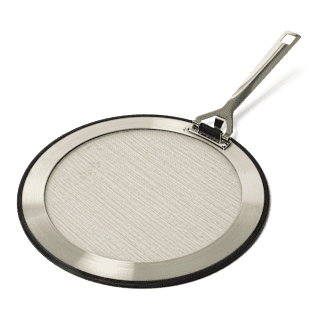
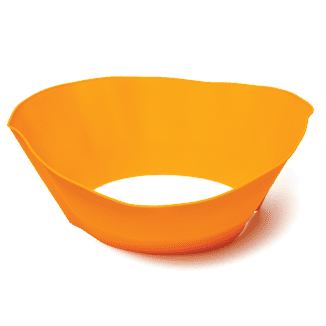

The best splatter screens keep your stovetop clean while you cook. Two models emerged from our testing as co-winners. The Frywall, a tall silicone ring that you position inside a skillet, is the best innovative splatter screen. Its unique open design keeps grease off the stovetop while allowing you to keep an eye on food as it cooks. It’s a little cumbersome to clean and you’ll have to buy different size Frywalls for smaller or larger pans (we tested the 12-inch model). The best traditional splatter screen is the BergKoch Splatter Screen, 13 Inch. Its mesh cover also does a great job of containing messy things such as pasta sauce and bacon fat, but it’s a little difficult to monitor cooking progress while the splatter screen is in place.

Call it poor planning, but I always seem to choose an extra-messy meal the day after I really clean my stovetop. Splatter screens are meant to help alleviate the problem of simmering sauces and hot oil dirtying the area around your cooktop. Typically, splatter screens are round, perforated stainless-steel disks with a handle. They sit directly on top of the skillet or saucepan, thereby keeping hot oil and fat from splattering surfaces (or people) in close proximity. Unlike lids, they release some steam that would otherwise be trapped and affect the cooking process (think: soggy chicken skin).
What Are the Different Types of Splatter Screens?
As mentioned above, the most common types of splatter screens are made of stainless steel. The circular part can be made from tightly woven mesh or consist of a flat metal disk with perforations; both types sit on top of the pan or skillet, covering it from edge to edge. Traditional splatter screens are generally intended to fit 12-inch skillets and can also be placed atop smaller 8- or 10-inch skillets.

Then there’s the Frywall, a unique product (featured on the television show Shark Tank) that the manufacturer describes as a “splatter guard.” Made of a flexible silicone, it resembles an open cone that a pet might wear after surgery. The silicone angles up and out of the pan, becoming an extension of the cookware’s walls. Steam releases into the air just as it would in an uncovered pan, but the tall walls prevent popping grease and fat from reaching the stove or countertop. The Frywall comes in a variety of sizes, each intended for a specific diameter of pan.

Do You Need a Splatter Screen?
It depends. Splatter screens offer some protection against burns and stains when you’re cooking. They are especially helpful if you have small children around the house who may be curious about what’s happening in the kitchen. But even the best ones cannot keep your stovetop pristine. Each time you lift a traditional splatter screen to check your food or reposition it, you’re removing that barrier and allowing a little grease to land on your stovetop. Traditional screens work best for foods that don’t require frequent attention, but you’ll always need to wipe down the stovetop after cooking. You’ll also have to clean the splatter screen itself, as well as find a place to store it.
Some people may therefore prefer to skip the splatter screen and just give their stovetop a thorough cleaning after cooking. But if that’s one chore too many and if you have room in your dishwasher for the splatter screen, you may prefer to cook with one of our winners.
What to Look for
- Good Splatter Containment: To assess performance, we lined the area around our skillets with kraft paper when frying bacon and then compared how much grease landed on the light-brown paper. The tall walls of the Frywall kept splatter to a minimum, as did traditional splatter screens with tight mesh.


- Easy to Position: We liked models that were easy to situate on or in cookware. For traditional splatter screens, we preferred models with handles that were easy to grip and remained cool to the touch during use. We also liked handles with some sort of plastic or silicone padding. When using the Frywall, there was a short learning curve, but we quickly got the hang of nestling it into cookware.
- Sturdy Construction: We liked traditional splatter screens with solid connection points between the mesh and frame. The Frywall also held its shape throughout testing, even after washing.
- Dishwasher-Safe: We loved being able to toss these items into the dishwasher after cooking. Hand washing with warm, soapy water is also an option.
Nice to Have
- Compact Storage: A splatter screen is not a tool we use every day, so it’s important that we be able to tuck it away in between uses. The Frywall is large, but the silicone ring can be rolled up to a quarter of its extended size, and it comes with a small storage sleeve. With traditional splatter screens, we liked folding handles. This feature made it easier to store the splatter screen and helped to fit into a dishwasher for cleaning.


Made of flexible silicone, the Frywall rolls up for easy storage. We also liked traditional models with folding handles.
What to Avoid
- More Permeable Screens: Some traditional splatter screens had mesh that allowed more grease and fat to escape during cooking, simmering, or frying. We looked at the screens under a microscope and found a visible difference in the thickness of the strands of metal that form the mesh. Screens made with heavier gauges were more effective. The lowest-performing screen was made from thin wires that didn’t successfully block grease


Our winning traditional splatter screen used thick stands of metal to form its mesh (left). Thinner wires (right) allowed more grease to make it out of the pan while cooking.
- Flimsy Mesh: One splatter screen was more fragile than the rest. By the end of testing, a portion of the mesh had separated from the metal ring, exposing the edges of the mesh and creating a gap that sauce or grease could pass through.
Other Considerations
- Visibility: Traditional splatter screens block your view of food as it cooks. If you want to check the crispiness of your bacon or how vigorously your pasta sauce is simmering, you need to remove the splatter screen. One model we tested has an odor-absorbing carbon filter that makes the mesh completely opaque. It performed well, but if you like to always have an eye on your food but want to cut back on splatter, you may prefer the Frywall instead of a traditional splatter screen.
The Tests
- Fry bacon in 12-inch skillet
- Simmer pasta sauce in 10-inch skillet (12-inch for Frywall)
- Sear chicken thighs in 12-inch skillet
- Wash splatter screens by hand after each test
- Wash splatter screens an additional seven times in dishwasher for a total of 10 washes
- Test fit with a variety of skillets, pots, and pans
How We Rated
- Performance: We evaluated how successfully the splatter screens prevented grease, fat, and sauce from reaching the stovetop.
- Ease of Use: We rated the splatter screens on how simple they were to use while cooking and whether they were easy to store.
- Cleanup: We evaluated how easy it was to clean the splatter screens both by hand and in the dishwasher. We also noted if they became damaged.