 Buy at Amazon
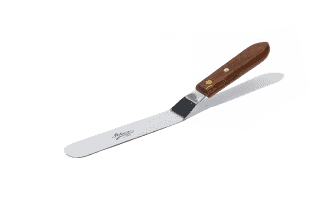
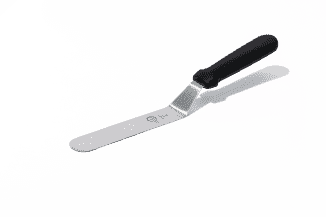
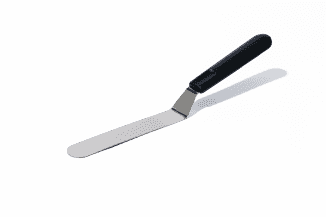
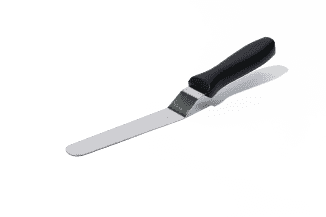
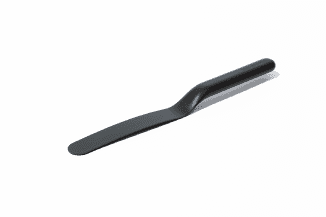
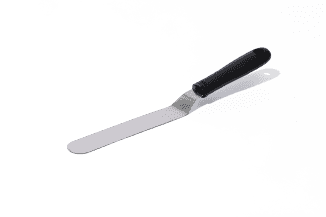
Offset spatulas have angled blades that spread frosting, cake batter, and fillings into smooth, even layers while keeping your hands out of the way. Our favorite model is the OXO Good Grips Bent Icing Knife. It has a rounded, grippy plastic handle that’s comfortable to hold for long periods of time with a thin, medium-length blade offset at a moderate angle. The blade is rigid enough to lift and support hefty cake layers yet flexible enough for delicate frosting work.

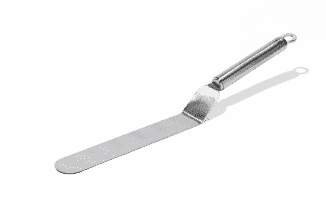
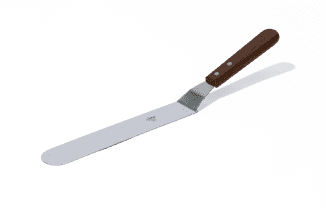
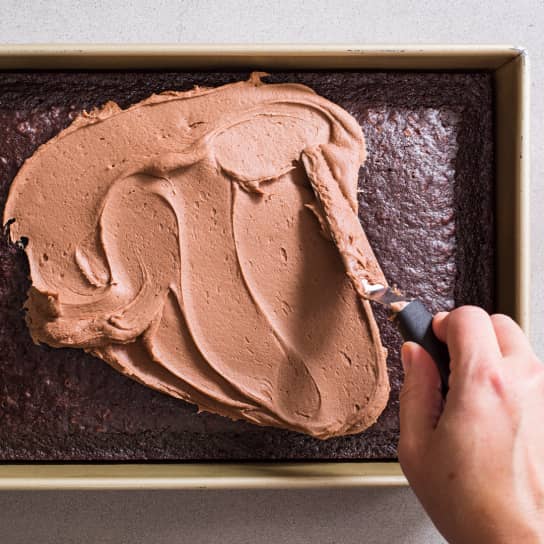
If you need to frost a cake, an offset spatula is the best tool for the job. These useful spatulas have long, thin, round-tipped blades that are offset (or bent at an angle) away from their handles. The angle creates enough clearance to keep your fingers free of whatever you’re spreading; it also allows you to reach inside cake pans to spread batter or frosting in a flat, even layer. Beyond smoothing and spreading, offset spatulas can help loosen and remove brownies, muffins, or other treats from baking pans; lift and transport cake layers; press dough flat into a pan; or create decorative swooshes in frosting.


Offset spatulas have long, angled blades designed to easily spread and smooth frosting and similar foods. They’re also great for removing brownies and other baked goods from baking pans.
Most offset spatulas have stainless-steel blades with handles made of plastic or wood. A few models are made entirely of stainless steel or plastic (usually nylon). These tools are sold in several sizes, but it can be surprisingly difficult to determine their actual sizes from online listings. Manufacturers usually specify the overall length of the blades, rather than that of the flat portions, so it can be hard to know how much flat, usable surface area a spatula has without seeing it in person. With this in mind, we chose spatulas with blades measuring from 7.5 to 10 inches long in total—a size range that usually allows for good coverage across cakes of multiple sizes but should still be maneuverable inside 9-inch-wide square, round, and rectangular baking pans.
What to Look For
- Moderately Offset Blades: Our favorite spatulas had blades that were offset a medium amount, to angles measuring about 35 degrees. These angles were steep enough to allow for good finger clearance but shallow enough to let us work comfortably without forcing our arms into awkward positions.

- Medium-Size, Relatively Thin Blades: We found that spatulas with blades measuring no more than 1.25 inches wide and about 8 inches long worked best. These blades had flat portions that were about 6.5 inches long: big enough to cover the surfaces of standard-sized cakes in a few passes but not so large that they had trouble fitting into cake pans.
- Thin, Stiff Stainless-Steel Blades: We preferred blades made of relatively stiff stainless steel, which were sturdy enough to hoist cake layers yet flexible enough to glide across cakes and give us better control for smooth, even spreads. We also liked blades that were less than 1 millimeter thick; these slid easily between pans and cake edges and under cake layers.

- Well-Proportioned Handles: Our favorite handles were about 5 inches long; these had enough room for testers of all hand sizes to comfortably hold. We also favored handles that weren’t too thick; 3.5 inches or less in circumference was the right size to give us control without tiring us out.
- Rounded, Textured Handles: Models with rounded handles were more comfortable to grip. We also liked textured handles made from soft, grippy plastic or slightly rough wood, both of which provided enough friction to easily grasp—even when coated in slippery frosting.

What to Avoid
- Big Blades: Blades that were wider than 1.25 inches or longer than 8 inches were difficult to use for several reasons. They felt especially cumbersome when used to smooth batter inside cake pans and were oversized for frosting smaller cakes. They felt off-balance with their handles and they distanced us from our work, which limited our control and dexterity. These longer spatulas may be ideal for large-scale commercial baking, but they’re too big to be useful in most home kitchens.

- Flimsy or Rigid Blades: Blades made of nylon or flimsier stainless steel weren’t sturdy enough to scoop frosting or lift and move cake layers, and they bent uselessly against the surfaces of cakes instead of letting us apply enough pressure to properly smooth. Ultrastiff blades were less bothersome but still not ideal; they often felt clumsy and unresponsive and dug into frosting as we swiped.
- Thick Blades: Blade thickness mattered too. Those that were more than 1 millimeter thick—especially one 2.3 millimeter thick blade—struggled to slide under or around the edges of cakes, which made it difficult to lift and transport cake layers or remove cakes from pans without damaging them.
- Bad Offset Angles: Flatter blades struggled to reach down into pans and failed to keep our hands clear of cakes’ surfaces. Sharply bent blades forced our elbows and wrists into uncomfortable positions, especially when we held the spatulas vertically to frost the sides of layer cakes.
- Undersized or Oversized Handles: Longer handles jutted into our hands and got in the way; most testers choked up on these models for better control. Large-handed testers felt cramped when using models with shorter handles (about 4.5 inches or less). Handle girth also mattered; one handle was so thick that it felt unwieldy and tiring to hold, especially for testers with smaller hands.

- Sharp Handles: Handles with sharp edges that dug into our hands were uncomfortable to grip. Smooth handles made of hard plastic or stainless steel became slick with frosting and difficult to hold on to, further limiting our control.
Other Considerations
- Wood Handles: One of the wood handles in our lineup had a soft, varnished finish that held up well to frequent hand-washing. Another model was unvarnished and grew rougher and dryer with each wash; the best way to prevent this is with occasional applications of mineral oil. We preferred plastic-handled spatulas that didn’t require as much upkeep.
The Tests
- Spread and smooth cake batter in 8-inch and 9-inch round cake pans and 13 by 9-inch baking pans
- Run spatula blades around the edges of baking pans to loosen and remove baked cakes
- Lift and move cake layers onto and off of cooling racks, plastic cutting boards, and cake stands
- Frost and decorate 9-inch layer cake
- Frost and decorate sheet cake in 13 by 9-inch baking pan
- Wash by hand after each test, then an additional 5 times according to manufacturer instructions
- Have right-handed and left-handed testers frost 10-inch round cakes and record their thoughts
How We Rated
- Performance: We evaluated whether the spatulas’ designs and construction allowed us to smooth batter, spread frosting, and lift and move cake layers effectively.
- Comfort: We considered how comfortable the spatulas were to hold and use for extended periods of time.
- Cleanup/Durability: We assessed how easy the spatulas were to clean and whether they could withstand multiple washings and everyday wear and tear.