 Buy at Amazon
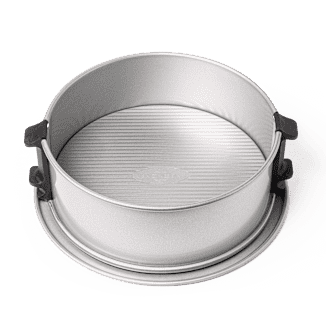
The best springform pans are straightforward to assemble and make attractive treats. Our top pick is the USA Pan Leakproof Springform Pan. Its two bracket closures are fairly easy to open and close and produce a tight, leakproof seal. Cake and cheesecake were easy to slice and serve, thanks to its tall, raised base.

Springform pans are most often used for cheesecake, but we reach for this unique piece of bakeware for so much more. Unlike a typical cake pan, which consists of a single piece of metal, springform pans have at least two separate pieces: The walls come apart and then latch shut around the circular base. This design is ideal for cheesecake because you can unmold it and cut a slice without any flipping required, but it also comes in handy for other baked goods that are delicate or have a topping that might get ruined if you tried to shimmy it out of a regular cake pan. Think: an olive oil cake with a lofty, crackly sugar crust; a cinnamony coffee cake with a pecan-studded crumble; or a whimsical ice cream cake with perfectly piped whipped cream decorations. It may not be the first pan every new baker adds to their collection, but they will be glad when they do.

What to Look for
- Tight-Fitting Collar: Springform pans are often used to bake cheesecakes, which frequently call for a water bath. To test that they were leakproof, we baked our cheesecake in a water bath dyed with blue food coloring. Most of the pans had standard metal buckles that you open to expand the walls and then simply latch shut around the base. But two pans had a unique design: Their walls come in two pieces, which you join together using two black plastic brackets with silicone seals underneath. They also had rubber gaskets around their bases. These pans are trickier to put together than pans with standard buckles and require you to keep track of extra parts, but they add extra security against leaking, which we appreciated. Our favorite pans had especially tight closures and didn’t feel loose or flimsy. Only one of the pans in our lineup leaked very slightly, but this didn’t significantly affect the finished product.

- Raised, Extended Base: All of the springform pans in our lineup produced great cakes and cheesecakes, but removing the finished product from the pan was another story. We found that pans with bases that were raised and wider than their collars were the easiest to use. They provided plenty of room and a comfortable angle to slide a thin metal spatula under a slice of cake, allowing us to remove baked goods with ease.
- Nonstick Coating: The worst case scenario is baking a picture-perfect cake and not being able to serve it because it’s completely stuck to the pan. All but one of the pans in our lineup had a nonstick coating, which enabled us to seamlessly release slices of cheesecake or entire olive oil cakes.
What to Avoid
- Recessed Base: A few springform pans had collars and bases that were the same diameter. The rim of their bases turned upwards, creating a small lip. It was difficult to wiggle a spatula underneath our baked goods and remove a tidy slice.

Other Considerations
- Light versus Dark Metal: We saw metal springform pans in a range of hues, including gold, silver, and dark grey. In general (and for all kinds of bakeware), darker pans absorb more heat than lighter pans, so treats bake more quickly. All of our pans baked cake and cheesecake in the suggested recipe time range, but some were done a little sooner than others. If you choose a darker pan, be sure to check for doneness a couple minutes early.
The Tests
- Bake Olive Oil Cake
- Bake Lemon Cheesecake in water bath dyed with blue food coloring after pans have been repeatedly opened and closed
- Open and close latches 100 times
- Wash each pan by hand after every use
How We Rated
- Performance: We evaluated the quality and appearance of cheesecake and olive oil cake prepared in each pan.
- Ease of Use: We assessed how simple it was to assemble the pans and how easy it was to bake with them and release baked goods.
- Durability: We evaluated how the pans held up throughout testing and after being opened and closed repeatedly, as well as how easy they were to clean.

 Buy at Williams Sonoma