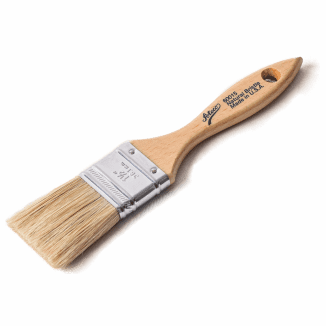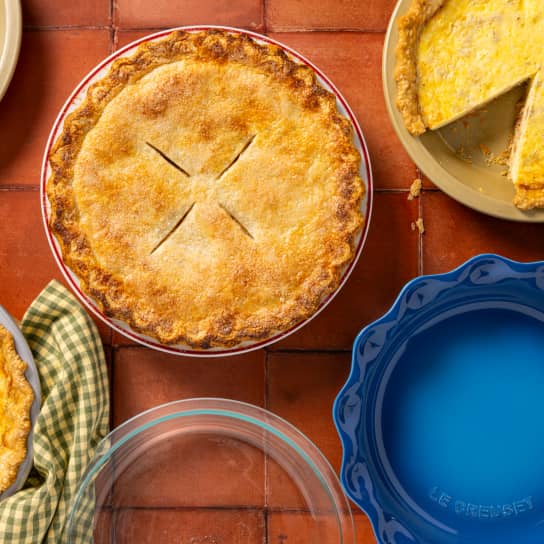



The best pastry brushes are durable and easy to use, picking up plenty of liquid and allowing you to precisely apply oil and melted butter or egg wash on raw dough and pastry. Our favorite is the Winco 1.5" Flat Pastry Brush. Its fairly long, dense bristles pick up the ideal volume of liquid and make it easy to apply it to different foods.

What You Need to Know
We love silicone brushes for basting meat and for oiling hot pans. They never shed bristles, they’re safe to use on hot surfaces, and they’re a breeze to clean—you can just throw them in the dishwasher. But for tasks that require a little more finesse, natural-fiber brushes can’t be beat. In the test kitchen, we reach for pastry brushes when spreading egg wash, glaze, or melted better on delicate doughs or pastry and for removing crumbs from layer cakes before frosting. Because natural-fiber bristles are so fine, they allow you to apply liquids more precisely and with a gentler touch than with silicone brushes. Natural-fiber brushes also simply have more bristles than silicone models, so they can pick up more than double the volume of liquid that silicone brushes can. Pastry brushes with natural-fiber (typically boar’s hair) bristles are notorious for shedding bristles, are trickier to clean, and can retain odors more readily than silicone. We recommend keeping both silicone and natural-fiber pastry brushes on hand so that you’re always prepared for any brushing task.

What to Look for
- Moderately Long, Uniform Bristles: We found that bristles that were just under 2 inches in length provided the right combination of agility and coverage. Longer bristles were great for reaching into the nooks and crannies of fruit tarts but were a touch unwieldy when applying oil to phyllo. Shorter bristles felt stubby and had less surface area with which to cover the food; they lacked the supple swish and fluidity of longer bristles. We also preferred brushes with bristles that were uniformly the same length throughout the head; we found that they allowed the most control. Bristles of different lengths tended to stick out like flyaways, making for slightly less precise, controlled application.

- Fairly Thick Heads: We liked brush heads that were moderately dense, measuring about ½ inch thick or more. The thicker the brush head, the more bristles it generally had and thus the more liquid it could retain, letting us reload the brush a little less often. Still, these differences in capacity weren’t all that dramatic—at most, it meant that a less-thick brush took three passes to cover a 14 by 9-inch sheet of phyllo with oil instead of two. On the flip side, some brushes had bristles that were a little too densely packed, and they felt stiff. They were a bit rougher on the food, pushing over and bruising some of the berries on the fruit tart and more readily tearing the phyllo dough.

- Reasonably Long, Textured Handle: We liked handles of medium length (4.75 to 5 inches), as these were easy for testers of all hand sizes to wield precisely. We preferred those that were relatively thick (2 to 2.5 inches in circumference) and made from materials that were easy to grip even when wet or greasy; rubbery plastic was ideal, but varnished wood was just fine too.
- Durable Bristles and Ferrules: Unsurprisingly, we had a preference for brushes that shed fewer bristles throughout testing. We also liked brushes that had ferrules that didn’t rust during our testing, even when we washed them more than 10 times.
What to Avoid
- Uncomfortable, Long Handles: Brushes with handles made of bare metal were too slippery, and brushes made from unfinished wood handles made testers worry about splinters. Handles that were longer than 5 inches took us a little too far from the action and generally made for clumsier maneuvering.

- Loose Bristles: While most of the brushes in our lineup dropped at least a couple of bristles, the worst shed quite a few throughout testing and handwashing.
The Tests
- Apply egg wash to raw store-bought pie dough
- Apply glaze to fruit tart
- Apply olive oil to sheets of phyllo dough
- Wash each brush by hand 10 times
- Note volume of bristles lost during testing
- Have users of different hand sizes, dominant hands, and levels of pastry experience test-drive
How We Rated
- Performance: We evaluated each brush on how much liquid it held and how agile, precise, and gentle it was in action.
- Comfort: We rated each brush on how grippy and comfortable it was to hold.
- Durability: We evaluated each brush on how durable it was, noting if it lost significant bristles over the course of testing.

 Buy at Williams Sonoma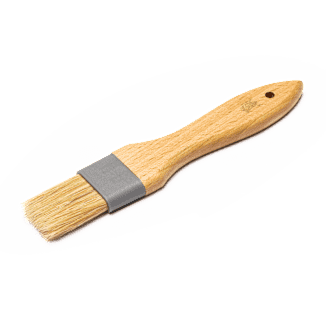
 Buy at Nordic Ware