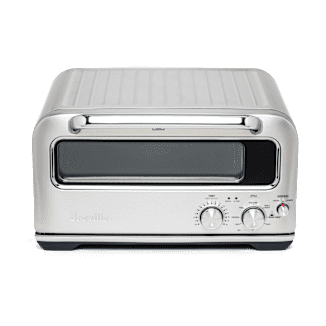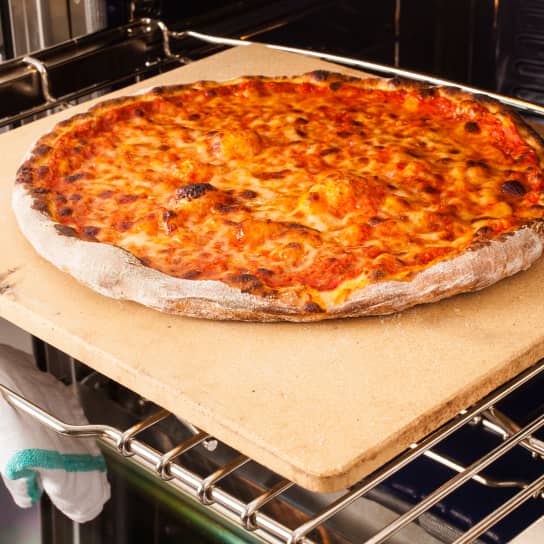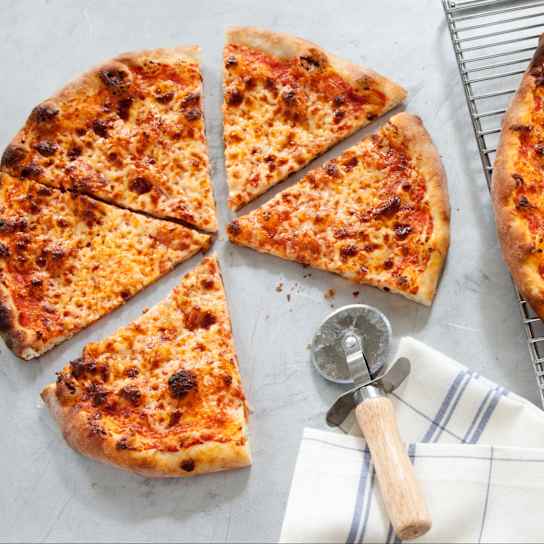



For pizzeria-quality pies with exceptionally pillowy, chewy-tender crust, you need an oven that gets very hot—ideally 800 degrees or more. Two electric models, the Ooni Volt 2 and the Model P Smart Pizza Oven from the brand Current Backyard reach those temperatures. They preheat quickly, have user-friendly controls, and make it both easy and fun to make outstanding pizza. They’re co-winners.

You can make pizza in your kitchen’s oven with a baking stone or baking steel, but dedicated pizza ovens get hotter and are able to cook a wider range of professional-level pizzas from blistered Neapolitan pies to thin, crisp New York–style slices.Unfortunately, when we first reviewed indoor pizza ovens, we found that they were generally slow, didn’t get very hot, and made pizza that was mediocre at best.


A high-quality pizza oven makes it easy, quick, and fun to make professional-level pies at home.
Breville launched the Smart Oven Pizzaiolo in 2019, ushering in the second generation of more advanced indoor electric pizza ovens. Ooni—one of the biggest names in portable outdoor pizza ovens also launched an electric pizza oven of its own. They reached 750 and 850 degrees, respectively, and made exquisite pizzas of all kinds. Both were priced around $1,000, undeniably expensive for an appliance.
There’s a learning curve to each model and some pizzas were prettier than others—but experimenting was fun and rewarding. You can adjust the settings on each model for crust that is exactly as crisp, chewy, and/or charred as you like it.
Today, it’s not just Ooni and Breville dominating the market. Other brands have emerged with models that get super hot and deliver professional-quality results. With more competition comes better prices: Today, all the ovens in our lineup cost $800 or less. We’re glad to see that they’re also getting more compact.
Some indoor pizza ovens are expanding their temperature ranges to be more versatile, including temperature settings as low as 90 degrees for proofing dough or 350 degrees for baking cookies. Even so, they are largely marketed as high-heat pizza ovens and aren’t meant to replace your toaster oven or home oven, at least not yet.
A high-quality pizza oven unlocks potential for truly exceptional pizza that you can cook both quickly and fairly easily once you get the hang of your particular oven. Each time we’ve tested the newest generations of indoor and outdoor ovens, we’ve been impressed by the beautifully charred and pillowy-tender Neapolitan-style pizzas they make.
Should I Get an Indoor or Outdoor Pizza Oven?
When deciding whether an indoor or an outdoor model is right for you, first consider the obvious question: Do you want to cook inside or outside? If you’re open to either, here are some factors to consider.

Outdoor pizza ovens are powered by propane and/or wood or charcoal. That means that you’ll be monitoring a gas flame or fueling a fire. Many have baking stones that can fit roughly 12-inch pizzas but some are big enough to make 18-inch pizzas. As the ovens get bigger, they get more expensive. There’s a big price range in this category, from about $500 to $800. As their name implies, they can only be used outside (although they should be stored indoors when not in use).
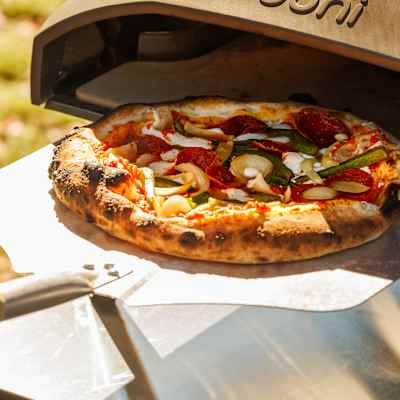
The Best Outdoor Pizza Ovens
A portable pizza oven that heats up to 800-plus degrees and turns your backyard into a pizzeria? It’s a pizza lover’s dream come true.
Read Our ReviewIndoor pizza ovens are powered by electricity. Most have baking stones that fit pizzas about 12 inches in diameter; there are no big 18-inch pies here. Although the high-end models are getting less expensive than they once were, they still typically cost about $700. If you don’t have any outdoor space, but do have a fair amount of kitchen space, or if you just want to be able to make stellar pizza in the comfort of your own kitchen, an indoor pizza oven may be right for you. Some indoor pizza ovens can be used outdoors if you have access to an electrical outlet; just be sure to check your oven’s manual for guidelines and voltage restrictions. Read on to learn more about them.
Tips and Tricks for Making Pizzas in an Electric Pizza Oven
Most of our favorite dough recipes meant for a home oven can be made in a pizza oven with a few tweaks.
- Divide dough for Thin-Crust Pizza into three balls (instead of two), set aside to proof, and then stretch into 11-inch rounds (instead of 13-inch)
- The dough for Whole-Wheat Pizza can also be shaped into three 11-inch rounds
- Rotate your pizza as it cooks
- An internal fan helps cool off the pizza oven, so don’t unplug it immediately after use; wait until the fan stops running
- If you’re using a dough recipe that contains sugar (like our Neapolitan-Style Pizza), omit it to prevent overbrowning
What to Look for
- High Temperatures: We liked ovens that were capable of achieving really high temperatures. The difference between 850 (the highest temperature setting on our favorite indoor pizza ovens) and 550 degrees (the highest temperature most home ovens can achieve) is significant. In our tests, we found that the temperature of the air and baking stones exceeded the top-rated pizza ovens’ respective maximum settings of 850 degrees. Baking pizza at such high heat means that the bottom crisps up and the toppings cook before the interior of the dough has a chance to dry out. Simply put: You can make pizza with tender chew and textural contrast that you cannot get from a home oven.

- Straightforward Controls: We liked ovens that were easy to operate, with simple, clearly marked dials, and markings that lit up brightly and were easy to read from a distance.
- Customizability: All the ovens we tested had settings for various types of pizzas and other foods, but we preferred ovens that allowed us to dial in specific temperatures too. For example, if an oven’s Neapolitan setting corresponds to 810 degrees, we appreciated that we could turn the temperature up or down a few degrees as needed. Every dough is different, so depending on which exact recipe you use, the dough may brown at a faster or slower rate. Being able to adjust the precise temperature ensured we were able to achieve our desired result. Built-In Timer: We appreciated models that had built-in timers that were easy to set, saving us from having to keep track of another gadget
- Large, Clear Windows: We preferred ovens with large windows so that we could watch our pizza cook without having to open up the door and lose heat.

Nice to Have
- Bigger, Square Pizza Stones: Bigger stones allow you to make bigger pizzas. Additionally, as we’ve found in our testing of baking stones and steels, launching a round pizza onto a round stone requires precision and finesse. We could still make excellent pizza but we appreciated the wiggle room larger stones gave us.
We found it a little easier to unload pizza dough into ovens with larger, square stones than into ovens with smaller, round stones, shown here.
- Tall Interior: If you’re going to invest in an indoor pizza oven and make room for it in your kitchen, it’s a great bonus if it can accommodate more than just pizza. While pizzas are typically no more than an inch or so tall, we appreciated ovens with an opening and an internal height of about 4 inches, allowing us to fit a wider variety of foods.
Other Considerations
- Additional Features: One oven’s temperature settings ranged from 90 degrees for proofing dough all the way up to 850 degrees for Neapolitan-style pizza. It also had a removable oven rack, similar to a toaster oven. While the internal height and shape of the ovens are still largely meant for cooking pizzas at a high temperature, additional features provide a little extra versatility for your money.
Are Any of These Smaller Models Worthwhile?

When we first visited the category of indoor pizza ovens, there weren’t many options. We tried countertop electric pizza ovens that were smaller and less expensive, but they were finicky to use, with tiny baking stones or cramped openings that made it difficult to load and rotate pizzas. And most importantly, they just don’t get hot enough to make stellar pizza. The best models barely broke 500 degrees, comparable to using a baking steel or stone in a home oven, and one never got above a tepid 265 degrees.
The Tests
- Make thin-crust cheese pizza
- Make Neapolitan-style pizza
- Make Neapolitan-style pizza with pepperoni
- Broil broccoli rabe
- Record the temperature of the cooking surfaces and air inside the oven at the maximum temperature settings
How We Rated
- Performance: We evaluated the quality of different styles of pizza prepared in each oven.
- Ease of Use: We considered how easy it was to adjust the pizza oven both using its preprogrammed options and the manual modifications. We also considered how easy it was to load, rotate, and remove pizzas.