 Buy at Amazon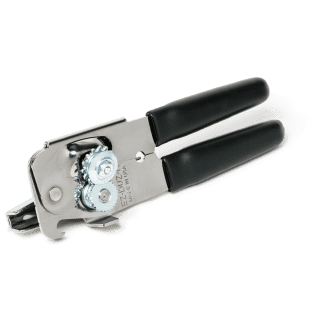


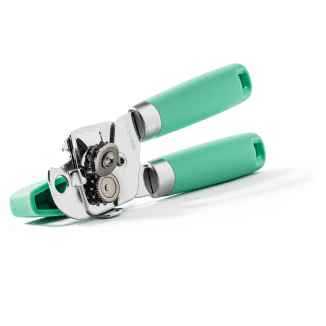
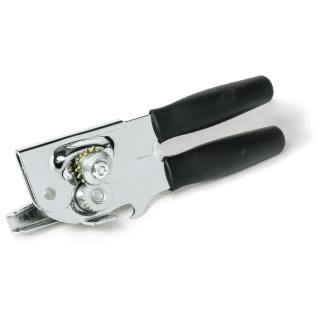
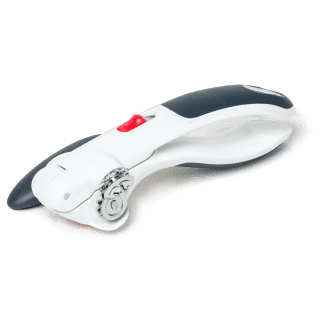
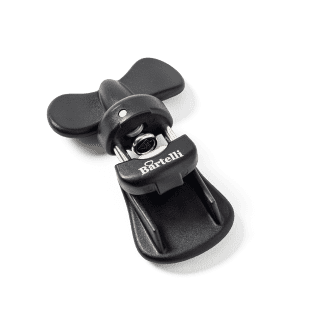
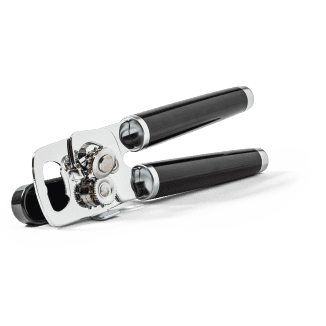
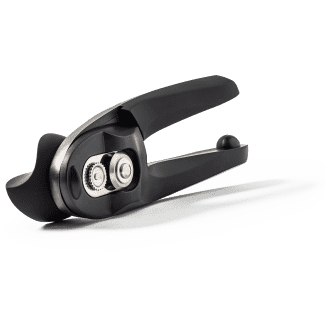
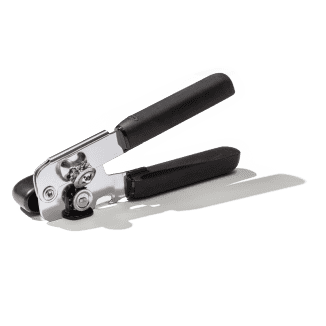
Our favorite traditional can opener is the OXO Good Grips Soft Handled Can Opener. It opens cans quickly, requires relatively little effort, and is comfortable to handle. We also like the EZ-DUZ-IT Can Opener, which is just as good at opening cans but a touch less comfortable to grip and use. Our favorite safety can opener is the Kuhn Rikon Auto Safety Lid Lifter. It does a great job of opening cans without leaving any sharp edges and is sleek and easy to store as well.
Curious about electric can openers? You can read our full review here.
The Trouble with Can Openers
Can openers seem like simple tools. Why is it so hard to find one everyone likes?
Learn MoreThe perfect can opener doesn’t exist. We’ve been reviewing can openers for decades, and every time we pick a winner, we get complaints about it from our readers and from the test cooks who use it at work.
Part of this has to do with the tools themselves. Most just aren’t made to last forever. Metal parts rust, cutting blades dull, handle grips loosen or fall off, and the tension and alignment of arms or gears can shift over time. These are just some of the many issues we’ve seen over the years—even in models we otherwise like.
Personal preference also plays a role. There are several types of can openers, and the kind you like really depends on your priorities.
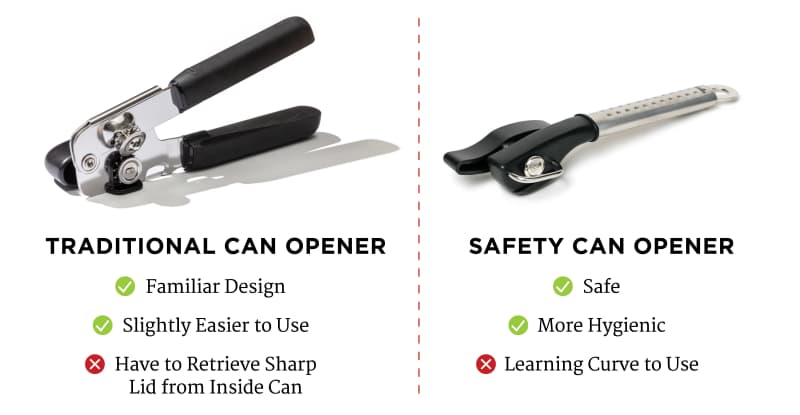
Traditional Can Openers and Safety Can Openers
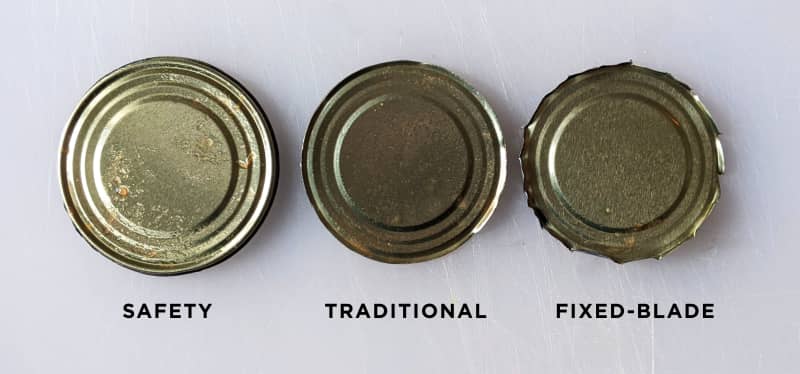
For this review, we focused on the two most common options—traditional and safety can openers. Both rely on a driving handle that users turn to propel a small, circular blade around the lid of a can. The difference lies in where that blade cuts. Traditional can openers puncture the top of the can, cutting downward around the lid inside the can’s rim. Safety can openers cut horizontally into the side of the can, usually on the top rim itself. This creates a smoother, and therefore safer, edge.
In our review a decade ago, we chose a safety can opener as our winner; in our review a few years ago, we selected a traditional model. The truth is, there is not just one right answer: All the models will open cans, and each type has pros and cons.


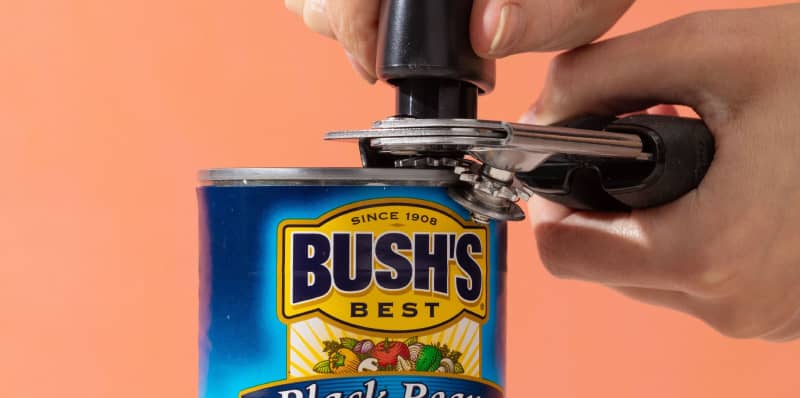
Traditional can openers cut downward into the top of the can. The severed lid is sharp and drops into the can itself.
How Traditional Can Openers Work
Most people are already familiar with traditional can openers, so this style can seem more intuitive to use. They also open cans a bit more quickly than safety openers. They have larger cutting wheels that cover more ground in a single rotation of the driving handle. They also feature longer driving handles that give you more leverage, allowing you to complete each rotation more easily. They give you more sensory feedback while you’re opening the can too: Air enters the can with a little hiss when you puncture it with the blade, and you can see your progress as the wheel moves around the can. You know the job is done when the lid is severed and sinks into the can below. Unfortunately, these openers leave the lid and can walls with sharp and sometimes jagged edges, making it tricky to remove the lid afterward.


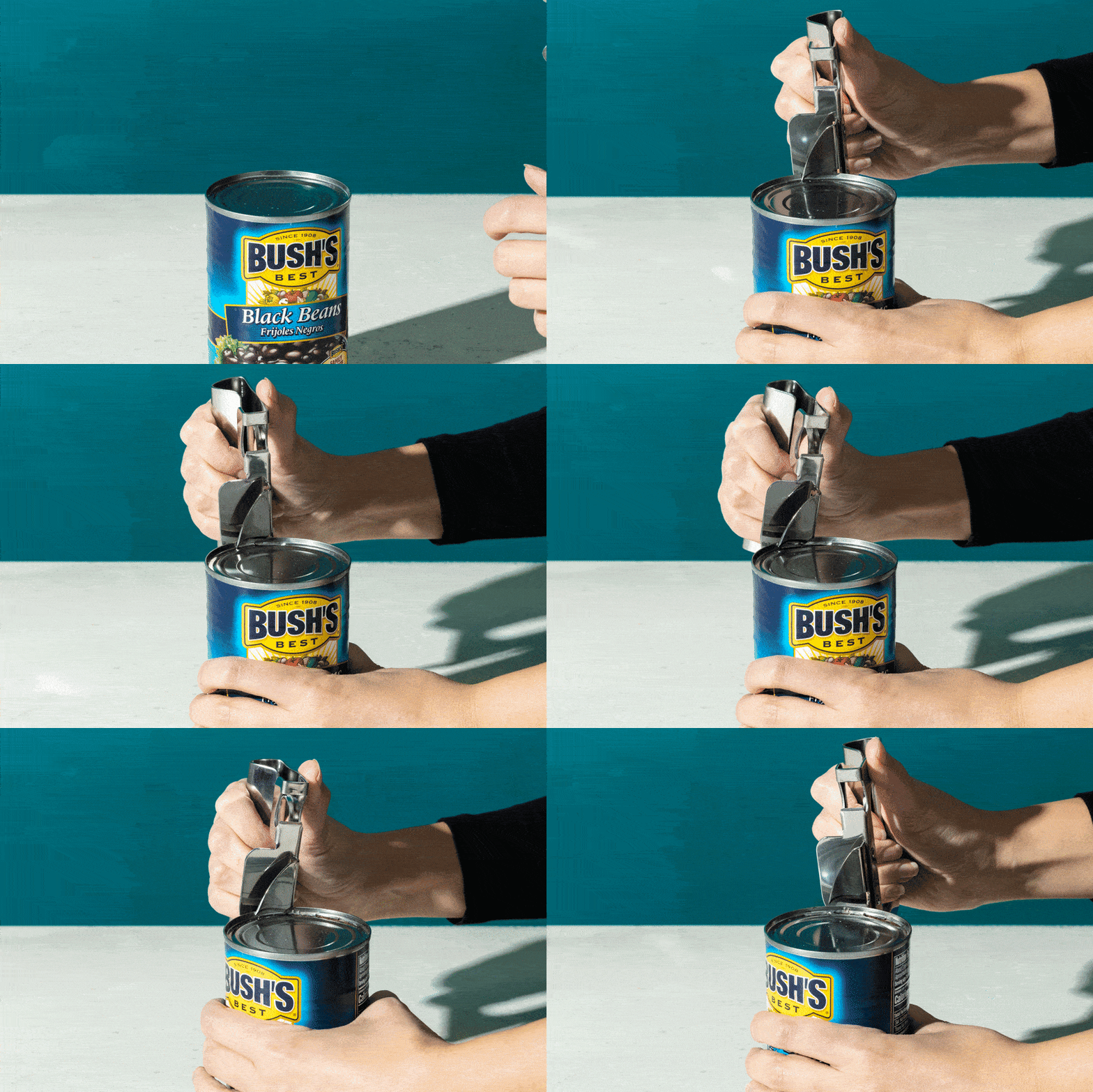
Safety can openers cut into the side of the can. The severed lid is safe to handle and can be simply pulled off.
How Safety Can Openers Work
Safety can openers really are safer. Lids severed by them have no sharp or jagged edges, and they’re easier to remove as well. In most cases, the safety opener will stay latched onto the lid after it’s done its job. Just lift the can opener and the lid will come with it. You can also pop the lid off with your fingers, and some safety models come with a built-in “bird’s beak” feature that acts like a little set of pliers, nipping and holding the rim of the can so that you can lift off the lid.
Better still, because the lid’s left intact, you can put it right back on the can, making it easy to store anything you haven’t used.
Safety openers are also neater and more hygienic. While the cutting edge of a traditional opener dips into the can as it cuts, no part of a safety opener ever touches the can’s contents. As a result, the blade never gets wet or soiled, making it less likely to rust, have bacteria grow on it, or need cleaning.

Still, safety models come with more of a learning curve. You attach them to cans differently; often the cutting wheel has to be positioned on top of the can, not on the side. And it isn’t always obvious when the opener has latched on—you can’t see the blade puncture the can the way you do with a traditional model, and there’s little or no hiss of air. It can also be hard to tell when you’ve actually detached the lid, since when you’re done, the can looks unchanged. (Once you remove the lid, you may see glue strings. These are unsightly but harmless and unlikely to get into your food.)

Safety can openers, which cut into the side (versus the top) of a can, may expose glue that helps seal the lid to the can. The glue itself is harmless and unlikely to get into your food.
Traditional versus Safety Can Opener: Which Is Right for You?
Some users find it takes slightly more force to turn a safety opener’s driving handle than the handle of a traditional can opener. On the flip side, some users find it uncomfortable to keep squeezing the arms of a traditional can opener together during use, as you must do to keep the unit latched onto a can. Safety can openers don’t have this problem—once one is attached to a can, it’s locked on; its one arm is just there to help guide the opener around, no squeezing required, reducing strain on your hands. (Because most safety openers only have one arm, and that arm isn’t essential for stability or grip, they’re usually lightweight—about 4 to 6 ounces. Traditional openers generally weigh twice as much, making them a little less comfortable to lift and move.)
Ultimately, it’s your choice. If you want an opener that is familiar, fast, and requires slightly less force to use, a traditional model is the way to go. If you never want to fiddle with a jagged lid again or are concerned about neatness or hygiene, try a safety model.
Regardless of type, we’ve found that a few features make the better models easier to use and hold.
What to Look for
- A Long Driving Handle: The longer the can opener’s driving handle, the easier it is to turn. The driving handle acts as a lever rotating around a fulcrum, and a longer lever imparts greater mechanical advantage. It takes less force to rotate a longer driving handle than a shorter one.
- Grippy Arms: We prefer can openers with arms made from textured metal or sheathed in rubbery material. These were easier to get a grip on even when wet.
- For Safety Openers, Blades That Cut into the Can Rim: We preferred safety can openers that made shallow cuts into the rim of the can as they separated the lid from the can, leaving no sharp edges anywhere. Safety openers that cut below the rim took off the entire top; while the top itself wasn’t sharp or jagged, the can walls sometimes were. And with no top rim, cans cut by these openers lost structural integrity and became more flexible and therefore, harder to transport and pour from securely.
The Tests
- Open six 15-ounce cans of black beans
- Open four 5-ounce cans of tuna in water
- Open four 6-ounce cans of tomato paste
- Open four 28-ounce cans of whole peeled plum tomatoes
- Have users open 1 can of black beans with each opener
- Wash by hand 5 times
- Winners only: Open 25 additional cans of different sizes
How We Rated
- Ease of Use: We rated the openers on how easy it was to attach them to and remove them from the cans, and how quickly and effortlessly they removed can lids.
- Comfort: We rated the openers on how easy and comfortable they were to grip and maneuver.