
 Buy at Amazon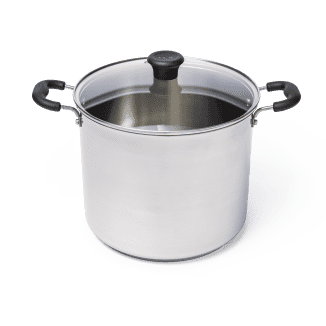
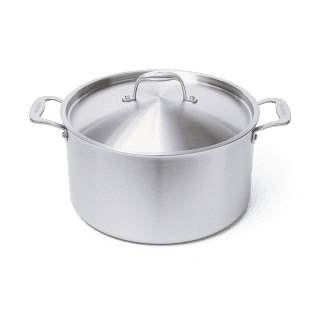
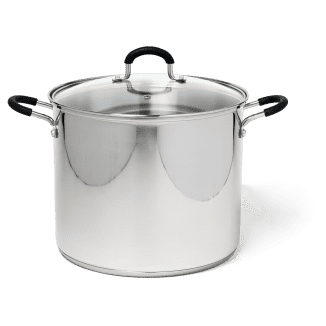
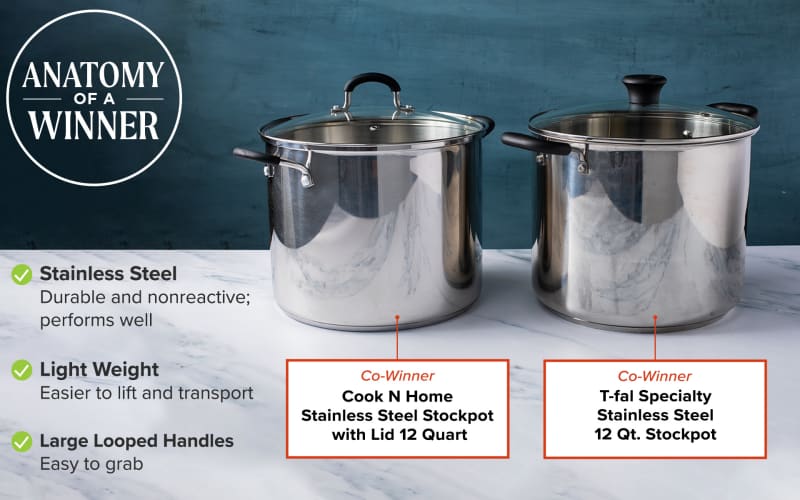
The best stockpots boast stainless-steel construction, are lightweight, and feature comfortable handles with textured grips. Two models rose to the top of our rankings: the Cook N Home Stainless Steel Stockpot with Lid 12 Quart and the T-fal Specialty Stainless Steel 12 Qt. Stockpot. They were also among the least expensive in our lineup.
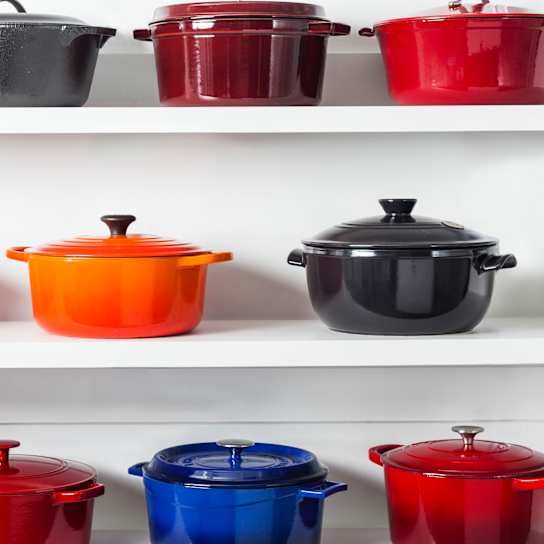
We prefer using stockpots for tasks involving large-scale boiling and simmering. If you’re more interested in making soups and stews, check out our review of Dutch ovens!
A stockpot is like an umbrella: You don’t use it often, but it’s invaluable when you need it. Usually hidden in a cabinet, it becomes a star player when making chicken broth in colder months. A large pot like this is also handy for cooking multiple ears of corn on the cob, whole lobsters, or big batches of pasta. You can also use it when making stew or chili for a crowd.
What’s the Best Size Stockpot?
For this review, we focused on stockpots that hold 12 quarts because we think this is the most useful size—big enough to accommodate our largest jobs yet small enough to easily store. All the stockpots were able to boil water at a reasonable speed, taking from 14½ minutes to 20 minutes to boil 4 quarts of water on medium heat. Our recommendations came down to other factors.

Assistant Editor Emily Phares takes notes during a visual inspection of stockpots.
Are Expensive Stockpots Worth the Money?
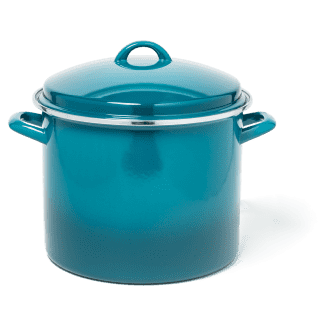
Stockpots are generally made from stainless steel or aluminum, but the type of metal—and its construction—can determine its price. Cheaper stockpots are usually made from a single piece of stainless steel or aluminum, often with a thicker metal disk to reinforce the base.
You’ll pay more for stainless-steel pots that are considered fully clad—meaning that the cooking surface and walls are made of three or more layers of bonded metal, usually with stainless steel sandwiching a layer (or layers) of aluminum. Fully clad pots are thicker, heavier, and often more durable than pots made from a single piece of metal, and they perform better with tasks involving sautéing or searing, cooking foods exceptionally evenly.

But while we often prefer fully clad cookware such as saucepans and skillets, we’ve found that cladding is not essential here. With stockpots, we’re usually boiling or simmering ingredients rather than sautéing them. And because we expect stockpots to hold very large, heavy volumes of liquid and other ingredients, we actually prefer lighter-weight, thinner models—they weigh less, are easier to lift, and can take slightly less time to bring the contents to a boil.
This is one instance where we think it makes sense to save your money and go with a cheaper, thinner pot. However, if you plan to do a lot of sautéing or make large batches of stews and chilis—and don’t mind spending significantly more—a fully clad stockpot can be a good option.
What to Look For
- Stainless-Steel Construction: We preferred stainless-steel pots as they were durable, nonreactive, and performed well across our testing. They were also able to withstand heat without discoloring.
- Light Weight: Our winning pots were on the lighter end of the spectrum, weighing a little over 4 pounds without their lids, and were therefore easier to lift and maneuver. Heavier models (weighing more than 5 or 6 pounds) weren’t dealbreakers but required extra effort when draining and straining food.
- Large Looped Handles: Generous-sized looped handles made our winning stockpots easy and quick to grab, even when we were wearing bulky oven mitts. Smaller handles were harder to grip.
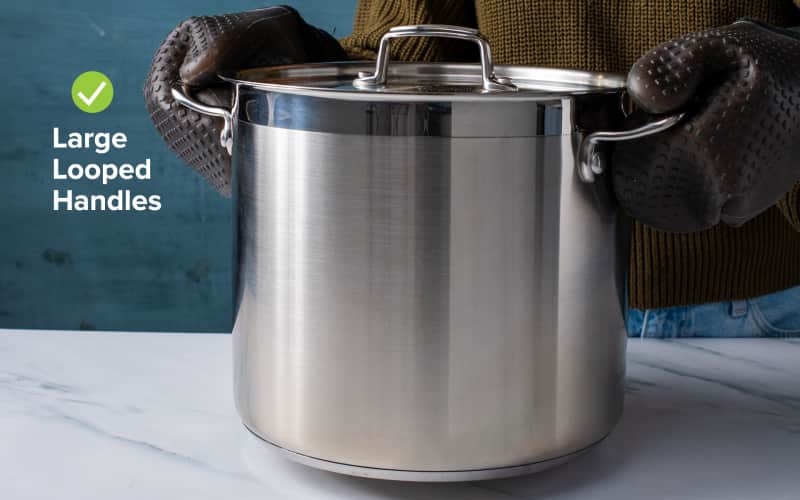
- Well-Fitting Lid: We preferred lids that were easy to position in place and sat neatly inside the pot’s rim.

Nice to Have
- Textured Grips: Rubber and silicone grips offered added security and comfort when transporting heavy chicken broth and bones to the sink.
The Tests
- Make Foolproof Boiled Corn, using tongs to remove the ears
- Boil 2 pounds of angel hair pasta, frequently stirring the pasta, and strain afterward
- Sauté 1 cup of diced onion in 2 tablespoons olive oil over medium-low heat until golden brown
- Make Classic Chicken Broth
- Wash five times according to manufacturer instructions
How We Rated
- Ease of Use: We rated stockpots highly if they fit all foods with ease and if they were lightweight and easy to maneuver around the kitchen, cook in, and pour from.
- Performance: We rated the stockpots on how well they performed a variety of tasks, including boiling water and making chicken broth.
- Durability: We gave strongest marks to stockpots that didn’t discolor or otherwise degrade during testing and that held up to repeated washings without showing signs of damage.