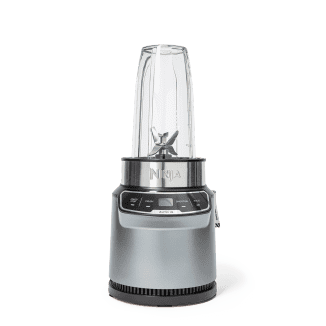




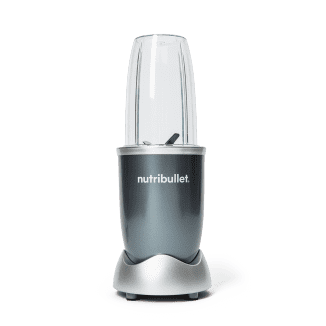
The best personal blenders are intuitive to use, whip up great smoothies and dressings, and allow you to bring them on the go. Our top choice is the Beast Mega 1200. It’s an impressive performer, blending everything to perfection. It’s also a handsome machine that’s simple and intuitive to operate. And it has one of the largest capacities we’ve encountered in a personal blender, so you can make smoothies for two with ease. If you’d like a smaller option, we also like the Beast Mighty 850. It operates just as simply as our top choice and is nearly as powerful, making super-smooth blends and purées. And if you’d like a less expensive option, try the Nutribullet Personal Blender. While it’s less powerful than our other choices, it still makes excellent, if slightly coarser-textured, drinks and sauces.

We love our winning full-size blenders, but personal blenders have lots of perks. They’re about half the size of regular blenders, with a smaller capacity of 18 to 33 ounces, so they take up less space in the kitchen. Many personal blenders come with lids that convert the blender jar into a travel mug, letting you take your drinks on the go, and many also have closed lids that make it easy to store your smoothies, milkshakes, or salad dressing in the refrigerator.
They’re a bit more limited than full-size blenders. Because they’re small, you can’t blend large batches of food in them, and they lack the power needed for the tougher jobs we ask of full-size blenders, such as making nut butter or crushing ice. They also can’t blend hot ingredients, as steam can build up and cause the tightly sealed blender jars to explode. (Thankfully, many of the models we’ve tested have automatic safeguards that prevent the motors from running when hot ingredients are detected.)
Instead, they’re ideal for people who want to make one or two smoothies each morning or those who want a compact machine for making milkshakes, sauces, or small batches of salad dressings. They’re also great for cooks with limited storage or counter space.
There are two main types of personal blenders. A few of the models we purchased are designed like traditional blenders—the blade is permanently centered in the bottom of the jar, which engages directly with the motor in the blender’s base and turns the blades to blend. Once you’ve finished blending, you can drink straight from the jar or pour into another cup.
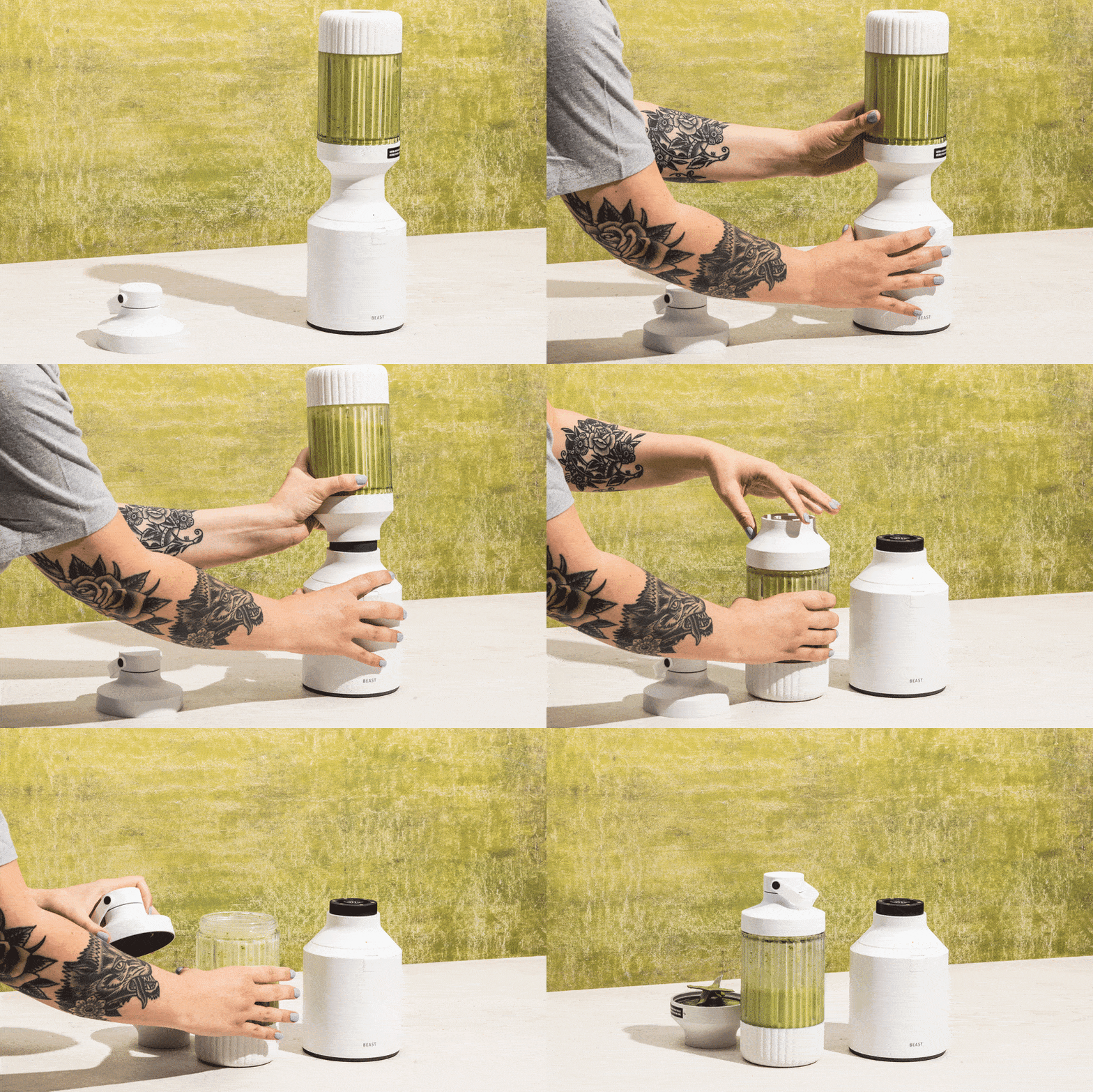
Most newer personal blenders have a different design, though. You add ingredients to a jar, taking care not to exceed the maximum fill line, if one exists. Then you screw on a removable cap that is fitted with blades. Invert the now tightly sealed jar and either screw it onto the blender base or twist it into place. Depending on the model, you can either press a start button or press the jar itself to engage the blender’s motor (housed in the base) and make it turn the blades. When the ingredients are blended to your liking, you unscrew or untwist the jar, invert it again, and take off the bladed lid. You can then drink directly from the jar or put a non-bladed lid on it for storage.
What to Look for
- A Powerful Motor: As with full-size blenders, a powerful motor is fairly important. We’ve found that a blender needs a certain amount of power to perform the toughest tasks, such as blending tough, fibrous kale into smoothies. And the more powerful the motor, the finer and smoother the purees, sauces, and dips the blender generally produces as well. While the wattage you see advertised on a blender’s packaging isn’t necessarily the power you get during use, we’ve found that as a rough guideline, the higher the advertised wattage, the more effective the blender does in fact seem to be. That said, all the wattage in the world can’t ensure good smoothies if a blender’s jar or blades aren’t designed well; the performance of any blender depends on a number of different factors.
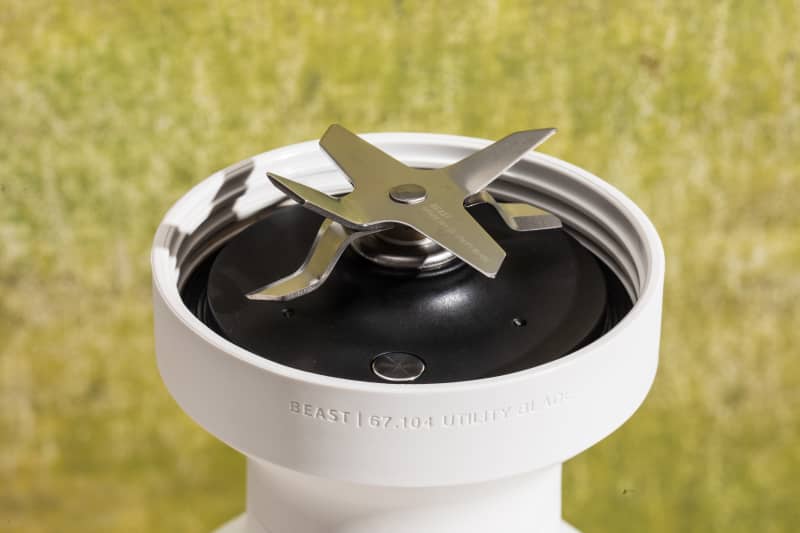
- Removable Blade Caps: We vastly preferred models with blade caps that could be removed when not in use and cleaned separately. While we didn’t necessarily hate models that had blades that were permanently attached to the base of the jar, we found that both these jars and blades were harder to clean.
- Moderately Wide Jars: We preferred models with jars that had openings measuring at least 2 inches across, as these were easier to fill than narrower jars. Jars that were relatively broad also did a better job of circulating and blending ingredients more uniformly than especially narrow ones, so we didn’t have to stop as often to shake or stir ingredients with a spatula.
- A Leakproof Lid with a Good Drinking Spout: We preferred travel lids that offered a leakproof seal and a comfortable drinking spout.
- Hands-Off Operation: Personal blenders work in three different ways: Some models have a conventional on/off button that you press to start and stop blending. Others start automatically when their jars are twisted into place. And a third style had pulse buttons that had to be held continuously in order to keep blending. We preferred the first two styles because they allowed us to walk away during blending and didn’t require tedious pressing of a button.

What to Avoid
- Too-Narrow Jars: Models with jars that were too tall and narrow, measuring less than 2 inches across, trapped ingredients far from the blades, so they couldn’t be incorporated into a smooth, uniform mix without pausing to shake or stir the contents, an extra step we’d rather not take.
- Fussy, Leaky Lids: Many of the lids that came with the blenders were flawed, making them less useful to take with us on the go. Solid lids lacked the drinking spout that we preferred and had to be twisted on and off. Some had leaky gaskets or petite pour spouts that were too narrow for thick smoothies. And others had hinged closures that hit testers in the forehead with each sip.
Other Considerations
- Blade Number and Design: After evaluating many personal blenders over the years, we’ve found that there is no one perfect blade design that ensures success. Many different blade factors can determine performance: the number and size of the blades, their wingspan and angle, their material and edge type (serrated or straight), and the way the blades fit inside their jars can all play roles in how well or poorly a model blends. Ultimately, the proof is in the pudding—or really, the smoothie. The most successful blade designs were those that worked well with their jars to ensure the finest purées.
The Tests
- Make smoothies with fibrous kale and pineapple
- Make Ultimate Chocolate Milkshake
- Make half-batch of Green Goddess Dressing
- Have five user testers make Very Berry Smoothie in each model
- Fill with water and take each model on a bumpy walk around the block, carrying it by hand at a jog and also transporting it inside the cup holder in a backpack
- Wash each blender cup and blade in dishwasher or by hand, according to manufacturers’ recs 10 times
- Prepare kale/pineapple smoothie 10 times for durability testing
How We Rated
- Performance: We rated the models on how well they made smoothies, dressings, and milkshakes.
- Ease of Use: We evaluated the models on how simple they were to use.
- Cleanup: We evaluated the models on how easy they were to clean.