

 Buy at Amazon
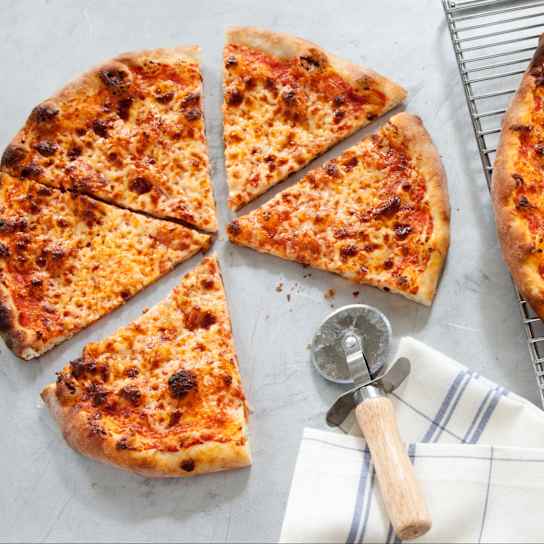
The blazing-hot oven of a real pizzeria can produce pizza with flavorful, crisp, deeply browned crust; melty, bubbling cheese; and hot, savory-sweet tomato sauce all in a matter of minutes. At home, though, pizza rarely reaches those heights. While a professional brick oven can reach temperatures upwards of 800 degrees, home ovens typically top out at 500 to 550 degrees. We’ve learned over the years that heating a good baking stone or steel in a 500- to 550-degree oven for an hour turns out pizzas that come closest to those produced in restaurant ovens.
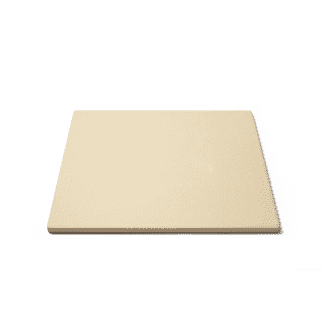
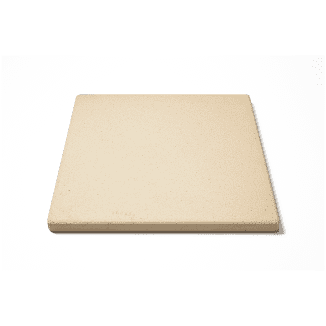
But which stone or steel performs best? There are plenty of choices on the market, most of them round and about the size of a pizza. In our previous testings, we preferred models with a larger, more generous rectangular shape, for a bigger landing zone plus more versatility when baking oblong pizzas and even long loaves of bread. We also preferred an unglazed, thick slab of synthetic high-temperature ceramic to hard-to-lift steel because of the ceramic’s easier handling and, frankly, slower baking. Especially for inexperienced home cooks, having several extra minutes of baking time can provide a little more margin for error. Ceramic also gave us more predictable, repeatable results: In the test kitchen, we sometimes found that a steel’s extra-speedy cooking overbrowned the bottom of our pies before the cheese on top had time to fully melt. We ultimately recommended models of both styles, though.
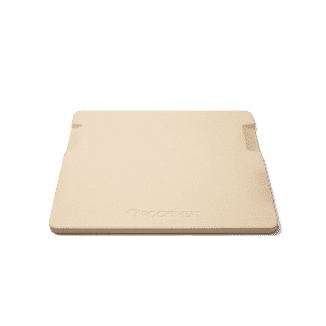
Recently, our longtime favorite baking stone by Honey Can Do, a 16 by 14-inch rectangle made of a type of ceramic called cordierite ceramic, was redesigned in a way that removed a feature we’d liked, particularly the raised feet that made it so easy to grab and lift. We decided to take a look at new options. And since our previous testing, our test cooks have continued to experiment with baking steels, learning to accommodate their superior heat transfer and faster cooking with a few tricks (see How to Get Your Pizza Stone to Heat More Evenly).
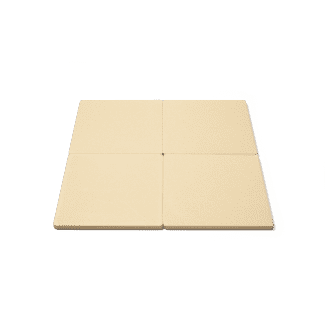
So we went back to the drawing board, testing a range of models, including the new version of our former winner. Several models were made of ceramic and others were made of steel, and all the models were rectangular or square in shape. They ranged in thickness from ¼ inch to more than 1 inch thick. Some were simple flat slabs, while others featured built-in handles, holes, or raised feet designed to make them easier to grab and pick up from a flat countertop or oven rack. We also tested two sets of small, lightweight tiles, each weighing less than 1½ pounds apiece. The tiles can be positioned side by side to make a 15-inch square on the oven rack—or, in the case of one set, a slightly larger rectangle. The rest were single slabs, with the heaviest weighing a whopping 27 pounds. We baked pizzas and bread on each model. We also tracked their temperatures to learn more about how the materials they were made from behaved in the oven. Along the way, we evaluated how easy they were to lift and move and how much work is involved in taking care of them.


Deeply browned crust and bubbling hot sauce and cheese were our goals.

Great Pizza Matters Most
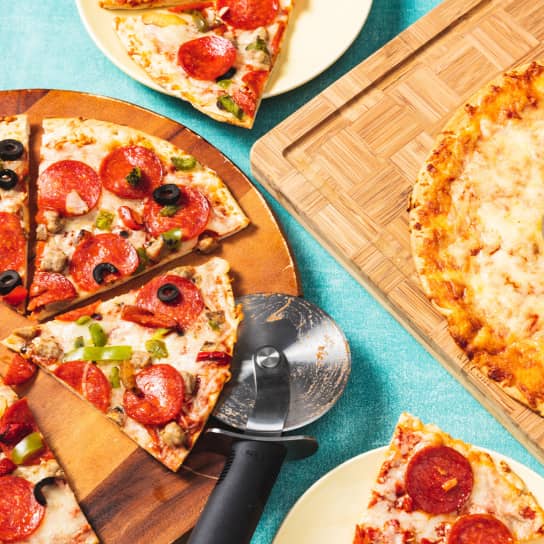
We know that the main use for a baking stone or steel is to make pizza, so that was our principal test and the factor we weighted most heavily when rating the models. We turned our home kitchens into temporary pizzerias, tracking the temperature of each model throughout the preheating and baking process. Then we compared the results.
Happily, all the stones and steels in our lineup produced very good pizzas. We were surprised to find that we saw no radical differences between pizza baked on the thinnest lightweight ceramic tiles and the thickest ceramic slab. However, we did notice one minor, but important, difference in the pizzas baked on the steels: Their crusts were a bit more airy and moist inside and perceptibly more tender to the bite. The stone-baked crusts, on the other hand, were slightly drier, chewier, and even a smidge tougher than ideal.

We baked a loaf of rustic white bread on each pizza stone and steel in our lineup to compare how well the dough rose and browned. We found that each stone and steel behaved consistently with the way they'd handled pizza. But because pizza is the main reason to get a stone or steel, we weighted that test more heavily.
When we baked a simple loaf of rustic white bread on each stone and steel, we noticed similar results. While all the bread passed muster, emerging crusty and brown, we noticed that the additional oven spring provided by the steels left those loaves slightly taller, and their crusts seemed just a bit crisper than their stone-baked counterparts (though their bottom crusts were a bit dark). The explanation for the differences lay in their materials.
Heat Transfer Is Faster In Steel Versus Stone
Steel and ceramic transfer heat at different rates: Steel is a better heat conductor than ceramic, so baking steels “throw” their heat into doughs much faster, causing them to rise higher and bake and brown more quickly than ceramic baking stones do. Our temperature tests revealed that while all the models measured 500 degrees after an hour of preheating, the steels’ temperatures dropped faster after receiving the doughs than those of the stone models. That might sound bad, but it means that they quickly gave away more of their heat—sending it into the pizza, where it counts. Ceramic stones transfer heat more slowly than steels. As a result, stones worked a bit more steadily and gradually to brown the crust—but this also meant that the crust lost slightly more moisture as the pizza baked. It’s not a huge difference, and not one that you’d necessarily notice without a side-by-side comparison, but the crusts produced on the steels were just a bit more on par with those produced in a professional wood-burning-oven pizzeria: supermoist, with a tender, chewy interior and a crisped, charred, flavorful exterior.

After doughs were added following a 1-hour preheat, the temperatures of the steels dropped faster than those of the stones. Why? They quickly gave away more of their heat—sending it into the pizza, where it counts.
Handling Baking Stones And Steels Can Be Difficult
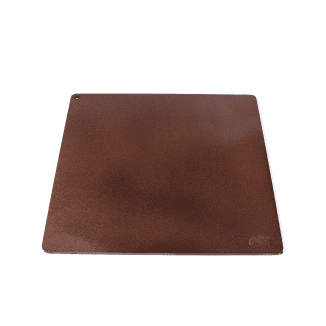
As we hoisted some of the heaviest models into and out of the oven, we found those with handles or raised feet that helped us get our fingers underneath easier to lift. A downside to the two steel models in our lineup is that their heavy, flat shape is hard to grab, and at 16 to 27 pounds, they were some of the heaviest models in the lineup. The Nerd Chef steel featured a pair of holes at two corners to use as handles, but we didn’t find them particularly helpful for this, though we liked that they could be used for hanging the steel, which might be a good option for storage. (For more on storage, see Should I Leave My Pizza Stone in the Oven All the Time?) An upside to the steels was that they were utterly unbreakable, so even if they were heavier and harder to handle than the stones, we had less to worry about when moving them. Easiest of all to handle were the set of four ceramic tiles by Outset and the set of six ceramic tiles by Cook N Home. These models are a real boon for anyone who struggles with heavy kitchen gear; each tile weighs less than 1½ pounds, and the set of four weighs less than 6 pounds total, so we could carry the set with one hand. Storing the little stacks of tiles is a breeze, too, since each tile is just 7½ inches square and ⅜ inch thick or less.

If lifting (and storing!) a heavy stone or steel is difficult, we recommend the set of four 7.5-inch ceramic tiles from Outset, which were lightweight but still effective for both pizza and bread. You can assemble them on the oven rack into a square or rectangle, as needed, or use two tiles in a countertop oven as a ministone.
At the conclusion of testing, we examined the condition of each stone and steel. None was damaged in any way, and while most were lightly stained, we know that this does not affect performance. All emerged in fine working condition.

The Best Baking Steels: The Original Baking Steel And The Nerd Chef Steel Stone, Standard ¼"
After our latest round of testing, we can recommend all the models we tested, but we’ve come around to steel as our top choice. Our favorite steels were virtually identical in size and weight (16 pounds) and performed equally, so we’re naming The Original Baking Steel and the Nerd Chef Steel Stone, Standard ¼" co-winners. Both transferred heat rapidly and efficiently to our doughs and produced the quality of pizza that we’d expect from a top pizzeria, right in our home oven. For a more budget-friendly choice (and one that’s easier on our muscles, too), we named the Cook N Home Pizza Grilling Stone Set as our Best Buy and Best Lightweight Option. Lightweight and versatile, these easy-to-handle tiles also made very good pizza, but without the weight and bulky storage requirements of a traditional stone or steel.
The Tests
- Bake Thin-Crust Pizza on each model, monitoring the temperature throughout the process, starting with an hour of preheating plus baking the pizzas
- Bake simple crusty bread on each model, noting the brownness, height, and crispness of the crust
- Evaluate the weight, shape, and handling of each model
- Assess the condition of the models at the conclusion of testing
Winning Traits
- Made from steel, which produces pizza with excellent oven spring, deep browning, and char while maintaining moist, tender interior
- Unbreakable
- Easy to clean and maintain