 Buy at Williams Sonoma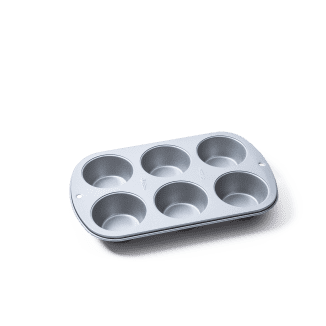
 Buy at Amazon
- Test six 6-cup muffin tins, priced from about $11 to about $26
- Conduct all tests in our winning toaster oven, the Breville Smart Oven
- Bake Basic Muffins
- Bake Easy Birthday Cupcakes
- Make Muffin Tin Frittatas
- Hand-wash each pan 10 times
If you bake muffins, cupcakes, or mini versions of baked goods such as pies, cheesecakes, and brownies, you need a muffin tin. We've always used 12-cup muffin tins, and we love our winner; it produces evenly baked, golden-brown food. Six-cup muffin tins, however, make half the number of baked goods. Their compact size means that they fit into smaller ovens, including our favorite countertop toaster oven, and are easier to store, a real plus in kitchens with limited space.
To find the best six-cup muffin tin, we gathered six models, priced from about $11 to about $26. The pans in our lineup were made from either metal or porcelain and ranged in color from white to gold to silver. All but two had nonstick coatings. We used each tin to bake Basic Muffins, Easy Birthday Cupcakes, and Muffin Tin Frittatas. We examined how easily food released, as well as the food’s overall shape and how evenly it browned. We also evaluated how comfortable the tins were to hold while moving them into and out of the oven and how easy they were to clean.
The Sizes And Shapes Of The Cups Matter
While we were happy with the foods produced in most of the tins, our results varied. The cups were shaped differently from pan to pan. Some were taller and narrower, while others were shorter and wider. Those differences affected the shapes of the baked goods they produced. Only one pan was a real problem, turning out unacceptably squat baked goods. Because the cups were shaped differently, capacites varied slightly from pan to pan, ranging from about 5 tablespoons to about 6½ tablespoons per cup. (For comparison, the cups of our favorite 12-cup muffin tin each hold roughly 7 tablespoons.)

The cups from each pan were shaped differently, so some of our baked goods were taller and narrower (left) and others were shorter and wider (right).
The two models that had the smallest cup capacities offered less than ½ inch of space between the cups. As batter rose in each cup, the expanding tops of the cupcakes ran into each other. When we pulled one of these tins from the oven, we had what looked like one giant cupcake instead of six. Our favorite tins had larger cups as well as about 1 inch of space between the cups, giving us baked goods that were separated and distinct.


The smallest tin we tested was by Nordic Ware. You can see its outline superimposed over our winner from Williams Sonoma here on the left. Its cups were small and there was so little space between them that baked goods ran together, as you can see on the right.
Pans With Extended Rims Gave Us A Place To Hold
The dimensions of the pans also affected how easy they were to handle. Some of these pans had very little space around their rims. The rims on the smallest tins were just ½ inch wide, so we didn’t have a convenient place to put our hands. With these tins, we had to pay special attention to avoid accidentally dropping them or poking the baked goods with our oven mitt. Pans with rims that were at least 1 inch wide were easier to handle. We liked that we could securely grab them without inadvertently leaving a fingerprint in our food or batter on our mitts, a feature we liked in our favorite 12-cup tin, too.


Muffins tins with at least 1 inch of space around the rim gave us a place to put our hands which made them easier to handle, especially when the tins were hot. We also liked that we could hold them without leaving a thumb-shaped indent in our baked goods.
The Color Of The Pan Is Important
We also considered the browning on the baked goods. The tops of the foods baked in all the tins looked evenly browned, and the foods were done within the time ranges cited in each recipe. It wasn’t until we removed the foods from their tins that we noticed differences. The materials and colors of the pans determined how darkly (or not) the sides and the bottoms of food browned. The white porcelain and gold-colored metal tins produced golden-brown food, while the darker metal pans produced food with darker browning. One pan didn't brown food well. It was made from shiny stainless steel, which reflects heat from the oven more than it absorbs it, so its baked goods turned out pale and flabby. We preferred the tins that gave us evenly browned baked goods.

We Like Pans That Are Nonstick
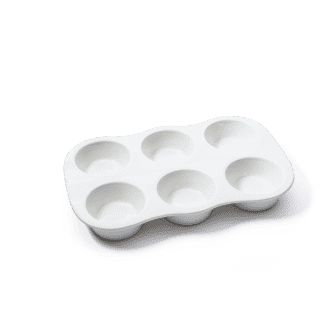
Four of the muffin tins had nonstick coatings, so they each released foods easily. These nonstick models were also easy to wash. One stainless-steel tin without a nonstick coating released food cleanly, though not as easily as those with nonstick coatings. The other tin without a nonstick coating, the porcelain model, didn't fare well. Small pieces of the muffins were left behind, stuck to the cups’ walls. The porcelain pan was especially difficult to clean because it was quite heavy—more than 3 pounds—and it became slippery in the sink.

- Cup capacity of about 6½ tablespoons
- At least 1 inch of space between each cup and at least 1 inch of exterior rim space
- Made from a metal that absorbs heat well and produces well-browned baked goods
- Nonstick-coated surface that releases food easily
- Relatively lightweight (2 pounds or less), so it’s easy to wash by hand
The Best Six Cup Muffin Tin: Williams Sonoma Goldtouch Pro Muffin Pan, 6 Well
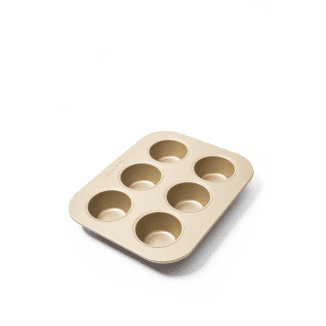
Our favorite six-cup muffin tin is the Williams Sonoma Goldtouch Pro Muffin Pan, 6-Well. The cups have large capacities, about 6½ tablespoons, and there’s enough space in between each cup to ensure that the contents don’t run into each other as they bake. The extended rim around the exterior of the tin makes it easy to securely move the tin into and out of the oven. Gold-colored, this tin produced beautiful golden-brown muffins and cupcakes with evenly browned sides and bottoms. Food also released without extra effort and left nothing behind. As a result, we were able to clean this tin quickly and easily. At roughly half the price, the Wilton Recipe Right Non-Stick/MD 6 Cup Muffin Pan is also a great choice. Because the rim is less spacious than our winner’s, it was harder to find a secure place to hold the hot tin while wearing oven mitts. However, food released easily, and it produced evenly browned baked goods that didn’t run together. If you have a toaster oven and/or limited storage space, or if you regularly make half batches of muffins or cupcakes, either of these pans will make an excellent addition to your bakeware collection.