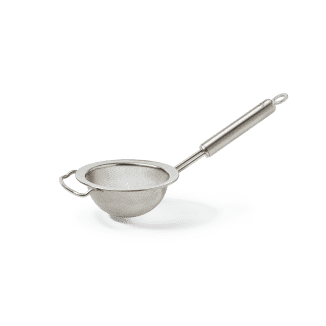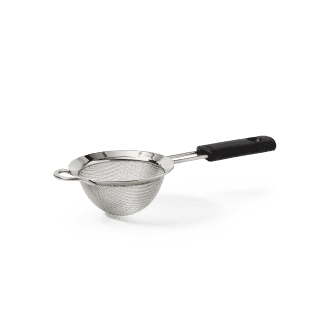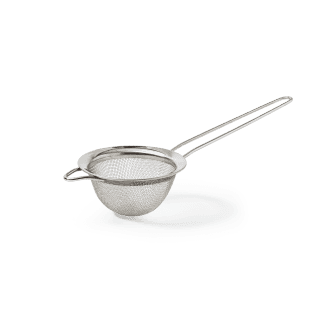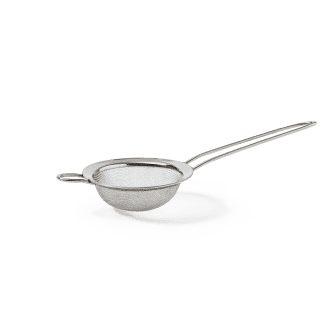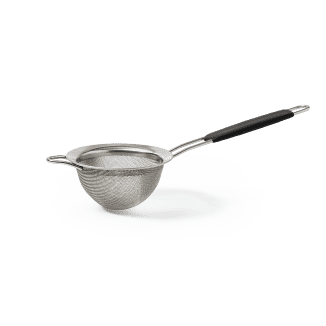
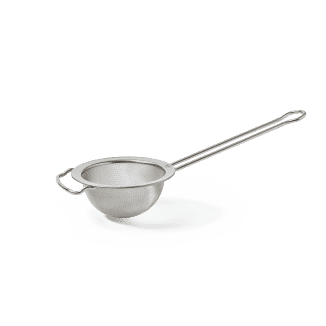

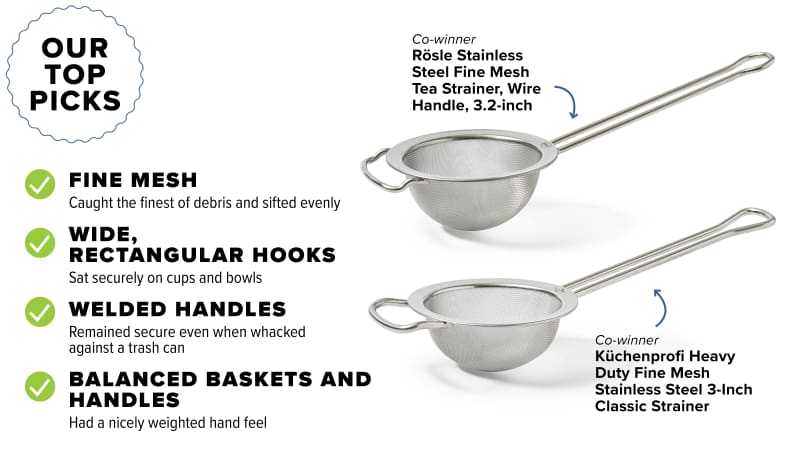
Small strainers are endlessly useful; we grab them to strain citrus juice, tea, and cocktails; dust counters with flour; sift confectioners’ sugar and cocoa powder; and even get pesky clumps out of baking powder. Our winners succeeded at sifting and straining a variety of ingredients with ease and refinement. Both the Rösle Stainless Steel Fine Mesh Tea Strainer, Wire Handle, 3.2-inch and Küchenprofi Heavy Duty Fine Mesh Stainless Steel 3-Inch Classic Strainer produced crystal clear lemon juice, evenly dispersed cocoa powder, and separated the fine bran from wheat flour (a test of mesh fineness). The weights of the handles and baskets were also evenly balanced.
Have you ever whipped out a large strainer to strain a few tablespoons of lemon juice and thought, Maybe this is excessive? While we love our winning fine-mesh strainer, the basket clocks in at nearly 8 inches across, and for some tasks we just need something smaller. Enter small strainers, sometimes known as tea strainers, which are about 3 inches wide and can be used for a variety of small kitchen tasks: straining citrus juice, loose-leaf tea, and cocktails and sifting small amounts of cocoa powder or confectioners’ sugar for decorating. We wanted to find a strainer that excelled at a variety of tasks and was also durable and easy to clean.
What to Look For
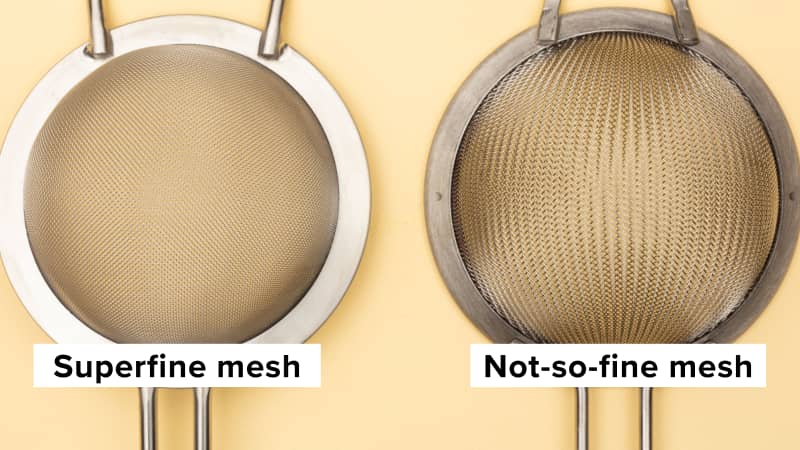
- Fine-Mesh Baskets: While many strainers were advertised as having fine mesh, some were finer than others. We preferred baskets made of more tightly woven mesh since they proved most effective at catching all different sizes of debris.
- A Wide, Rectangular Stabilizing Hook: We found that models with these types of hooks sat more securely on a variety of surfaces, including small bowls and cups, than those with smaller triangular or rounded hooks.
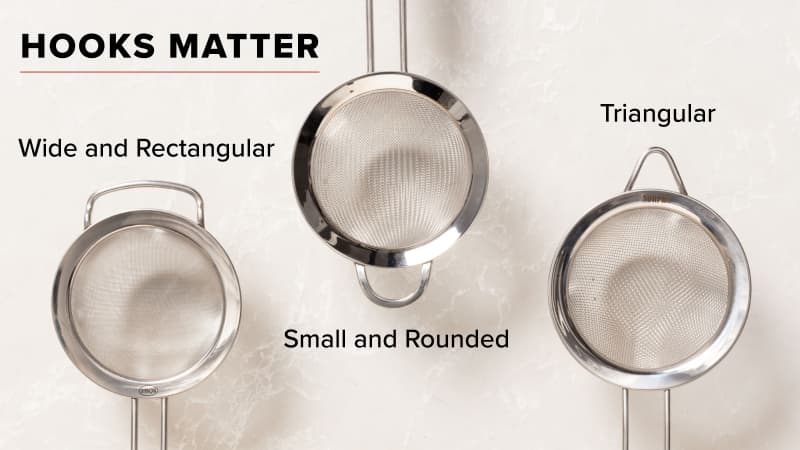
- Balanced Handle and Basket Weights: Strainers with balanced handle and basket weights were easier to handle than unevenly balanced ones, which felt tippy. They also sat more securely on cups and bowls.
- Welded Handles: It’s common to whack strainers on a trash can or compost bin to dislodge anything stuck in the mesh (lemon pulp, for example). We found that strainers with welded-on handles had little risk of breaking off when whacked. This is likely because welding creates a strong bond once the melted metal hardens.


Strainers with welded handles could take a beating without breaking, while those with soldered handles were more flimsily attached.
What to Avoid
- Baskets with Wider Mesh: Though these strainers caught big pieces of debris, they let smaller particles fall through. While this isn’t a huge deal in certain circumstances (such as when straining lemon juice), a finer mesh guarantees a finer sift when decorating a cake with confectioners’ sugar.
- Unbalanced Strainers: When a strainer’s handle outweighs its basket or vice versa, the strainer is more apt to fall from the surface it’s resting on (a small bowl, for example).
- Offset Handles: The handle of one of the models we tested was offset, which made it hard to maneuver and caused the strainer to flop over when empty.


Strainers with handles attached at slight angle are easier to maneuver than ones with more offset handles, which feel unwieldy.
- Soldered Handles: During durability testing, the handle of one strainer broke off after a few whacks against a trash can. Upon inspection, it looked as though the handle had been soldered, not welded, onto the basket, so the bond between the two was weaker.
Minor Flaws
- Fine-Mesh Baskets Are Hard to Clean: There was one downside to strainers whose baskets were fashioned from ultrafine mesh: They were harder to clean, especially after straining lemon juice and loose-leaf tea; little bits stuck in the mesh, and we had to use our sinks’ spray attachment to remove the particles. Read on for tips on how to clean a small fine-mesh strainer.
- Strain lemon juice, pressing pulp with a spoon
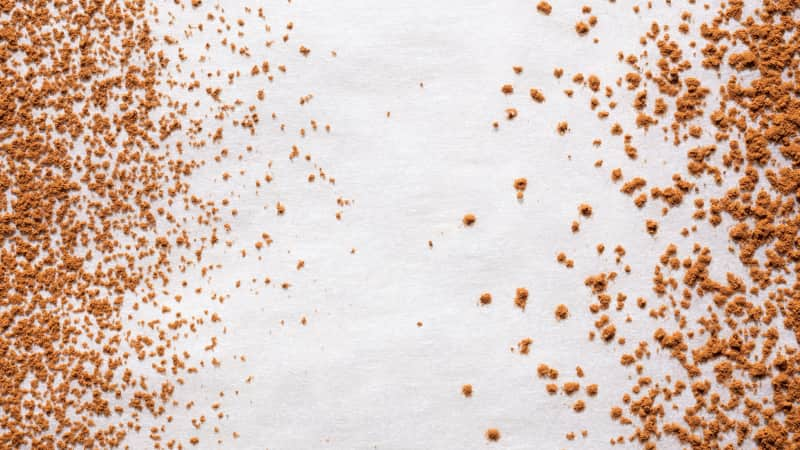
- Dust cocoa powder onto parchment rounds
- Strain loose-leaf tea
- Sift bran from whole-wheat flour to gauge basket fineness
- Hand-wash the strainers
- Wash the strainers in the dishwasher three times
- Hit the strainers on the edge of a plastic trash can 20 times