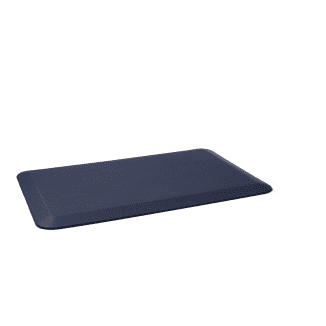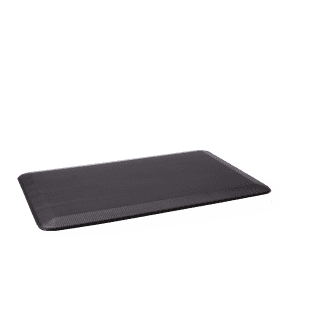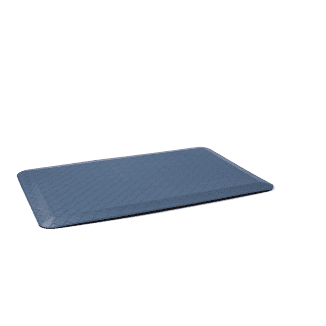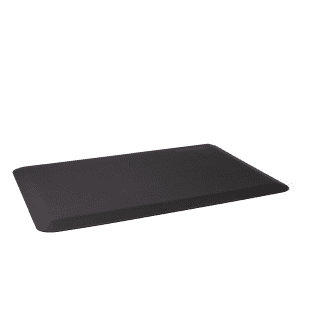

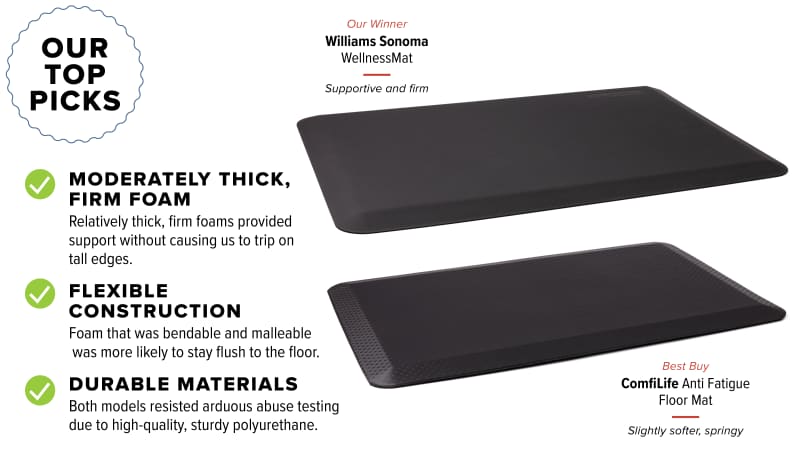
We know what it’s like to spend long days on our feet preparing (and cleaning up after) delicious meals. Antifatigue mats promise to keep both casual and avid cooks pain-free, but only a few of them actually work well. Our favorite, the Williams Sonoma WellnessMat, is supportively firm yet plush, providing a solid, comfortable surface for long days in the kitchen. It’s durable and easy to clean, and its beveled edges and effective no-slip backing minimize the risk of tripping or slipping. We also named the ComfiLife Anti Fatigue Floor Mat as our Best Buy. It performs similarly, but its softer foam provides a little less support.
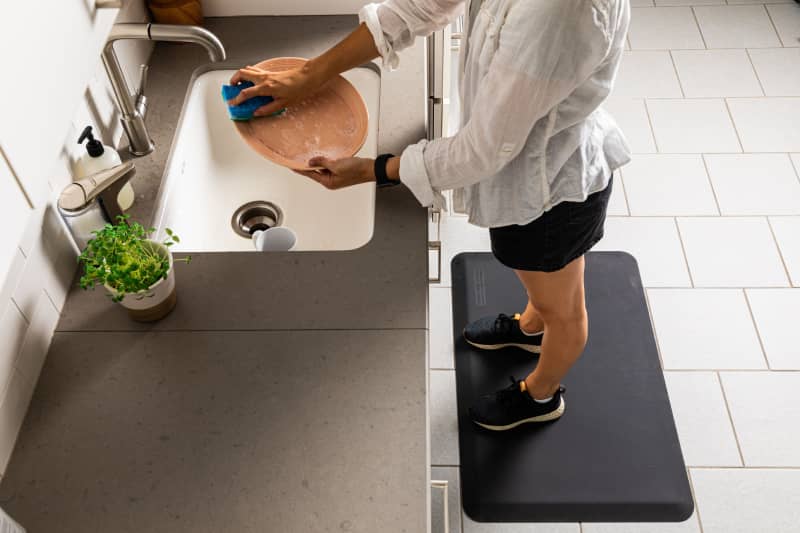
Every seasoned cook knows that some of the best recipes can call for hours of standing in the kitchen. The strain from spending those extended cooking shifts on our feet can build over time, heightening our risk of chronic pain, musculoskeletal disorders, and more. Antifatigue mats (or ergonomic mats) are designed to provide a supportive layer between our feet and the floor. According to Dr. Griffin Baum, a neurosurgeon and spine expert at New York City’s Lenox Hill Hospital and an assistant professor at the Zucker School of Medicine at Hofstra University, antifatigue mats can reduce the negative impacts on our joints and spinal column caused by prolonged standing. The mats are also meant to encourage the muscles in our legs and feet to make microadjustments that stimulate blood flow and prevent blood from pooling in the lower body. These movements reduce the risk of leg swelling and cramps as well as more serious conditions such as blood clots.
All the mats we tested measured approximately 2 feet by 3 feet, and each of them was advertised as ¾ inch thick (more on that later). Though we know that every mat we tested was made mostly from polyurethane foam, we weren’t able to get much more information from manufacturers about additional materials. Some mats had textured surfaces, while some were entirely smooth. All had beveled edges and no-slip backings meant to reduce the potential for trips or stumbles, although they varied in effectiveness.
What to Look For
- Relatively Thick, Firm Foam: Every mat we tested was supposedly ¾ inch thick, but when measured their actual thicknesses varied by up to 0.20 inches. This difference may not sound like a lot, but it was noticeable. We liked mats that were thick enough to provide substantial support but not so thick that they felt like obstacles; our favorites measured around 0.70 inches thick. We also liked mats made with firm, relatively solid foam. These mats felt more supportive and didn’t “bottom out” (sag and compress so that we could feel the floor through the mat) over time.


Mats with firmer foam were more supportive and didn't "bottom out" or sag. Testers preferred them to mats with softer foam, which didn't provide as much support.
- Flexible Material: We preferred mats that were flexible and malleable because they were more likely to lie flat against the floor. Flexible mats absorbed our weight without buckling or crinkling.
- Gently Sloping Beveled Edges: All the mats in our lineup had beveled edges designed to reduce the potential for tripping, but only some were effective. We preferred mats with beveled edges that approached the floor at a less severe angle (less like a steep oceanside cliff and more like a gently sloping beach). They gave the mats a lower profile around the edges and were effective at preventing us from stumbling.
- Relatively Heavy: Each model touted its no-slip backing, but not all of these backings actually worked. We hoped to explain this distinction by looking at the textures on the undersides of the mats, but there was no correlation between no-slip effectiveness and texture (or lack thereof). Our winner gripped the floor most effectively, likely due in part to its weight relative to the other mats: At just over 6 pounds, it weighed nearly twice as much as the next heaviest competitor.
- Smooth, Nonsticky Surface: Mats with smooth surfaces didn’t have small ridges or gaps for crumbs and flour to get stuck in, and their smoothness felt comfortable on our feet. The best mats also weren’t sticky, even when wet.


We preferred mats with smooth surfaces, which swept clean easily. Textured mats were harder to clean because flour and other debris got stuck in their creases and gaps.
Nice to Have
- Dark Color: We liked mats that came in a variety of colors, but for the sake of stain resistance and concealing wear and tear, we found that the darker the color the better. Lighter-colored mats showed stains and dirt that darker mats easily hid. Also, the small deteriorations or discolorations that accumulate over time are easier to see on a lighter mat. Some users did prefer lighter, more decorative colors that matched their kitchen’s decor.
- Size Options: We tested mats of similar sizes (2 feet by 3 feet), but many of the models in our lineup are available in multiple sizes, which is great for finding a mat that best fits your space.
What to Avoid
- Thin, Soft Material: Thinner and softer foams provided less support and were more likely to compress and bottom out, causing us to feel the floor below the mat.
- Stiff, Inflexible Construction: The edges of stiffer mats crumpled or curled up slightly at the edges as we applied pressure. The mats were less likely to lie flat and were often tripping hazards.


Mats made of more rigid material were more likely to buckle or curl up at the edges when we stood on them. We preferred flexible mats, which absorbed the pressure we put on them while staying flush against the floor.
- Sticky or Heavily Textured Surfaces: Mats with sticky surfaces collected crumbs and other debris and were harder to clean. Similarly, mats with raised ridges or other textures trapped flour and pet hair and were less comfortable under foot than their smooth counterparts.
- Ineffective No-Slip Backing: Some mats didn’t hold up to their no-slip promises because they were too lightweight or their antislip backing material wasn’t effective (or both). They moved around as we used them, and one even slid as we walked across it, which was dangerous.
The Tests
- Use the mats on an ongoing basis on a variety of floor surfaces while performing the following tasks: preparing ingredients and cooking, washing dishes and unloading the dishwasher, working at standing desks, and folding laundry while standing, for a total of at least 10 hours per mat
- Have additional testers use the mats in their home kitchens for a few weeks
- Spread honey, vegetable oil, and turmeric on the mats; set them aside overnight; and then clean them with soap and warm water, noting whether the mats retained stains or odors
- Spread flour, onion peels, and pet hair on the mats; set them aside for 1 hour; and then clean them using a broom and then a vacuum cleaner, noting whether any residue remains
- Repeatedly stomp on the mats, laid flat, for 1 minute and then on rolled-up mats for 30 seconds
- Use a meat-tenderizing mallet to strike the mats across their entire surfaces for a total of 15 seconds
How We Rated
- Comfort: We evaluated whether the mats felt comfortable and supportive and if they provided consistent support over time.
- Ease of Use: We tested how well the mats worked in our kitchens and offices, including whether they were tripping hazards or if they slid around easily.
- Cleanup: We assessed how easy the mats were to keep clean and whether they retained stains or odors.
- Durability: We tested how well the mats held up to extended use and whether they could withstand abuse.