Smart cocktail devices are popular, but we think they’re a waste of money. Bulky dispenser-style machines require too much work to use and maintain; they take up valuable counter space and, most importantly, the drinks they produce from capsules are mostly dull and unappetizing. So-called “smart cocktail scales” are similarly unserviceable: Their flimsy construction and unreliable technology make them more trouble than they’re worth.
If you’re interested in learning to make quality cocktails, you don’t need an overpriced gadget. Consider purchasing a reliable jigger and cocktail shaker to start, then pair them with our comprehensive guide, Cocktails Illustrated. Round out your barware collection with a Hawthorne strainer, a barspoon, and a muddler. None of these items is essential, however: Consult our tips for how to make cocktails without special equipment.

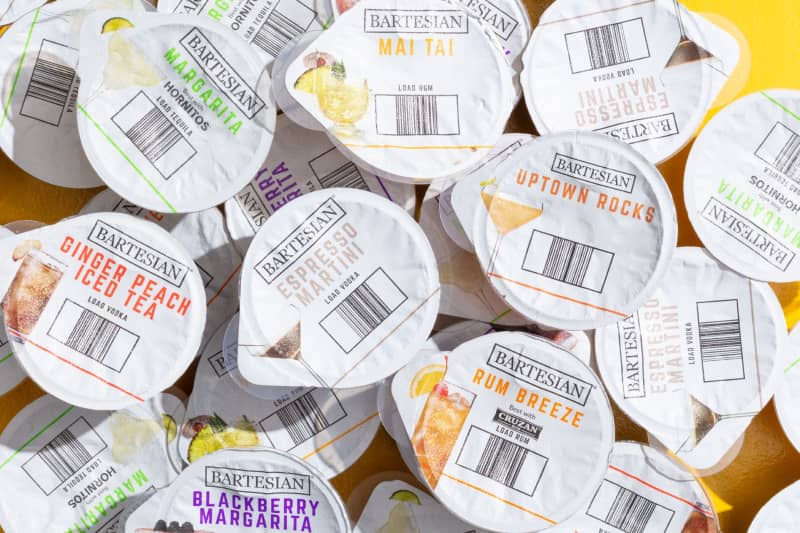
Smart cocktail machines promise to make it easier to mix up your favorite drinks at home. There are two types of devices on the market. Some are dispenser-style machines that work similarly to Keurig or Nespresso coffee makers. They use prepackaged capsules that contain concentrated juices, bitters, and other flavorings necessary to make specific cocktails. With these models, you’ll need to fill and attach separate bottles containing water and the base liquors of your choosing. Barcodes on the capsules direct the machines to mix their contents with the corresponding spirits and water through a system of pumps and tubes. These machines allow you to customize the strength of your drink, from nonalcoholic to “strong.”
Larger dispenser-style appliances mix water with bottled spirits and pre-packaged flavor capsules to make individual drinks.
There are also smart scales or “coasters,” which work in conjunction with their respective cocktail recipe apps on a phone or tablet via Bluetooth. These devices walk you through cocktail recipes step by step by indicating how much of each ingredient to pour and alerting you when you’ve added the right amount. One model includes a Bluetooth-enabled mixing tumbler that’s meant to wirelessly mix the cocktail using a motorized paddle. We were interested in whether either type of device could simplify the process of making excellent cocktails. In general, we weren’t impressed, for a few key reasons.
Why We Don’t Recommend Cocktail Machines
- Prepackaged Capsules: The best cocktails are made with fresh ingredients. This gave dispenser-style machines, which use prepackaged capsules, an automatic demerit. Nearly every capsule-based drink we tasted was unappealing, whether it was because it was sickly sweet, flat, watery, or otherwise unbalanced. Even when we adjusted our expectations and compared the drinks made from capsules to cocktails we made with bottled mixers commonly found in supermarkets and liquor stores, the drinks made with capsules were still worse.
- Machine-Specific Bottles: Machines that required us to decant our liquor into glass bottles took too much time to set up and clean and ruined the fun of displaying our collections of spirits. The bottles were often complicated to install and remove, either because they required us to push down with extra force to connect to their input ports, or they were prone to leaking or spilling as we inserted them.


We preferred using our own spirit bottles (right) instead of decanting our liquor into machine-specific bottles (left). Using our own bottles saved time and effort, and it made displaying our liquor collection fun.
- Limited Spirit Selection: Whether they used proprietary bottles or allowed us to attach our own spirit bottles, the dispenser-style machines all had finite numbers of ports, which limited us to a small handful of spirits. We’d rather have the option of using whichever liquors, cordials, liqueurs, bitters, and other ingredients we want, whenever we want—especially since handmade drinks all tasted better anyway.
- Confusing, Malfunctioning Interfaces and Apps: Most machines had displays that were cluttered with small buttons and icons that were difficult to select, making cocktail-crafting needlessly complicated (especially for devices marketed as convenience products). A few machines had touch screens or dials that were occasionally glitchy or unresponsive, which made using them difficult and slowed us down. Navigating one coaster-style model’s corresponding app was often just as frustrating: It was poorly organized and confusing to navigate.

- Unreliable Bluetooth Connections: The “smart” coaster had trouble connecting via Bluetooth and interacting with its accompanying app, often glitching out or crashing in the middle of a cocktail recipe. Since the cocktail components are all added directly to the cocktail shaker as you go, any break in the process ruined whatever drinks we were trying to make. If we were making a margarita and the app crashed in the middle of pouring orange liqueur into tequila, for example, we were sunk.
The Tests
- Unpack, set up, and clean the machines according to manufacturer instructions
- Download smart scale apps and connect to tablets and mobile phones
- Test accuracy of smart scales using standardized laboratory weights
- Make a margarita with each device according to manufacturer instructions, noting elapsed time
- Make each of the following cocktails according to manufacturer instructions, comparing flavor and quality to ATK or other standard recipes: margarita, old-fashioned, whiskey sour, cosmopolitan, Long Island iced tea
- For automatic machines: Make a margarita at each strength setting (nonalcoholic, light, regular, and strong), noting differences in flavor and amount of tequila and water dispensed
- Smear smart scales with 1 tablespoon grenadine each, set aside overnight, and then clean according to manufacturer instructions
- Recruit additional testers to use the devices to make various drinks
- Use each device daily for a few weeks to make additional cocktail varieties
- Clean devices at least five times
How We Rated
- Performance: We tested whether the machines accurately weighed or dispensed cocktail components, and we evaluated the flavor and quality of the resulting drinks.
- Controls: We noted how easy the devices were to operate and whether their displays or apps were simple to interpret and use.
- Setup/Cleaning: We assessed how easy the devices were to unbox, set up, and clean. Setup included installing the apps for the smart scales and attaching liquor bottles for the automatic machines.