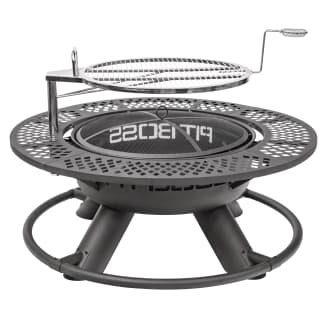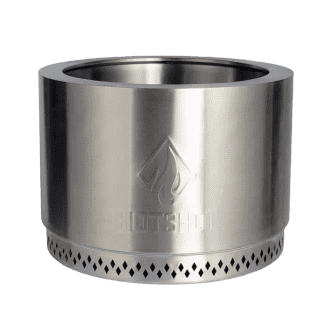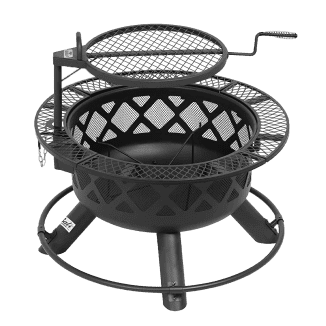


Open-fire cooking takes practice no matter which fire pit you buy, but some models are easier to cook with and maintain than others. The Breeo X19 Smokeless Fire Pit Grilling Bundle is our Best Overall fire pit. Its large, adjustable cooking grate is easy to move up and down or swivel laterally for unhindered access to the fire. The pit and grilling accessories are made with durable steel that holds up well to long-term use. It also emits noticeably less smoke than more traditional models. We named a Best Portable Pit as well, the Barebones Cowboy Fire Pit Grill - 23". It has an easy-to-use adjustable cooking grate, and its wide base provides ample space for zoned cooking. It’s lighter and easier to transport than the Breeo, but it gives off more smoke and is more prone to rusting without proper care.

Fire pits were once simple backyard centerpieces, usually capable only of roasting s’mores and hot dogs. Nowadays, grilling rigs with detachable cooking grates have upgraded these pits to open-fire grills that can handle entire barbecues. The market has exploded with innovations promising to make gourmet, open-fire cooking easy and “smokeless.” In reality, learning to cook over open flames or coals takes patience and lots of trial and error. The right fire pit may not keep you from burning your first batch of food, but it can make things easier so that you’ll get better, faster—and have more fun while learning.


Several team members each tested one or two pits, cooking the same dishes and diligently comparing notes about key factors. We grilled pounds and pounds of asparagus, a dozen or more whole chickens, and even threw outdoor hot dog and taco extravaganzas. We became deeply familiar with our pits and identified their pros and cons.
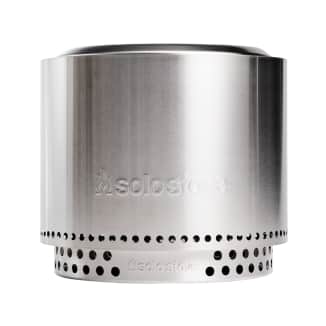
To find the best fire pit for cooking we tested a range of options available, buying everything we needed to properly use, clean, and maintain the pits, including cooking grates, grilling accessories, and weatherproof covers. For some models, we were able to purchase bundles or kits; for others, we purchased accessories separately. We explored whether key design elements such as adjustable cooking grates, lightweight materials, or “smokeless” technology (popularized by the Solo Stove) were worth the hype. Find out which factors set the winners apart below.
What to Look For
- Easy Assembly: Our favorite pits required minimal assembly and included grilling setups that were simple to put together and install. Not having to waste time with nuts and bolts meant that we could get to the cooking faster.


We preferred pits that arrived mostly or completely assembled (left). While we were game to put pits together and even got our spouses to help (right), it’s less fun to piece together your pit than it is to start grilling quickly.
- Adjustable Cooking Grates: We strongly preferred adjustable-grate pits because they granted us freedom when repositioning food and making changes to the fire. We could raise the cooking grates or swivel them away from the flames when we wanted to slow down cooking and rearrange the logs or coals to maintain consistent heat. Lowering or swinging the grates closer to the fire allowed us to apply more direct heat to food.
The best grilling rigs included adjustable grates we could swivel laterally or raise and lower. This helped us control cooking temperature and speed and allowed easy, safe access to the fire.
- Spacious Grates with Small Gaps: We preferred cooking grates that were large enough to hold a lot of food. Our favorites were at least 17 inches in diameter, ample space for a whole spatchcocked chicken or six hot dogs and buns plus a large bunch of asparagus. We also liked crosshatched cooking grates with small gaps, which kept food from falling through into the flames below.

- Durable Materials: Every pit we tested was made of steel, but some were sturdier and more durable than others. Pits made from slightly heavier or thicker steel held up better. We also liked sturdy steel or cast-iron cooking grates, which didn’t get damaged after frequent use. We liked pits that came with well-fitted weatherproof covers, which helped prevent moisture from accumulating in the pits and causing rust.
- Simple Cleanup and Maintenance: The best fire pits were easy to clean and maintain. We preferred pits that had lift-out ash trays, which were a breeze to remove and empty. One grilling bundle included an ash shovel that made digging out ashes simple, if a little more time consuming.
The winner from Breeo included an ash shovel designed to fit into the base of the pit for easy ash removal. While this was more convenient than flipping the entire pit over, we still think removable ash trays are the easiest, tidiest option.
Nice to Have
- Wide Fire Pits: While it was important to have cooking grates that were big enough to accommodate lots of food, we also liked fire pits that were larger on the whole, as these gave us more space to build different types of fires. Most longer-cooking fire pit recipes call for two-level fires. This means we allowed our first addition of wood to burn into smoldering coals, then moved those coals to one side of the pit while maintaining active flames on the other. Wider pits (at least 20 inches in diameter) made it easier to maintain these fires and cook long-roasting foods such as whole chickens or larger cuts of meat. We were eventually able to cook delicious food with pits of all sizes, so we don’t think having a larger pit is absolutely essential. But more space made things simpler.


Wide pits gave us more space to build larger fires (left) or maintain multiple heat zones. Narrower pits (right) weren’t a dealbreaker, but they took some extra time to master. We still made delicious food with them.
What to Avoid
- Complicated Setup: A couple of models arrived in pieces and required a long time (and ideally another person) to put together. They didn’t come with any spare hardware, called for additional tools, and had parts that fit together poorly. While assembly wasn’t a deal breaker for us, it felt like an unnecessary hassle; we’d rather spend less time building and more time grilling.
- Fixed Cooking Grates: Fixed cooking grates sat directly atop the pits and were entirely stationary. If we needed to add logs or adjust the fire, we had to completely remove the cooking grates and the food on them, which was difficult and dangerous to do once the grates and food were hot. Because we couldn’t reposition the food, we had to become skilled at building and maintaining the perfect fire with minimal adjustments, a fickle process that adjustable-grate models spared us from. You can learn to work with this feature—many do and produce excellent food. But if cooking with your fire pit is your main goal, choose an adjustable cooking grate and make your life easier.

- Grates with Large Gaps: We disliked cooking grates with large spaces that let thinner foods such as asparagus fall through.


Grates with large gaps between the bars allowed smaller vegetables such as asparagus and sliced peppers and potatoes to fall through and burn. No thanks!
- Flimsy Materials: A few pits and grilling accessories were made of flimsy steel. These pits scratched easily and showed signs of weathering after only a couple uses. One model’s cooking grate warped when exposed to direct flames, causing food to roll off of it.
- Complicated Cleanup: Some fire pits were hard to clean or empty ashes out of. One model required us to completely lift away the main fire pit and set it aside in order to access the ash tray below it. Others didn’t include a shovel or tray, forcing us to turn the entire pit over to pour ashes out or find an additional tool to dig and scrape.
Other Considerations
- “Smokeless” Technology: No pit was able to completely eliminate smoke, but some notably reduced smoke output. If you’d like less smoke in your face on windy nights, some “smokeless” models are worth their heftier price tags. It’s just better to think of them as “smoke-reducing” instead. (For more information, check out “Are ‘smokeless’ pits actually smokeless?” in the FAQs below.)
- Portability: Some people prefer lightweight fire pits that are easy to stow in a car trunk for a campout or backyard gathering. Our overall winner is well-made and extremely durable, but too heavy for frequent transport. We also named a Best Portable model, which is relatively lightweight and extremely easy to assemble. The tradeoff? It’s more prone to rusting, so store it inside when you’re not out adventuring.
The Tests:
- Assemble fire pits and cooking grates according to manufacturer instructions
- Build and maintain a single-level fire while grilling hot dogs, sausages, buns, and asparagus
- Build and maintain a two-level fire while making Grill-Roasted Butterflied Chicken and Ember Baked Potatoes from The Outdoor Cook
- Have multiple testers grill additional dishes of their choice over several weeks, including Fireside Chili, Smoky Potato Salad, Thick-Cut Rib Steaks, Chicken Souvlaki, and more from The Outdoor Cook
- Remove ashes and clean pits and cooking grates according to manufacturer instructions
- Cover and store pits both indoors and outside over several months to test durability
How We Rated
- Setup: We evaluated how complicated the fire pits were to unbox, assemble, and transport. We also noted whether it was easy to set up and attach their cooking grates.
- Ease of Use: We rated how simple it was to build and maintain multiple types of fires in the pits, and whether their cooking grates were spacious and easy to grill on.
- Performance: We assessed each model on its ability to minimize smoke, put out heat, and help us produce quality food.
- Cleanup: We determined whether the pits were simple to clean and maintain, including how easy it was to remove ash and scrub the cooking grates.
- Durability: We evaluated how well each fire pit held up to months of use and storage.