America's Test Kitchen LogoCook's Country LogoCook's Illustrated Logo

Reviews You Can Trust.
See Why.

Why We Don’t Recommend Metal Cutting Boards

Headshot of Lisa McManus
By Lisa McManus

Published on July 9, 2026

What You Need to Know

Metal cutting boards are making a splash, aggressively advertised as safer than boards of wood or plastic. Ads warn that traditional boards “leach toxins” into your food or harbor germs. With hard, nonporous surfaces, metal boards are touted as easier to clean and sanitize and also free of microplastics. We know that using a glass cutting board is terrible for your knife, so we balked when we saw this new category of cutting board emerge. But our friends and family kept asking us: Are they a good choice? Will they keep my kitchen cleaner and safer?

How We Tested Metal Cutting Boards

We bought five boards—three sold as titanium and two stainless steel—and assigned each board  a new copy of our favorite 8-inch chef’s knife. Then we conducted these tests:  

  • Mince parsley
  • Dice an onion
  • Peel and chop whole butternut squash
  • Slice tomatoes
  • Wash cutting boards by hand with hot soapy water after each use
  • Before and after each cutting test, record knives’ sharpness scores using an industrial sharpness tester
  • Repeat cutting tests on our top-ranked large wooden cutting board 
  • Wash metal cutting boards in dishwasher 10 times
  • Leave metal boards damp and draped in wet towels overnight to test rust resistance
  • Leave lemon slices on metal boards overnight to test acid resistance 

What Are Metal Cutting Boards Made From?

Metal cutting boards are described as either stainless steel or titanium. Most hype centers around titanium, with manufacturers claiming their boards are certified “pure titanium,” a material that’s widely used in aerospace and medicine, including surgical implants, though typically in the form of a titanium alloy (meaning it is mixed with other metals). 

Metal boards touted as high-end titanium are sometimes ordinary stainless steel. The density of their material indicated they could not be titanium.
Titanium or not? Some sellers who claim to use this expensive metal are selling cheaper steel boards instead. Calculations of the boards’ density revealed that two of the three “titanium” boards we bought could not be titanium.

As part of our testing, we used the weights and measurements of the boards to calculate their density and it became clear that two of the so-called titanium boards were in fact stainless steel. Their much heavier weight and low prices, well under $100, are clear signs that they’re not titanium, which is considerably more expensive. Would other claims prove equally dubious? 

Four metal cutting boards and knives, after mincing parsley on each board. The hard metal boards dulled knives significantly with each use.
We assigned new knives to each metal cutting board and performed common kitchen tasks, including mincing parsley. The knives dulled more after every use on the hard metal surfaces.

Metal Cutting Boards Dull Knives Immediately

Every time we cut food on any of the metal boards, that knife dulled dramatically. The knives’ sharpness scores progressively became worse—quickly going from out-of-the-box sharp to dull, requiring repair or maintenance. We saw no significant difference between stainless steel or titanium boards; they were equally hard on our knives. By contrast, the identical knife assigned to a wooden board stayed in near-new condition throughout.

Knife sharpness scores became worse after every use on metal cutting boards, but the knife used on a wooden board stayed sharp as new.
Metal cutting boards made new knives duller with every use; higher scores indicate duller edges. By contrast, the knife used on a wooden board stayed sharp as new.

Our conclusion? Metal cutting boards are too tough on kitchen knives. Like glass cutting boards, their unyielding surface lacks elasticity, so it can’t cushion the blade as wood or plastic surfaces do. Even though the knife’s steel is technically harder, its fine, sharp cutting edge is fragile, and becomes rolled over or smashed against the rigid metal with each contact. This happens surprisingly fast: Chopping a handful of herbs, an onion, a squash, and a tomato as we did in our testing all could be done in the course of preparing a single meal. By the time we tried to slice tomatoes in the final test, we had to saw back and forth on the tomato’s skin with firm downward pressure. One knife’s dull blade slipped right off the tomato, which is dangerous. By contrast, the knife we’d only used on a wooden board glided through the tomato on the first try, yielding a perfect tomato slice—just as it should with a virtually new blade. 

Onions diced on a wooden board vs a metal board. The onions on the wooden board are neater, smaller and more uniform; on the metal board pieces are bigger and more irregular.
It was easier to dice onions into neat, even pieces on a wooden board (left) because the knife remained sharp as new. The metal board had already dulled its knife substantially while mincing parsley, so it slid off the onion; we struggled to cut small, uniform pieces.

Metal Cutting Boards Are Awkward to Use

In addition to rapidly dulling our knives, the metal boards felt awkward to cut on and handle. Knives clacked unpleasantly against their hard surfaces. They were thin; all measured less than 2 mm thick. The stiff metal boards didn’t sit securely on our work surfaces. One arrived warped, and with the exception of one board with an L-shaped side that wrapped over the counter’s edge to help hold it steady, these boards slid, spun, or rocked unless we put a damp paper towel underneath as an anchor. Worse, their surface texture was unpleasant to touch and use: Pieces of squash peel stuck firmly to the metal, and the occasional screeching sound when scooping up chopped food with a bench scraper set our teeth on edge. 

Are Metal Cutting Boards Safer and Easier to Clean?

People are drawn to metal cutting boards in large part because of their supposed cleanliness, so we paid close attention to how they held up to use and how easy they were to wash. One thing we noticed from the start: Metal boards show every fingerprint. And wherever food touched, we saw more spots and blotches, on both steel and titanium surfaces. After each food-chopping test, we scrubbed the boards with hot soapy water and a sponge, rinsed them well, and dried them with towels. We were surprised to see that the surfaces still had dark splotches showing where we’d cut food and still had most of the fingerprints. 

A metal cutting board shows substantial smudge marks and scratches from use.
Smudges and knife scratches marred the metal cutting boards as we used them. Scratches indicate that microscopic metal shavings have come off the board. 

We also saw knife scratches on every board; the worst appeared on the titanium board. These scratches were concerning, said our science editor, Paul Adams, who noted that metal boards generate microscopic metal shavings. “Every scratch represents metal that is shaved off the board, and potentially ingested.” 

One steel board’s surprisingly fussy instructions warned us “do not use strong detergent” and “do not soak it or expose it to high heat places. Put it in upright position to air dry.” However, when we tested this by leaving all the boards wet overnight, and by leaving boards with fresh lemon slices on them on another night, none rusted or showed any other signs of damage.

After 10 trips through the dishwasher, food splotches and fingerprints cleared up—at least until we touched them again—but the knife scratches remained. While metal cutting boards are touted as exceptionally durable, any piece of kitchen equipment will show signs of use, and these metal boards are no exception. While plastic boards have raised concerns about knife damage causing them to shed microplastics, wooden boards pose no known health threat when they are scratched. 

The Best Way to Clean a Cutting Board

Although the trend of metal cutting boards is relatively new, concerns about properly cleaning cutting boards are not. Every few years, rumors arise (and are firmly quashed) that wood cutting boards harbor dangerous bacteria. We explored this question: We sent an independent laboratory a stack of wood, plastic, bamboo, and composite cutting boards to see if any particular material harbored more bacteria after washing. 

The lab colonized the boards with salmonella, then washed them with hot, soapy water, comparing results to spraying them with bleach solution or with undiluted vinegar. 

The results were excellent news for home cooks. The lab found that all of these cleaning methods were equally effective at reducing bacteria to less than 10 CFUs (colony forming units)—which is a safe level. As our science editor explained, “Less than 10 CFUs is essentially zero.”

Knives dulled by working on hard metal cutting boards struggled to slice tomatoes, making irregular slices.
It was shocking to see how fast metal cutting boards ruined sharp, new knife edges. We cut parsley, onions, and butternut squash on the boards and then tried to slice tomatoes. The now-dull blades sawed back and forth on the skin several times before slicing in, and they cut unevenly. 

We Don’t Recommend Metal Cutting Boards

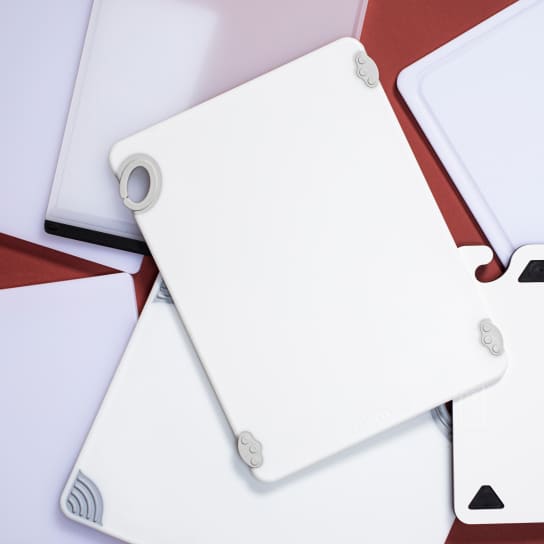
The bottom line: You don’t need to sacrifice your knives—or your nerves—by using metal cutting boards. They are not more durable or easier to clean than other kinds of cutting boards, and they will damage your knives. We don’t recommend them. A good quality wood or bamboo cutting board is a far better choice. Or if you prefer, plastic boards are also gentler on knives.  

Equipment Review

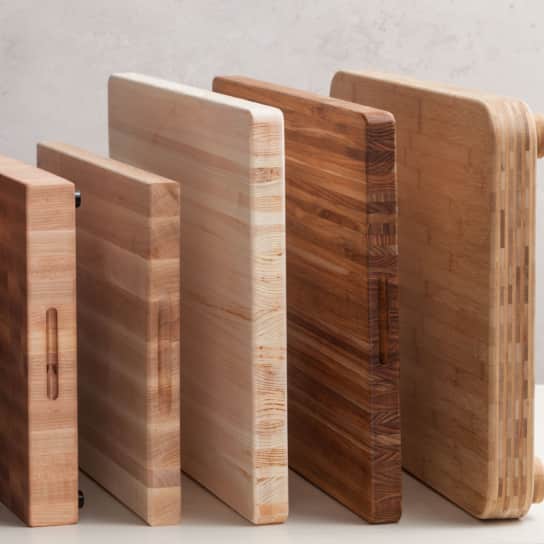
The Best Wood and Bamboo Cutting Boards

A good wood or bamboo cutting board is a much better choice than a metal model.

Read Our Review
Everything We Tested

Good 3 Stars out of 3.
Fair 2 Stars out of 3.
Poor 1 Star out of 3.

Not Recommended

  • Performance
  • Ease of Use
  • Cleanup
  • Durability

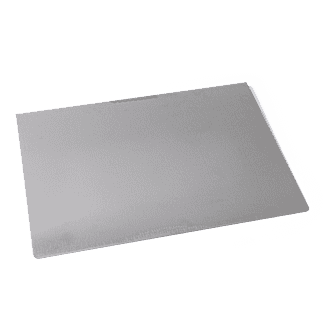
Billamb Stainless Steel Cutting Board

The only thing we liked about this board was that it had a narrow L-shaped lip, which bent over the edge of the counter, helping to anchor the board a bit more than its slippery competitors. Our knife dulled quickly, within four uses.

Model Number: n/a

Weight: 1 lb, 15.9 oz

Size: 16 x 11 13/16 inches

Thickness: 0.88 mm

Price at Time of Testing: $28.99

  • Performance
  • Ease of Use
  • Cleanup
  • Durability

The only thing we liked about this board was that it had a narrow L-shaped lip, which bent over the edge of the counter, helping to anchor the board a bit more than its slippery competitors. Our knife dulled quickly, within four uses.

Model Number: n/a

Weight: 1 lb, 15.9 oz

Size: 16 x 11 13/16 inches

Thickness: 0.88 mm

Price at Time of Testing: $28.99

  • Performance
  • Ease of Use
  • Cleanup
  • Durability

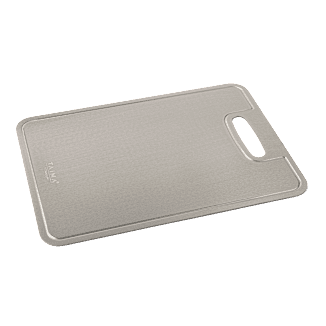
Taima Certified Pure Titanium Cutting Board V2

While this was the only board in our lineup that was actually made of titanium, according to our calculations, it behaved just like the other metal cutting boards we tested. We needed a damp towel to anchor it to the counter or else it slid around. It rapidly dulled our knife and clacked unpleasantly when the blade struck the board. Its surface showed more knife scratches than the other metal boards. Testers described the surface as rough and “a bit uncanny” to our fingertips.

Model Number: Medium

Weight: 1 lb, 10.1 oz

Size: 13 ¾ x 9 13/16 inches

Thickness: 1.96 mm

Price at Time of Testing: $99.00

  • Performance
  • Ease of Use
  • Cleanup
  • Durability

While this was the only board in our lineup that was actually made of titanium, according to our calculations, it behaved just like the other metal cutting boards we tested. We needed a damp towel to anchor it to the counter or else it slid around. It rapidly dulled our knife and clacked unpleasantly when the blade struck the board. Its surface showed more knife scratches than the other metal boards. Testers described the surface as rough and “a bit uncanny” to our fingertips.

Model Number: Medium

Weight: 1 lb, 10.1 oz

Size: 13 ¾ x 9 13/16 inches

Thickness: 1.96 mm

Price at Time of Testing: $99.00

  • Performance
  • Ease of Use
  • Cleanup
  • Durability

Stron-Dura Stainless Steel Cutting Board

This steel board lay flat on the counter but needed a damp towel beneath it to prevent it from sliding around. Just as with the other metal boards, it looked splotchy and streaky even after hand washing. Like the other boards, it also dulled the knife considerably in a few short uses.

Model Number: n/a

Weight: 1 lb, 10 oz

Size: 15 5/16 x 11 inches

Thickness: 0.86 mm

Price at Time of Testing: $29.99

  • Performance
  • Ease of Use
  • Cleanup
  • Durability

This steel board lay flat on the counter but needed a damp towel beneath it to prevent it from sliding around. Just as with the other metal boards, it looked splotchy and streaky even after hand washing. Like the other boards, it also dulled the knife considerably in a few short uses.

Model Number: n/a

Weight: 1 lb, 10 oz

Size: 15 5/16 x 11 inches

Thickness: 0.86 mm

Price at Time of Testing: $29.99

  • Performance
  • Ease of Use
  • Cleanup
  • Durability

Saliva Titanium Cutting Board

This petite, inexpensive board’s name is misleading; by our calculations of its density, it is not made of titanium but stainless steel. It slid and spun on the counter unless we put a damp towel under it. Its edge was sharp enough to cut a tester’s knuckles after they gently bumped against it while making horizontal slices in an onion. Like the other metal boards, the Saliva board quickly dulled our new knife; after four ordinary cutting tasks the knife struggled to slice a tomato. After hand-washing, the board still looked splotchy and streaky where we’d cut food.

Model Number: SZB04-L-US

Weight: 1 lb, 14.4 oz

Size: 13 3/4 x 9 1/16 inches

Thickness: 1.4 mm

Price at Time of Testing: $16.99

  • Performance
  • Ease of Use
  • Cleanup
  • Durability

This petite, inexpensive board’s name is misleading; by our calculations of its density, it is not made of titanium but stainless steel. It slid and spun on the counter unless we put a damp towel under it. Its edge was sharp enough to cut a tester’s knuckles after they gently bumped against it while making horizontal slices in an onion. Like the other metal boards, the Saliva board quickly dulled our new knife; after four ordinary cutting tasks the knife struggled to slice a tomato. After hand-washing, the board still looked splotchy and streaky where we’d cut food.

Model Number: SZB04-L-US

Weight: 1 lb, 14.4 oz

Size: 13 3/4 x 9 1/16 inches

Thickness: 1.4 mm

Price at Time of Testing: $16.99

  • Performance
  • Ease of Use
  • Cleanup
  • Durability

Zaucet Titanium Cutting Board

This board is also misrepresented as a titanium board. By our calculations of its density it is made of stainless steel. It didn’t lie flat; in fact, the two copies we bought arrived warped. The board rocked as we chopped. We anchored it with a damp towel, but it remained unpleasant to cut on. Slicing butternut squash in half on it was a bit scary as the squash threatened to slip. Like the other boards, it quickly dulled the chef’s knife.

Model Number: Medium

Weight: 1 lb, 12.6 oz

Size: 15 3/16 x 10 13/16 inches

Thickness: 0.97 mm

Price at Time of Testing: $39.88

  • Performance
  • Ease of Use
  • Cleanup
  • Durability

This board is also misrepresented as a titanium board. By our calculations of its density it is made of stainless steel. It didn’t lie flat; in fact, the two copies we bought arrived warped. The board rocked as we chopped. We anchored it with a damp towel, but it remained unpleasant to cut on. Slicing butternut squash in half on it was a bit scary as the squash threatened to slip. Like the other boards, it quickly dulled the chef’s knife.

Model Number: Medium

Weight: 1 lb, 12.6 oz

Size: 15 3/16 x 10 13/16 inches

Thickness: 0.97 mm

Price at Time of Testing: $39.88

America's Test Kitchen Accolades Badge

Reviews You Can Trust

The mission of America’s Test Kitchen Reviews is to find the best equipment and ingredients for the home cook through rigorous, hands-on testing. We stand behind our winners so much that we even put our seal of approval on them. Have a question or suggestion? Send us an email at atkreviews@americastestkitchen.com. We appreciate your feedback!

The Expert

Author: Lisa McManus

Lisa McManus

Executive Editor, ATK Reviews

Lisa is an executive editor for ATK Reviews, cohost of Gear Heads on YouTube, and gadget expert on TV's America's Test Kitchen.

Lisa McManus is an executive editor for ATK Reviews, host of The Taste Test and cohost of Gear Heads on YouTube, and a cast member on America's Test Kitchen. A passionate home cook, sometime waitress, and longtime journalist, she graduated from Columbia University's Graduate School of Journalism and worked at magazines and newspapers in New York and California before returning like a homing pigeon to New England. In 2006 she got her dream job at ATK reviewing kitchen equipment and ingredients and has been pretty thrilled about it ever since. Her favorite thing is to go somewhere new and find something good to eat.

*All products reviewed by America’s Test Kitchen are independently chosen, researched, and reviewed by our editors. We buy products for testing at retail locations and do not accept unsolicited samples for testing. We list suggested sources for recommended products as a convenience to our readers but do not endorse specific retailers. When you choose to purchase our editorial recommendations from the links we provide, we may earn an affiliate commission. Prices are subject to change.

Reviews You Can Trust.
See Why.

This is a members' feature.
America's Test Kitchen LogoCook's Country LogoCook's Illustrated Logo