

- Use each brush to clean grate of charcoal grill both before and after grilling 9 boneless, skinless chicken thighs, each coated in ¼ cup barbecue sauce
- Use each brush to clean grate of gas grill both before and after grilling 9 hamburger patties
- Run each brush up and down charcoal and gas grill grates 100 times (200 strokes on each type of grill, or 400 strokes total)
- Clean head of each grill brush with soap and water
- Scrape head of our favorite grill brush on sidewalk 20 times to gauge durability
- Use our favorite brush to clean 36‑inch cooking grate of large grill while grill was hot
Grilling is a quintessential summer activity, which means cleaning the grill is, too—or at least it should be. It’s a small chore with a big payoff: a smooth, gunk-free cooking surface. A good brush should allow you to scrub the entire cooking grate, even the hard-to-reach grate ends, and remove debris with minimal effort. It should also be durable enough to use repeatedly without falling apart.
We learned of availability issues with our previous winner, so we set out to find a widely available brush that could efficiently clean both charcoal and gas grill grates. We tested a variety of models, several of which had traditional metal bristles. We’re aware of the safety concerns related to such brushes (namely, the risk of ingesting a bristle if one were to come loose), so we included models that featured bristles made from nylon and palmyra fiber (which comes from a type of palm tree) in addition to models with bristles made from stainless-steel coils and steel wool. We also included an all-wood model in the shape of a paddle.
Then we got to grilling: chicken thighs coated in barbecue sauce on charcoal grills and hamburgers on gas grills. In the end, every brush got the cooking grates on both types of grill satisfactorily clean, but some tools required a lot more work to get the job done than others.
Bristle Free Models Posed Some Challenges
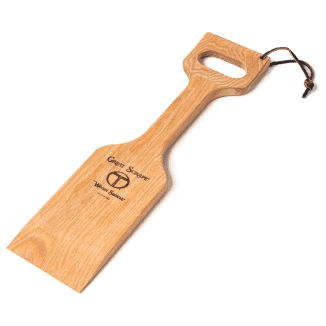
We were intrigued by the all-wood model. It was shaped like a paddle with a straight edge on one end that you repeatedly run over the hot grill grate, burning indentations into the wood and eventually creating grooves that will scrape off debris. But after spending 10 minutes hovering over a hot charcoal grill, pushing the paddle across the grate, we saw only faint indentations in the paddle. When we used a new paddle on the gas grill, we were able to achieve deeper indentations because the grill and grate were heavier and sturdier and we could apply more pressure. It was a lot of work, though, and because the paddle’s indentations and grooves were rigid, we couldn’t clean the grates as thoroughly as we could when using a brush made with bristles or other more flexible materials.

The paddle-like model didn't clean grates as thoroughly because of its rigid indentations, which made it harder to rotate and get into nooks and crannies.
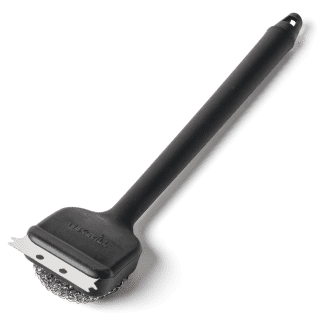
The model that featured a steel wool pad attached to a plastic brush head was effective at scrubbing the tops of grates, but we couldn’t clean between the grill grate bars because of the plastic brush head. We tried to minimize contact between the hot grates and the plastic because we feared that the plastic might melt.
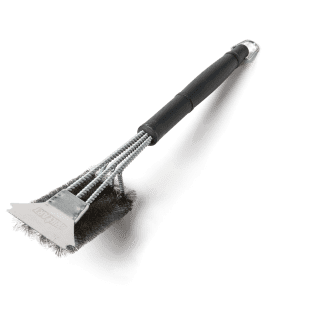
The brush with metal coils was easier to use than the steel wool model, but it still required some effort—even after we dipped it in water, as instructed, to create steam. The coils were rigid and required us to press down on the head and position it at an awkward angle to ensure a good cleaning.

Bristles: Shorter Was Better
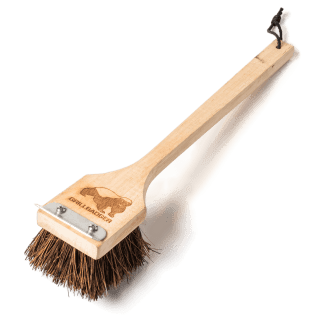
Brushes with bristles—whether made of stainless steel, nylon, or palmyra fiber—were generally easy to use, though we definitely preferred some models to others. The bristles on these brushes ranged in length from ½ inch to 2 inches. The model with 2-inch-long bristles resembled an enormous toothbrush, and its long bristles proved to be a drawback. This brush came to an abrupt halt whenever we reached a crossbar on a cooking grate—the bristles couldn’t easily glide over it even though they were made of flexible palmyra fiber. Most of the remaining brushes, including our favorite brush, had ½-inch-long bristles that were short enough to glide over all areas of the grill with ease.
A Triangular Brush Head Was Most Versatile
The heads of the brushes we tested varied in design and included square, rectangular, and triangular shapes. The square and rectangular heads generally did a fine job, but the two triangular brush heads offered a distinct advantage over the others: We could clean the grill grates using the long side of the triangle (which was positioned perpendicular to the brush handle), or we could turn the brush on its side and use one of the triangle’s corners to clean between the bars of the grill grates, allowing for a more thorough cleaning.
Scrapers Limited Reach
Five of the models we tested featured metal scrapers, thin blades attached to the ends of the brush heads that you can use to attack especially stubborn, burnt-on crud. While these scrapers were effective for their intended use, they’d frequently hit the back of the grill as we scraped the grate with the brush head, limiting the brush’s coverage and preventing us from scrubbing the edges of the grill grate, which typically accumulate a lot of buildup.
In the end, we weren’t sold on the necessity of a scraper. As one tester stated about our scraper-less favorite brush, “You can get in anywhere with this thing.” Without a scraper to impede coverage, we could easily clean the grill grates’ nooks and crannies, scrubbing right up to the rounded edge of a charcoal grill grate and reaching all the way to the back of a gas grill grate.
A Shorter Brush Handle Offered Better Leverage And Mobility
The handles on the brushes we tested ranged from 7½ inches to 14 inches long. And even though we generally liked the models with longer handles, the brush with the shortest handle was our favorite. This compact handle was a mere 7½ inches long, which put our hands closer to the heat but not dangerously so—even when we tested on a large 36-inch grill. The short handle gave us better leverage and agility while scrubbing than the long-handled models.
Durability Was Crucial
One of the most important aspects of a grill brush is how durable it is—both overall, because we want it to last through more than a few cleanings, and especially when it comes to the all-important bristles, which we want to remain firmly embedded in the brush, not in our food. The Centers for Disease Control and Prevention cautions, “If you use a wire bristle brush, thoroughly inspect the grill’s surface before cooking. Wire bristles from grill cleaning brushes may dislodge and stick into food on the grill.”

We didn't see evidence of any broken or dislodged bristles while using wire bristle brushes, but we did notice issues with other models.
We understand these concerns, so we paid close attention to the brushes with metal bristles. We can report that we did not see evidence of any broken or dislodged bristles while using them. To go one step further, we used our favorite brush, which has metal bristles, to repeatedly scrub a hard cement surface to see if the brush would shed any bristles. It didn’t (though we did leave behind a very clean sidewalk).
We saw durability issues with other brushes, though. The palmyra‑fiber model lost a few strands during testing, but because they were 2 inches long, we could easily spot them on the grill grate and had no concerns about them ending up in our food. Another brush’s steel wool head started unraveling immediately after the first use; we downgraded it accordingly.
The Best Grill Brush: Kona Safe/Clean Bristle Free Grill Brush
Our top choice is the Kona Safe/Clean Bristle Free Grill Brush—its head features stainless-steel coils instead of bristles, so there’s no risk of accidentally ingesting metal particles. This brush was more cumbersome and required more effort to use than some of the models we've tested, but it still effectively cleaned both charcoal and gas grill grates and offered peace of mind as well.