Pork is one of the most consumed meats in the world. From European charcuterie stars such as prosciutto di Parma, jamón Serrano, and jamón Ibérico to the Jinhua dry-cured hams from the Zhejiang province of China used to flavor stews and stir-fries, ham is a big deal.
In the United States, the word “ham” refers to a dizzying array of products: spiral-sliced ham, deli ham, country ham, city ham, fresh ham, and more. We set out to report on American ham, with the hope of clarifying the options and helping you expand your horizons. We focused on the main types of ham made and sold in the United States—city ham, country ham, American prosciutto, and fresh ham—and spoke to meat scientists, butchers, and ham producers to learn as much as possible about how all these products are made, prepared, and served.

The top five pork-producing states in the United States are Iowa, Minnesota, North Carolina, Illinois, and Indiana. Many packing plants (where the animals are processed) are now located in these areas as well, according to Gregg Rentfrow, PhD, extension professor of meat science at the University of Kentucky. Most meatpacking originally took place in the Chicago stockyards, “but we’ve moved the packing plants to where the animals are.” While a small portion of farmers focus on raising heritage breeds, the vast majority of pigs consumed in the United States are crossbred to optimize speedy muscle and fat growth, efficient reproduction, and a consistent product, Rentfrow explained. Their diet largely consists of corn and soybeans.
City Ham
What Is City Ham?
City ham is wet-cured, meaning it has been injected with or immersed in a saltwater solution. It includes spiral-sliced hams that are popular across the country, especially on holiday tables in the Northeast. It's believed that ham is served because Germanic pagans ate wild boar and ham during yuletide celebrations. The custom of consuming ham was one of several pagan holiday traditions that Christians adopted.

How City Ham Is Made
The ham is brined in or injected with a solution of water, salt, sugar, and spices. Spiral-sliced ham nowadays is sold bone-in or boneless, but the term “spiral-sliced” refers to a special slicing machine made to slice bone-in hams, originally built by the founder of The Honey Baked Ham Company, Henry Hoenselaar, in 1936. Large-scale producers will invest in a mechanical tumbler, which resembles a big washing machine, which “massages” the hams for as little as 2 hours to help the brine permeate more quickly, while also tenderizing the meat. Smaller ham makers that don’t use tumblers, such as The Meat Hook, will brine for longer, up to 10 days. Then, the ham can either be boiled or baked, boiled or baked and then smoked, or just smoked. Deli ham is boned before brining and many are forced into a mold to create a neat shape and homogenous texture.

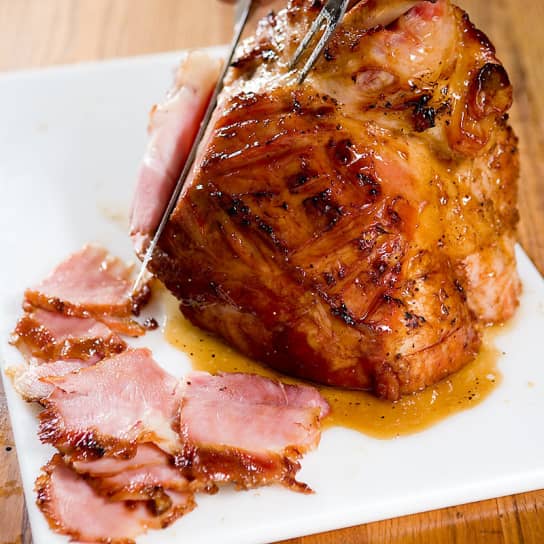
Glazed Spiral-Sliced Ham
Ham is appealingly simple but often comes out dry and jerkylike. Here's what you need to know to produce a top-notch glazed ham that is always moist and tender.
Get the RecipeHow City Ham Is Prepared and Served
Spiral-sliced hams are sold already cooked and marked as “ready to eat” but are often warmed through for better flavor. This can be done in an oven bag, a plastic bag designed to help keep meat and poultry moist, and at a low temperature over a few hours. Our recipes for spiral-sliced ham typically call for bone-in ham and include our own warming instructions to keep the meat moist and tender. We also prefer to whisk together homemade glazes that make this salty-sweet centerpiece shine. Deli ham needs no preparation before serving.

What City Ham to Buy
You can find spiral-sliced hams and deli ham in supermarkets year-round, but if you’d like to mail-order a special spiral-sliced ham, Burgers’ Smokehouse Spiral-Sliced City Ham won our tasting. It was tender with the perfect balance of savory, sweet, pork, and smoke. It is available online with free shipping. Unopened, spiral-sliced hams can be stored in the refrigerator for up to 28 days or in the freezer for up to a year.

The Best Spiral-Sliced Ham
Spiral-sliced ham is an easy and elegant holiday centerpiece. But not all hams are created equal.
Read Our ReviewCountry Ham
What Is Country Ham?
Country ham, which is an intrinsic part of the culture in the Southeastern and Midwestern United States, is made by large-scale producers and individuals alike. This region falls within the Ham Belt, a latitudinal strip that circles the globe through Western Europe, southeastern China, and the Southeastern United States, where the weather is conducive to ham preservation. The production facilities for the most famous cured hams fall within it.
Country ham is dry-cured, meaning that the exterior is rubbed with salt, sugar, and spices before being aged. Historically, without refrigeration, the process began around November with the cooler temperatures, with shorter-aged hams ready to eat by Easter. Dwight Muse of Dakota Hams in Nancy, Kentucky, grew up in a family that cured ham and currently cures his own, selling it to high-end restaurants from Kentucky to New York City. His mother used to say, “It’s time to kill the hogs because there’s ice on the mud puddle.”
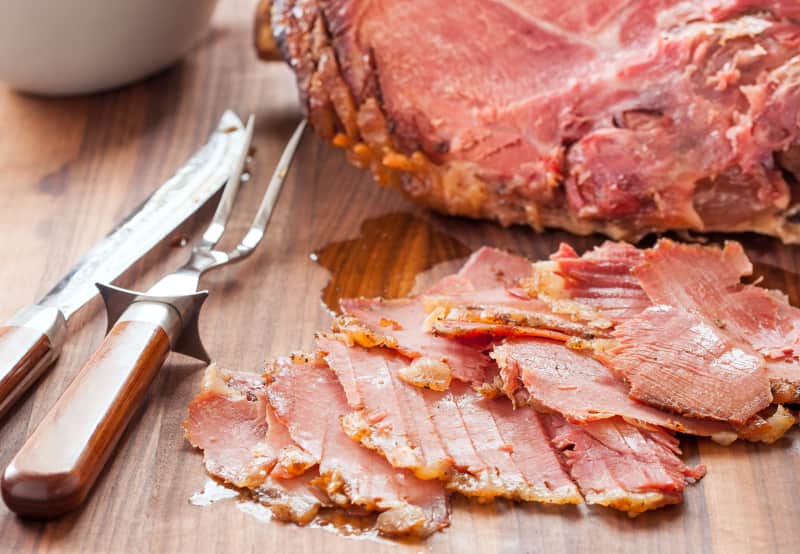
How Country Ham Is Made
The process of making country ham consists of three main stages: curing, salt equalization, and aging. After the hind leg is trimmed and shaped, the ham is rubbed with a mixture of salt, sugar, and spices. (Learn more about how it’s done here.) Country ham is often cured for at least a month to draw out the moisture. The temperature should be below 40 degrees Fahrenheit whether it’s in a refrigerator or in a cool garage or basement. Commercial ham makers use temperature-monitored warehouses, often referred to as “ham houses.”
Traditionally, when springtime temperatures rise to between 50 and 60 degrees, the ham goes through a month-long salt equalization period where the warmer temperatures allow the salt and sugar to fully migrate throughout the ham. In commercial settings, producers simulate this temperature change. After salt equalization, some, but not all, country hams are cold-smoked at a low temperature. “In Kentucky,” Rentfrow says, “a ham produced east of I-65 is not smoked and if it’s west of I-65, it is smoked.”
Finally, country hams are usually aged for at least three months. This is usually done at slightly higher temperatures during the summertime. Hams at the lower end of the aging spectrum will taste less salty and complex. But some ham makers, including Muse, rarely sell hams aged for fewer than 20 months, aiming for an extra-salty, funky, gamey flavor.

How Country Ham Is Prepared and Served
Especially in regions where it’s made, people love to eat country ham uncooked, sliced paper-thin and enjoyed like prosciutto. However, the USDA “isn’t so keen on the consumption of uncooked country ham,” explains Steve Coomes, author of Country Ham: A Southern Tradition of Hogs, Salt & Smoke (2014). Producers of uncooked cured meats such as country ham have the choice, under U.S. Department of Agriculture (USDA) regulations, to either undergo strict microbial testing or use labeling that indicates that it is not a ready-to-eat product. Most producers choose the labeling option, knowing that some aficionados will still eat the hams without cooking them, as they’ve always done.Thicker slices can be pan-fried, used to make a red-eye gravy, and served for breakfast.
If you buy a whole uncooked country ham, you will likely need to first scrub mold and residue from the exterior. This mold is harmless; many producers, including Muse, assert mold growth is necessary for hams to develop deep, complex flavor. The University of Kentucky recommends scrubbing it off with a brush dipped in a solution of vinegar and water. Then, country ham is traditionally soaked in water for 12 to 48 hours before cooking. Our recipe uses a workaround to skip this step, but the method works best for hams at 5 percent salt or less.

Country Hams
What did we learn when we sampled America’s own artisanal, cured pork? It’s (almost) all good.
Read Our ReviewWhat Country Ham to Buy
If you live in the Southeastern and Midwestern United States, you can find country ham in stores year-round. Otherwise, you can mail-order it, as we did for our tasting. We tried a spread of country hams and Burgers’ Smokehouse Ready to Cook Country Ham was our favorite for its “balanced,” “rich” ham flavor, with a complexity that tasters likened to “nutty,” “funky,” “oaky” prosciutto. It is available online with free shipping. Storage recommendations vary based on what form of country ham you purchase. In a cool, dry environment, you can hang an uncooked country ham in its original packaging to continue aging, or you can store it in the fridge or freezer for up to a year to stall the aging process.
City Ham vs. Country Ham
The main difference between city ham and country ham is how they are cured. City ham comprises all types of ham that are wet-cured, such as spiral-sliced ham or deli ham. Wet-curing is when the meat is either injected with or fully immersed in a mixture of water, salt, and sometimes sugar and spices. Country ham is dry-cured. This means the ham's exterior is rubbed with salt, sugar, and spices and left to cure for a month or even longer to remove moisture.
City ham and country ham are also eaten differently. Spiral-sliced ham, a type of city ham, is often a centerpiece on Christmas or Easter tables. It is sold fully cooked and can be warmed and glazed before eating. Deli ham is thinly sliced and eaten in sandwiches. Country ham, especially in the regions in which it's made, is thinly sliced and eaten similar to other cured meats with charcuterie accompaniments. Sometimes, it is cooked whole in the oven for long periods of team, sliced, and served with biscuits.
American Prosciutto
What Is American Prosciutto?
Prosciutto is made across the United States as well and is dry-cured similarly to country ham, though it’s prepared and enjoyed differently.

How American Prosciutto Is Made
Before curing, prosciutto is typically trimmed to remove the aitch bone and leave the hip joint exposed. Salt is applied and then the leg is cured. The cut is trimmed more heavily than country ham, so the process goes more quickly, taking just 15 to 20 days, explained Coomes. Then, it’s aged for anywhere from nine months to 36 months, with American prosciuttos often on the lower end and D.O.P Italian prosciuttos on the higher end. Similar to country ham, it will taste more complex the longer it’s aged. Prosciutto, though, is never smoked.

How American Prosciutto Is Prepared and Served
Prosciutto is typically purchased very thinly sliced and consumed as is, no cooking needed. It is served on charcuterie plates paired with fruit jams and cheeses. It can be eaten cooked as well, such as in pork saltimbocca, or crisped as a salad topping.
What American Prosciutto to Buy
You can find American prosciutto at most supermarkets. In our tasting, we liked Volpi Traditional Prosciutto for its “buttery” texture and “porky complexity.” To learn more about imported prosciutto, read our tasting here.

Supermarket Prosciutto
A new surge of grab ’n’ go packages means you no longer have to wait at the deli counter to have this cured pork sliced by hand. But does “convenience” prosciutto make the cut?
Read Our ReviewFresh Ham
What Is Fresh Ham?
Fresh ham is less common than city ham because most ham in the United States has already been smoked or cured. A fresh ham is one or both halves of a pig’s hind leg, in its raw state. In the meat industry, it’s also referred to as a green ham. Brent Young of The Meat Hook butcher shop in Brooklyn said, “If anyone ever asks for fresh ham, I make sure to really ask them questions about how they’re going to brine it, what’s the final product they’re looking for.” You could buy a fresh ham, he continued, “expecting that you’re gonna have something that you can just go home and throw in the oven for 45 minutes and have a ready-to-go Easter ham. It’s not the same thing."
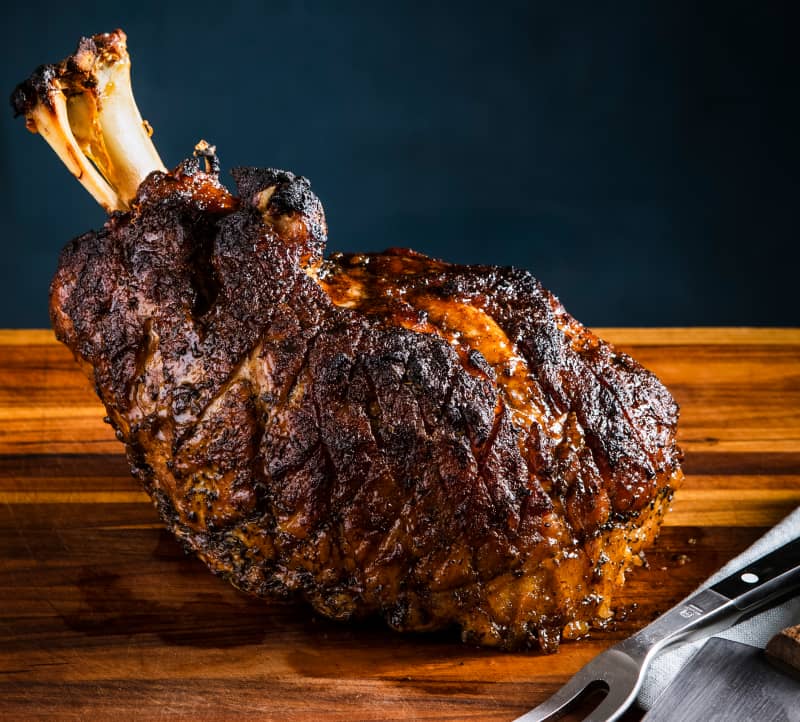
How Fresh Ham Is Made
Fresh ham is simply a pig’s uncured and uncooked hind leg.

Roast Fresh Ham
The right brine, the right sequence of oven temperatures, and the right glaze transform an uncured ham into a pork roast with rich, moist meat and crackling crisp skin.
Get the RecipeHow Fresh Ham Is Prepared and Served
You can roast or smoke a fresh ham yourself, which takes many hours.
What Fresh Ham to Buy
Fresh ham often has to be ordered from a butcher.
FAQs
With wet-cured hams, the classification can vary depending on the end product’s water content. They will be graded by the USDA as “Ham,” “Ham with Natural Juices,” “Ham, Water Added,” or “Ham and Water Product.” The more water it has, the less protein it contains and the less expensive it will be.
- Ham: At least 20.5 percent protein by weight. 0 percent to 2 percent added water.
- Ham with Natural Juices: 18.5 percent to 20.5 percent protein by weight. 7 percent to 8 percent added water.
- Ham, Water Added: 17 percent to 18.5 percent protein by weight. No more than 10 percent added water.
- Ham and Water Product: Less than 17 percent protein by weight. More than 10 percent added water.
Sodium nitrite is almost always added to processed meats, including ham, to control the growth of Clostridium botulinum, the pathogen that causes botulism, explained Rentfrow. Country ham often uses sodium nitrate, which breaks down over time to create sodium nitrite. While sodium nitrite inhibits harmful bacteria, it also affects the color and flavor of the meat. “It produces nitric oxide and it makes the color bright red. When we cook it, it gives us that cured meat color: Nitrosyl hemochromogen, that pink color that we associate with cured meats,” Rentfrow said. With uncooked cured meats, the pigment is called nitric oxide myoglobin.
Picnic ham is a cut of pork, but it is technically not ham at all. It is another name for Boston butt, which despite its name is not from the pig’s hindquarter. Picnic ham or Boston butt is pork shoulder.