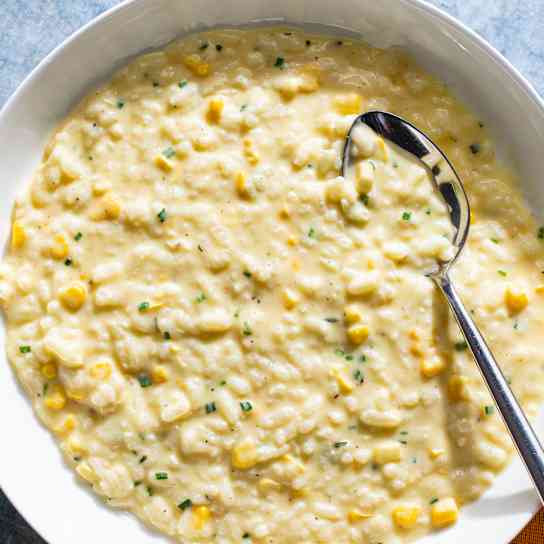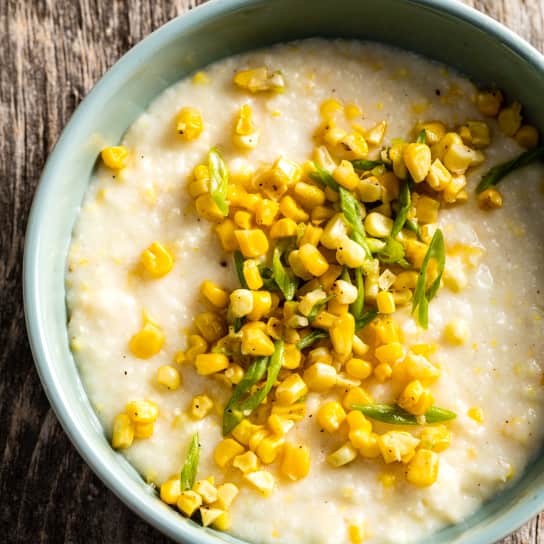
Ground corn products are used in a variety of cuisines to make breads, porridges, doughs, and more. In the United States, the most common forms are cornmeal, grits, and polenta. Although some recipes and product packaging may claim that these three products are interchangeable in a pinch, each is a distinct ingredient with specific uses. We interviewed industry experts and tasted products in all three categories to help you understand those differences and what to look for while shopping.

What Kind of Corn Is Used to Make Cornmeal and Other Corn Products?
While there are many varieties of corn, flint and dent are the two types used to make cornmeal, polenta, and grits. Although starch levels differ among corn varieties, the anatomy of every kernel is essentially the same. The outer protective layer or shell, called the pericarp or the “bran,” is a kernel’s most fibrous part. This layer protects the endosperm and the germ, or embryo, of the kernel. The germ holds genetic information, vitamins, and minerals. Lastly, the “tip cap” attaches the kernel to the cob and is where water and nutrients flow.
In addition to anatomy differences, corn varieties also range in color, from white and yellow to blue, red, and black. We’ve chosen to focus on white and yellow corn products here since those are the most readily available in grocery stores.
Cornmeal
What It Is and How It’s Prepared: Dried dent corn kernels are ground to various degrees of coarseness to make cornmeal. There are four grind sizes: coarse, medium, fine, and very fine (flour). Since grind sizes differ, it’s important to make sure the coarseness of the cornmeal you buy aligns with your recipe. Coarse and medium grinds are used for heartier-textured baked goods. Depending on the recipe, coarse cornmeal can also be used in place of products specifically labeled "polenta.” Finely ground cornmeal and corn flour are typically used for cake and cornbread.
Shopping Tips: You’ll likely come across the terms “whole-grain,” “degerminated,” “enriched,” or “bolted” on cornmeal packaging. To understand what these terms mean, we talked with Sarah House, research and development lead at Bob’s Red Mill, a national brand that produces corn and other grain products. House explained that for “whole-grain” cornmeal the entire kernel, including the bran, endosperm, and germ, is ground together. When making degerminated cornmeal, the outer layer, or bran, and the germ is removed from each kernel before it's ground. Whole-grain cornmeal contains more vitamins, nutrients, and fiber than degerminated cornmeal. When manufacturers return the vitamins and nutrients that were removed during degermination, it becomes “enriched.”
Bolting is the process of grinding corn and then sifting it so that parts of the kernel— specifically the bran—fall away. Bolted cornmeal contains less fiber than unbolted cornmeal.
You may also see products labeled “self-rising.” Unless the recipe calls for it, avoid this type of cornmeal because it contains leavening agents such as baking powder or baking soda.
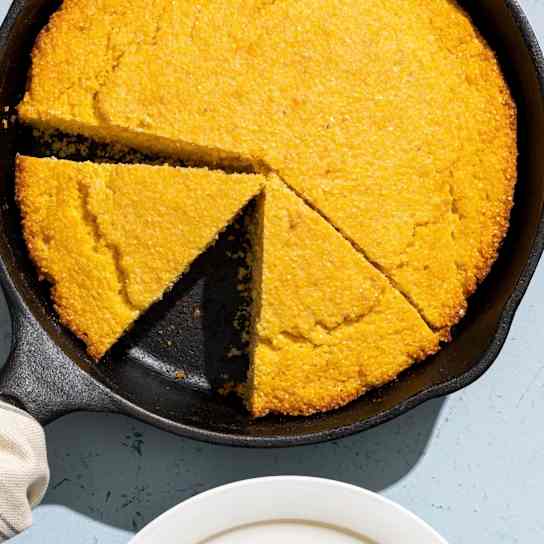
What We Tasted: We compared three cornmeals in cornbread. Anson Mills Fine Yellow Cornmeal, our favorite, made “moist,” “soft,” and “tender” cornbread with a cakey texture and a “nice butter flavor.” Pearl Milling Company Yellow Corn Meal, which is widely available in supermarkets, made drier cornbread that was “sturdy” yet tender with a buttery taste. Marsh Hen Mill White Cornmeal, from a smaller company known for its heirloom products, was notably finer than the other cornmeal and could also be used as a corn flour. Tasters picked up on hints of fresh corn and even notes of popcorn.
Grits
What They Are and How They’re Prepared: Grits are made from white or yellow dent corn and are typically slightly more coarsely ground than coarse-grind cornmeal. They’re usually partially or fully degerminated; they’re cooked in water, stock, or milk to make porridge and are then served with salt, butter, cheese, or sugar. Grits should not be confused with hominy grits, which are made from corn that has been treated with an alkali solution and then coarsely ground.
Shopping Tips: “Stone-ground” and “old-fashioned” grits are the same thing: products made by grinding the corn kernels in a grist mill—a grinder composed of two stones that can be manually operated or powered by water, wind, or electricity. Depending on the brand, stone-ground and old-fashioned grits can take 25 to 90 minutes to cook. “Quick” grits are a finer grind and cook much faster, around 5 minutes. “Instant” grits are parcooked, so they’re done within a minute. Since these three styles have drastically different cook times, it’s important to note which type a recipe calls for before purchasing.
What We Tasted: Our winner, Anson Mills Colonial Coarse Pencil Cob Grits, is available in specialty stores and by mail order; we think it’s worth seeking it out for meals where grits take center stage. We loved its complex, “sweet,” “rich,” “creamy,” and “fresh corn” flavor. Quaker Grits Old Fashioned, which you can find in many supermarkets, were less flavorful, though pleasant.
Polenta
What It Is and How It’s Prepared: Polenta is made from ground yellow flint or dent corn. It hails from regions in Northern Italy, including Lombardy and Piedmont. It’s stirred into salted water or stock to make a thick, creamy porridge or is baked as a casserole. As Harold McGee writes in On Food and Cooking: The Science and Lore of the Kitchen (2004), traditionalists insist the proper way to cook polenta is slowly and with constant stirring over the course of an hour or more. However, there are several instant polenta products available in grocery stores. Ground finer than its traditional counterpart, instant polenta is precooked and dehydrated, which shortens the preparation time to minutes. Polenta is also sold in precooked logs that can be sliced and fried, grilled, baked, or roasted.
Shopping Tips: If you prefer prominent corn flavor and don’t mind frequent stirring, opt for regular polenta (you can also use coarse-ground cornmeal). If you want to save time, you can choose instant polenta, as we do in many recipes geared for quick meals.
What We Tasted: We compared several styles of polenta. Bob’s Red Mill Organic Polenta, a traditional polenta, was the most coarsely ground and took about 8 minutes to cook. Tasters noted “slight nuttiness and earthiness” and enjoyed its “creamy,” “buttery” flavor. The Pastene and Colavita instant polenta we tasted were less flavorful. Due to a much finer grind size and “smooth,” “consistent” granules, both cooked in just 3 minutes and made firmer, thicker polenta.
FAQs
Always store your cornmeal, grits, and polenta in a cool, dry place. Make sure they’re fully sealed before storage to prevent insects or other pests from getting into the product.
According to Sarah House, research and development lead at Bob’s Red Mill, cornmeal can spoil. Whole-grain products will go bad much faster because of the natural oils they contain. You can tell if a product has gone bad by smelling it—if it smells old, sour, or rancid, it’s time to toss it. Also look out for textural changes such as clumping or any signs of infestation. Some companies such as Anson Mills also suggest storing their products in the refrigerator or freezer to keep them fresher longer.
Corn is naturally gluten-free, but sometimes it can be processed alongside gluten-containing grains such as wheat, rye, or barley. As a result, the corn may be exposed to gluten. In order for a corn product to be labeled as gluten-free, it needs to be processed in a gluten-free facility and undergo testing.
Corn flour is dried corn that has been ground to a flour-like consistency, while cornstarch is made of the extracted starch from the kernel. In recipes, corn flour is primarily used for baked goods, and cornstarch is used as a thickener or to create an extra-crispy coating on fried foods.