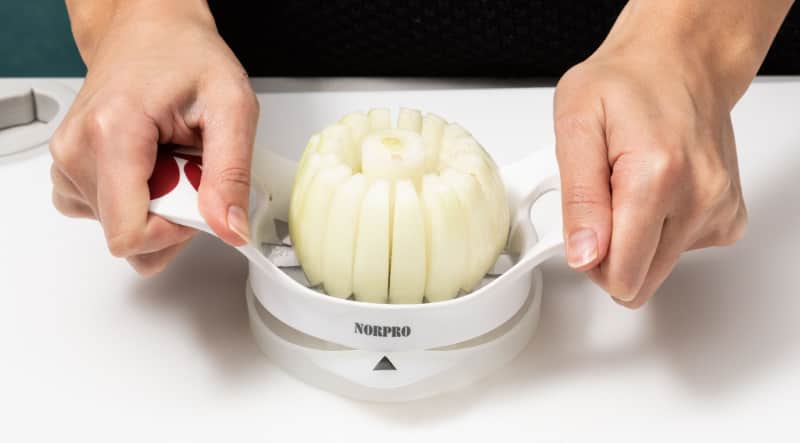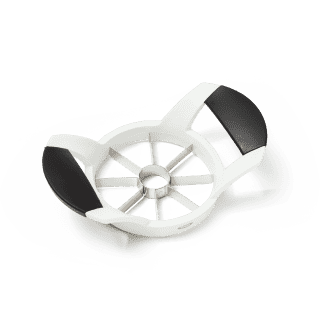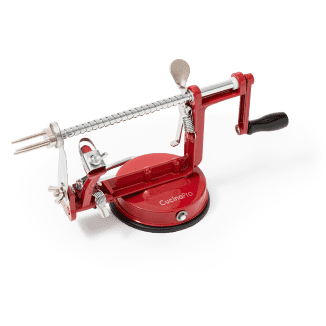


We tested two kinds of apple prep tools, crank style and push style, and found favorites in each category. We think both styles have a place in your kitchen, whether you’re snacking or baking. Our favorite crank-style apple peeler, corer, and slicer is the VKP Brands Johnny Apple Peeler, Suction Base, Stainless Steel Blades, Red. Cast iron and sturdy, it processed fruit in seconds. If you’re making a lot of apple pies or crisps, using this device is the fastest way to create piles of peeled, cored, and uniformly sliced apples that are ready to bake (and the slices are also great to snack on). We also have two recommended push-style apple corers/slicers, which don’t peel apples but do core and cut them into wedges that are ideal for snacking: the Norpro Grip EZ Fruit Wedger, 16 Slices with Base, which cores and slices apples into 16 narrow slices, and the OXO Good Grips Apple Divider, which cores and slices apples into eight chunky wedges. Both are sturdy and sharp and make it easy to core and cut apples into convenient pieces.
Tools that help cooks prepare apples, whether for snacking or baking, are wonderful time-savers, especially during the bounty of apple-picking season. We found two styles: crank style, which peels, cores, and/or slices fruit with the turn of a crank, and push style (shaped like a wagon wheel), which simply cores and slices fruit, leaving the peel on. Push-style devices can be used year-round on both firm and soft fruit (even on ripe pears and less-than-crisp supermarket apples), but the crank style requires crisp, firm apples that will stay anchored on prongs, or the machine won’t work.


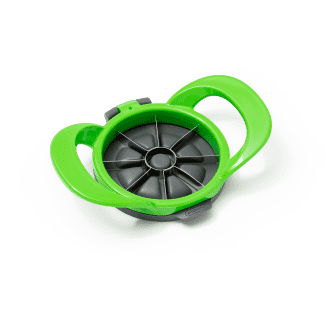
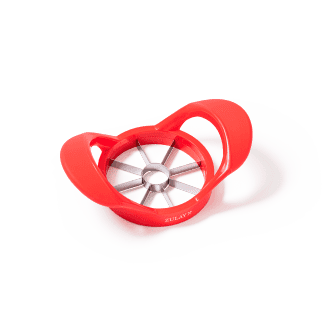
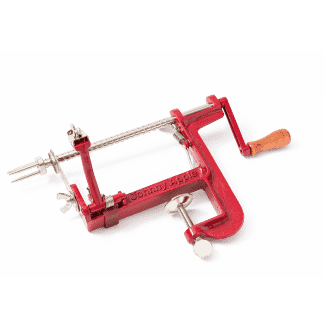
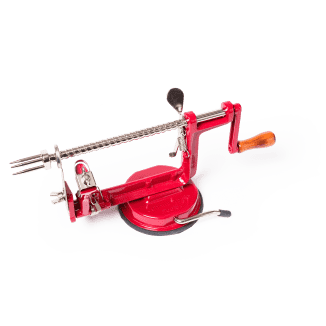
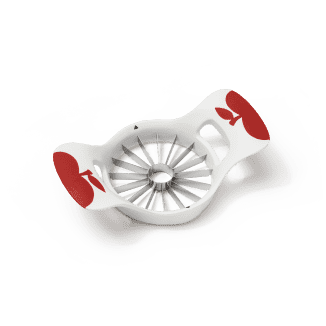
Push-style devices (left) have blades shaped like a wagon wheel. They slice and core fruit in seconds. Crank-style models (right) will peel, core, and spiral-slice fruit; afterward, simply cut the fruit from top to bottom to turn it into uniform slices perfect for baking and snacking.
Push-style models are best for prepping apple snacks, but our favorite model’s 16 slices are slim enough for pies and tarts, too. If you have room for only one small device that fits in a drawer, this is the most versatile model we tried. The crank models take up a bit more space but are ideal for bakers because you can peel, core, and slice an apple in about 15 seconds. A single cut through the finished apple from top to bottom gives you two stacks of uniform half-circles just right for pies.

Crank-style devices remove the apple skin perfectly, leaving a thin, several-foot-long string of peel from one piece of fruit.
What to Look For
Both Styles:
- Sharp Blades: It might seem obvious, but models with sharper blades worked more reliably and with less effort than those with duller blades.
- Easy to Use: On push-style models, we preferred large, raised, slightly grippy handles that made the tool easy to grab and push comfortably, without banging our knuckles on the cutting board after the blades got through the fruit. Our favorite crank-style models attached quickly and securely to counters and were simple to set up and adjust as needed, so we could get right to work.

Pro tip: Crank-style devices won't work unless they're firmly attached to the counter. But if your countertop is made of a material with a rough texture or tiny holes in its surface, such as granite or marble, you might have trouble getting the device to attach. Put a rimmed baking sheet under the device and attach its suction-cup base to the sheet. (Put a damp paper towel or dish towel or a nonskid cutting board stabilizer underneath the sheet to anchor it.) Bonus: The baking sheet corrals peels and juice for quicker cleanup.
- Sturdy and Durable: Our favorite models in both styles tackled apple after apple without feeling like the firmest apples were going to win and crack the device. We tested the highly ranked models with an additional 25 apples apiece and saw no decline in their performance.
Crank-Style Models:
- Suction Bases: For crank-style models, a rock-solid attachment to the countertop (or to a rimmed baking sheet) is all-important. We liked models with large suction bases that measured about 4 inches in diameter and that used a lever to tighten the suction. This setup worked better to anchor the device in place than the small plastic suction feet on one model and the screw-on clamp of another.

Crank-style devices attach with a large suction cup across the base; place it where you want it and flip the lever to activate the suction and anchor it to your countertop.
- Ability to Replace Parts: Apple-prepping gadgets have a tough job and can break or wear out, but our favorite crank-style model’s manufacturer guarantees its device for five years and sells replacement blades and other parts as needed.
Push-Style Models:
- Protruding Coring Blade: Our two favorite push-style corers/slicers shared an extra design tweak that made a big difference: The ends of their round coring blades stuck out just a bit farther than their slicing blades. As a result, the round coring blade bit in first, anchoring the device on the apple and breaking the skin’s resistance, helping the slicing blades glide through the fruit.

Our top two push-style models shared a winning trait: Their coring blades protrude slightly past the slicing blades to anchor the device and break the resistance of the apple skin, making pushing through the fruit easier and more secure.
- Hands-Off Release: It’s inevitable for apples to get stuck in the blades of some push-style models right at the bottom of the fruit, but some of the best models came with round, plastic bases that push out the fruit. After you push down to cut and core the apple, you place the device (with the apple in it) on the plastic base, which has raised areas that correspond to the bottom of the apple core and slices, and then push again. This makes the fruit release instantly from the blades. With devices that had bases, we never had to poke at or pull apple pieces from between the sharp blades.

We liked the plastic base that came with some push-style models, including our winner. After pushing through the fruit, we placed it on the base and pushed gently again to free the core and all the slices instantly.
What to Avoid
Both Styles:
- Dull Blades: At least one push-style model we tried had fairly dull blades that required us to jump up and down and use our entire body weight just to cut an apple into wedges. A crank-style model’s dull blade jammed and slowed our progress.
- Hard to Clean: Trapped bits of peel and fruit in an apple-processing device are annoying to clean but also clog it up. On one push-style model, we kept finding food stuck in corners after we’d washed the device. We also disliked the exposed razor blade on one crank-style model that had to be popped off for rinsing and drying afterward; it also had a clear plastic base that trapped water and took days to dry.
Crank-Style Models:
- One-Trick Ponies: One crank model turned out to only peel apples (and not core them or slice them). It did a fine job, but we weren’t sure why we’d need a large gadget to replace the paring knife or vegetable peeler we already have.
- Clamp Attachments: As an alternative to suction bases, one crank-style model offered a screw-on clamp for attaching to a counter or table. We never succeeded in getting it to clamp firmly, so the device rocked and failed to peel, core, or slice the fruit.

We never succeeded in getting the clamp on the base of one model to attach firmly to any table or counter; without being anchored in place, crank-style models do not work.
Push-Style Models:
- Low, Uncomfortable Handles: On push-style models, we disliked pressing down on skinny, uncomfortable handles set at low angles, which made our hands hit the cutting board.

We preferred push-style models that had high, comfortable handles. Models with low-set handles made our hands bang onto the cutting board when we cut through fruit.
- Poor Construction: We loved the idea of a push-style model that could be switched to cut apples into eight or 16 wedges, but the blades didn’t align when it was set to eight slices, so it was hard to push down; shredded the edges of slices; and trapped bits of peel and fruit, making it harder to clean.
- Use each device on at least three standard-size, round medium apples
- Use each device on at least three irregularly sized (very big, small, or lopsided) or soft apples
- Have additional testers use each device
- Process 25 additional apples on highly ranked devices
- Wash each device by hand after each test; also run the winners through the dishwasher, if dishwasher-safe
- Attach the crank-style models to various counter surfaces and detach them multiple times
- Attach and detach the winning crank-style model 25 additional times
- Adjust the blades and other settings on the crank-style models and use them in various configurations, when available (to slice and core without peeling, to peel without slicing, to peel without coring, etc.)
- Use the winning devices to process ripe pears, russet potatoes, and raw whole onions, testing the manufacturers’ claims