Essential Ingredients

These are the ingredients you'll need for the omelets and soufflés in this class. The list may be short, but each one serves an important role.
Eggs

Our recipes generally call for large eggs. There’s no difference in flavor between white and brown eggs, so use either in your recipes. If your refrigerator has an egg tray on the door—don’t use it. Eggs should be stored on the shelf, where the temperature is below 40 degrees. The average door temperature in our test kitchen refrigerators is closer to 45 degrees. For more information on egg sizes, purchasing and storing, see our Essential Eggs course.
Cream of Tartar

Recipes that require stiffly beaten egg whites often call for potassium acid tartrate, better known as cream of tartar. When egg whites are whipped, the protein strands within begin to unwind and form a network that holds water and air bubbles in place. But egg whites contain sulfur atoms, which form strong bonds that can over-strengthen this network. Acidic cream of tartar slows the formation of the sulfur bonds, preserving the stability of the network so that air and water stay put. If you don’t have cream of tartar, substituting ¼ teaspoon lemon juice or white vinegar per egg white works almost as well.
Cornstarch

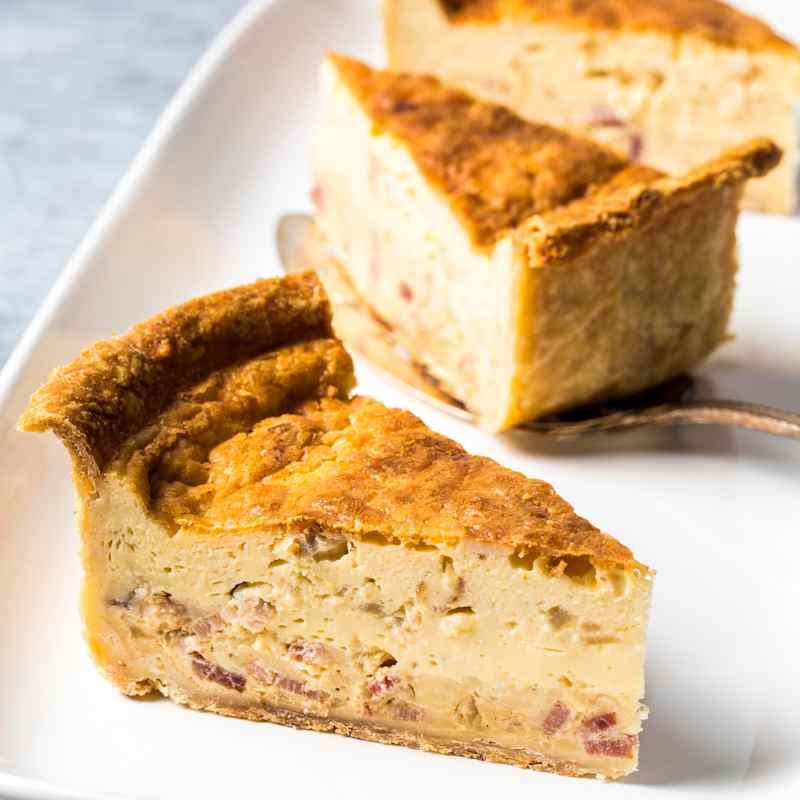
Many custards, including that used for our deep dish quiche Lorraine, will include a thickener such as flour or cornstarch. Our recipe uses cornstarch as its neutral flavor doesn’t mask the flavor of the other ingredients. In addition, the cornstarch helps to prevent the eggs from separating or curdling during baking.
Butter

When shopping for butter, you can buy salted or unsalted butter. In many markets, you can also buy cultured butter (which has been lightly fermented). We use regular unsalted butter for baking and save cultured butter (either unsalted or salted) for spreading on toast. Butter can pick up off-flavors and turn rancid when kept in the refrigerator for longer than a month. If you don’t use a lot, store butter in the freezer for up to 4 months in a zipper-lock bag and thaw sticks as needed. To make a sturdy-yet-flaky crust for the quiche in this class we use an all-butter pastry dough, so you’ll need a few sticks at the ready!
Gruyere

Though labeled "Gruyère," domestic cheeses of this type bear little resemblance to the real thing. Made from pasteurized cow's milk, they are aged for fewer months and have a rubbery texture and bland flavor. We prefer imported Gruyères, especially those that are aged 10 or more months to develop stronger flavor. The unique nuttiness and smooth meltability of Gruyere make it a star ingredient in both the soufflé and the quiche in this class.
Parmesan

Salty and nutty, a little Parmesan cheese can add a lot of flavor to a dish. The test kitchen’s favorite is Italian Parmigiano-Reggiano, which is aged for at least 12 and up to 24 months. To add maximum cheesiness to the soufflé in this class without weighing down the texture, we supplement Gruyere with some grated Parmesan, which gives a ton of bang for your buck in terms of flavor.