Essential Equipment for Biscuits, Cornbread, and Soda Bread

Turning out perfect biscuits, cornbread, and soda bread requires some essential tools, but the good news is you probably have most of them in your kitchen already. Read on to find out.
Biscuit Cutters

Makeshift cutters such as juice glasses produce rounds that rise unevenly because of their blunt edges. The sharp edges on real biscuit cutters avoid this problem by cutting through the dough efficiently. Buy a set (so you can make biscuits in various sizes) or pick up a single 3-inch cutter (the size for our large, flaky buttermilk biscuits).
Instant-Read Thermometer

For those recipes that give an internal temperature to determine the doneness of bread, an instant-read thermometer is key. Most lean, rustic breads are done when they reach 200 to 210 degrees; rich breads are fully baked at about 190 degrees.
Bench Scraper

These broad, slightly blunt blades with handles that span the length of the blade cut through plump rounds of dough or scrape sticky dough loose from the counter. Avoid models with uncomfortable metal handles. A good metal blade is essential, and a plastic, rubber, or nylon grip is preferable. Ruler marks on the blade are handy but not essential.
Rimmed Baking Sheet

We bake some quick bread recipes, such as scones and biscuits, on a rimmed baking sheet. Buy large (18 by 13 inches is ideal), heavy-duty baking sheets.
Cast-Iron Skillet

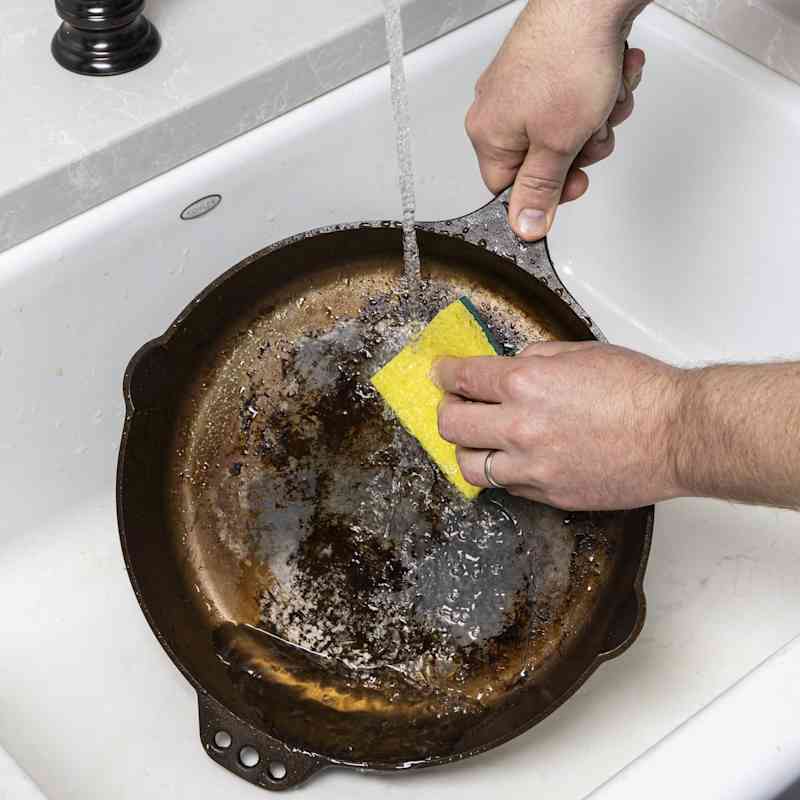
Skillets made from cast iron heat up slowly but retain their heat well. For this reason, we often use cast iron to bake cornbread and other baked goods, as we love the deep crust that it gives. Cast-iron cookware is inexpensive and lasts a lifetime, however it must be occasionally seasoned (unless you buy pre-seasoned cast-iron cookware, which we recommend).
Parchment Paper

Don’t try to bake quick breads on a rimmed baking sheet that hasn’t been lined with a piece of parchment. Not only does parchment eliminate the risk of sticking, but it also speeds cleanup. White and brown paper work equally well. If you bake a lot, order flat sheets cut to fit baking sheets so you can avoid having to uncurl the rolls.
Wire Rack

We like wire racks with a woven grid as opposed to ones with bars that run in just one direction. A woven grid, with bars running perpendicularly, better supports both delicate and heavy quick breads.
Digital Scale

When you’re baking, weighing your ingredients is the most accurate method of measurement. Given the choice between electronic and mechanical kitchen scales, we’ll take electronic any day for their easy readability and incredible precision. We prefer scales with larger weight ranges—¼ ounce up to 10 pounds at least.
Pastry Brush

Throw out your old-fashioned bristle brushes, now! Boar bristles can harbor odors and tend to fall off. Newer models with silicone bristles solve both problems, as long as you buy a brush that has perforated flaps. The flaps trap liquid and mitigate the fact that silicone doesn’t absorb or hold liquids terribly well. We like brushes with an angled head that makes it easy to reach tight spots.
Serrated Knife (Bread Knife)

This knife features pointed serrations that allow it to glide through crusty breads, bagels, tomato skins, and more to produce neat slices. It’s also great for slashing release cuts into bread dough (as with our Soda Bread) before baking. Look for knives with blades 10 inches or longer, which won’t catch their tips on larger loaves. A slightly flexible and curved blade with pointed, not wavy serrations offer maneuverability and a better grip on the food.
Ruler

One often overlooked but useful tool is the kitchen ruler. In fact, we think it is indispensable and we reach for it constantly whether we are cutting up beef for a stew, prepping vegetables, or making pastry. Stainless steel is easier to clean and dishwasher-safe (unlike wood.) The test kitchen’s preference is an 18-inch ruler, which will handle all kitchen tasks and still fit in a kitchen drawer.
Rolling Pin

Forget about the fancy rolling pins now on the market. An old-fashioned wooden pin does a better job than marble, nonstick, or other high-tech options. We like French-style rolling pins without handles. (We find that pins with ball bearings and handles can exert too much pressure on the dough.) We like a long pin (20 inches or so) with tapered ends that help produce dough that rolls out to an even thickness—for the biscuits in this class that's 1/4 inch.