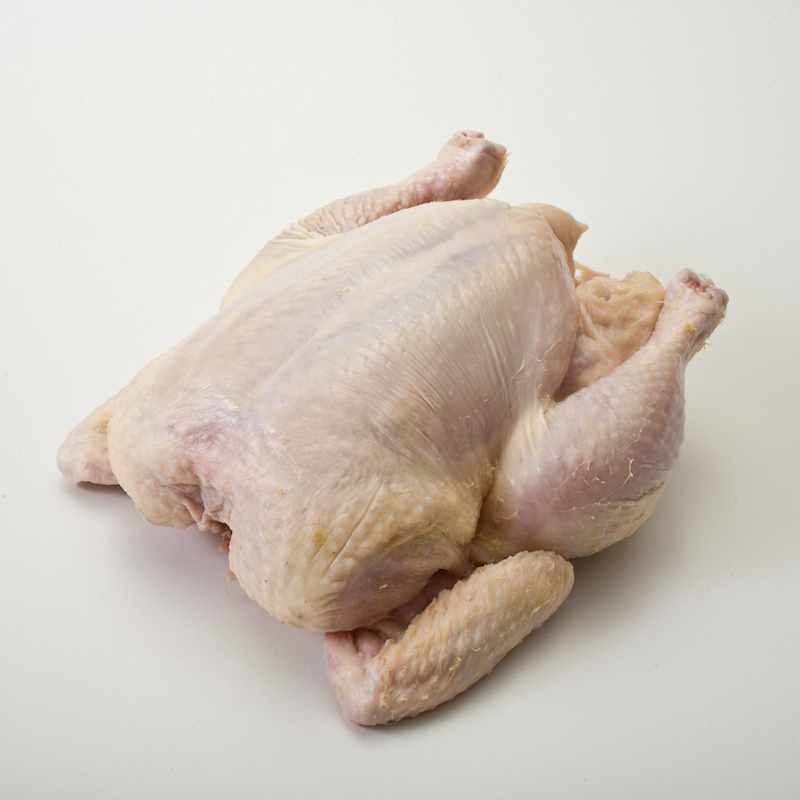
Chicken Labeling

Many claims cited on chicken packaging have no government regulation, while those that do are often poorly enforced. Here’s how to evaluate which claims are meaningful—and which are full of loopholes or empty hype.
USDA Organic

The seal “USDA Organic” is considered the gold standard for organic labeling. This label ensures that chicken eat organic feed that doesn’t contain animal byproducts, are raised without antibiotics, and have access to the outdoors (how much access, however, isn’t regulated).
Air-Chilled

“Air-chilled” means that chickens were not water-chilled en masse in a chlorinated bath and the meat did not absorb any water during processing. (Water-chilled birds can retain up to 14 percent water—which must be printed on the label—diluting flavor and inflating cost.) Instead, individual chickens hang from a conveyor belt and circulate around a cold room.
Raised Without Antibiotics

“Raised without antibiotics” and other claims regarding antibiotic use are important; too bad they’re not strictly enforced. (The only rigorous enforcement is when the claim is subject to the USDA Organic seal.) Loopholes seem rife, like injecting the eggs—not the chickens—with antibiotics or feeding them feather meal laced with residual antibiotics from treated birds.
Natural and All Natural

Beware the ubiquitous “natural” and “all natural” food labels. In actuality, the USDA has defined the term just for fresh meat, stipulating only that no synthetic substances have been added to the cut. Producers may thus raise their chickens under the most unnatural circumstances on the most unnatural diets, inject birds with broth during processing, and still put the claim on their packaging.
Vegetarian-Fed and Vegetarian Diet

“Vegetarian-fed” and “vegetarian diet” sound healthy, but are they? Since such terms aren’t regulated by the government, you’re relying on the producer’s notion of the claim, which may mean feeding chickens cheap “vegetarian” bakery leftovers. The winners of our whole chicken tasting assured us that their definitions mean a diet consisting of corn and soy.
Hormone-Free

When used with chicken (and pork) “hormone-free” is an empty reassurance, since the USDA does not allow the use of hormones or steroids in the production of either chicken or pork.