SCIENCE: Leaveners Do More Than Heavy Lifting

We use leaveners for lift, but they do so much more for our cookies.
Why do so many cookies (and all baked goods) call for a combination of leaveners? The two work in tandem to create cookies that rise—and spread—to the right degree.
Baking Powder

Baking powder is responsible for lift since it’s engineered to produce most of its gas after the cookies go into the oven, where the dough sets before the bubbles can burst. But too much lift can mean cookies that turn out domed and cakey. Here’s where baking soda comes in: as long as there’s an acidic ingredient in the dough for it to react with, a small amount of baking soda can even things out.
Baking Soda

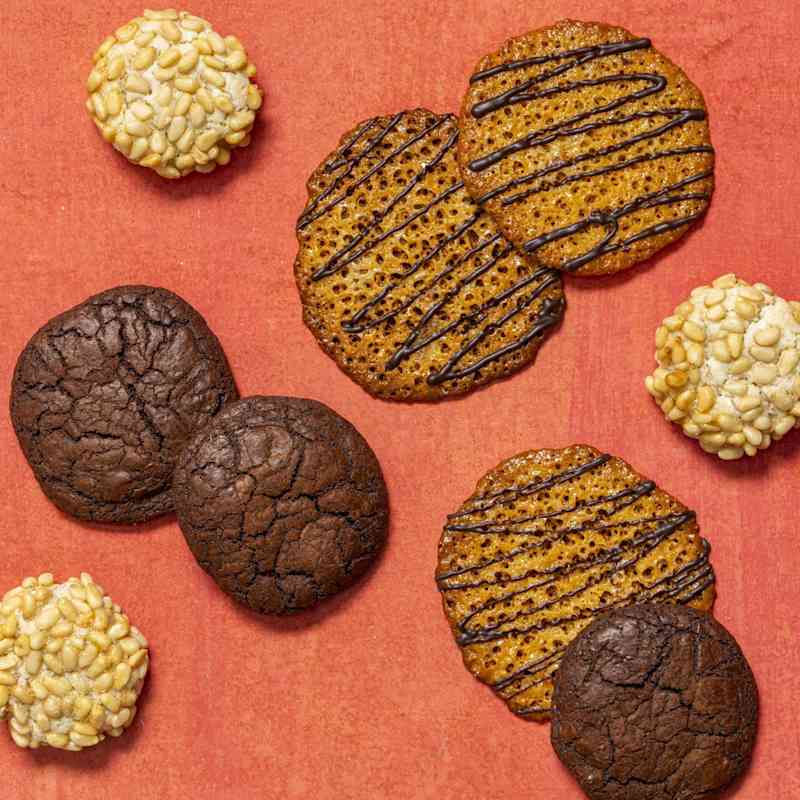
Baking soda raises the pH of the dough (baking powder does too, but not as high), which weakens gluten. Weaker gluten means less structure and cookies spread nicely. It also allows for crackly tops to form on cookies; the baking soda reacts immediately in the wet dough to produce large bubbles of carbon dioxide that can’t all be contained by the weakened dough. Before the cookies can set in the oven, the bubbles rise to the top and burst, leaving fissures in their wake.