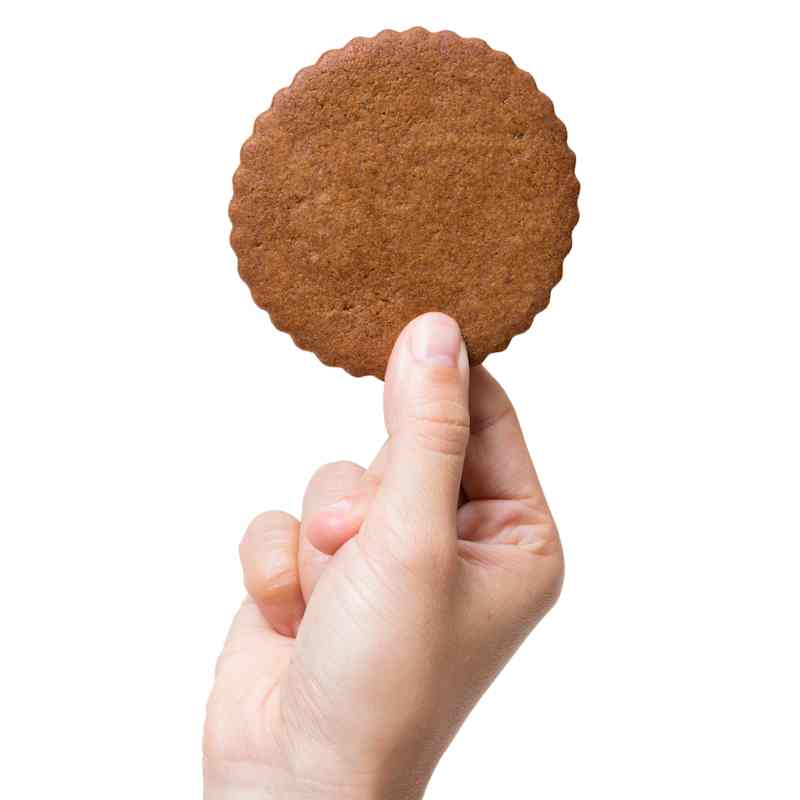
Chewy, Cakey, or Thin and Crispy: How to Manipulate Texture

The texture of a cookie is as important as the taste, and knowing how ingredients affect texture can get you one step closer to the perfect cookie.
People generally fall in one of three cookie-camps: chewy, thin-and-crispy, or cakey. You already know your preference, read on to discover how manipulating ingredients affects texture.
Flour
Chewy: Bread flour has a high protein continent that gives breads chew, but makes delicate cookies tough and dense, so all-purpose flour is best for chewy cookies
Thin and Crispy: All-purpose flour works for most cookies
Cakey: Introducing some cake flour (or cutting AP flour with cornstarch) makes cookies more tender
Fat
Chewy: Using the right ratio of unsaturated fat (like oil) to saturated fat (like butter)—about 3:1—forms a more crystalline structure that translates to chew. Melted butter makes the water available so it can readily interact with flour, developing more gluten which gives cookies chew.
Thin and Crispy: Using less butter creates a leaner cookie with less moisture so it’s less soft. Melting the butter can boost chewiness but also contributes to a thin cookie. Melted butter cannot aerate the way creamed butter does so its structure can’t lock in moisture.
Cakey: Creaming butter with sugar can open the cookie’s crumb. Shortening has a higher melting point than butter so the structure sets before the cookie spreads much. With no water, shortening also tenderizes the crumb, making it crumbly, so cutting butter with shortening can make a cakier cookie
Sugar
Chewy: Brown sugar is hygroscopic and holds onto moisture during and after baking which yields a chewier cookie. This effect is more extreme with liquid sweeteners like corn syrup or molasses.
Thin and Crispy: Granulated sugar crystallizes as the cookie cools, making the cookie crunchier. It doesn’t hold onto moisture readily.
Cakey: Granulated sugar or a combination of granulated and brown sugars is appropriate for cakey cookies; using all brown sugar or a liquid sweetener would make the cookie too moist.
Eggs
Chewy: Using more yolks than whites creates a chewier cookie because whites tend to create a drier, cakier crumb. Since the white contains much of the egg’s protein, any white that isn’t fully absorbed dries out. An extra yolk also adds fat that keeps the cookie chewy after it's baked.
Thin and Crispy: Using a small amount of egg (or even just yolk) will bind the cookie without adding a lot of moisture.
Cakey: The more eggs called for, the more lift they provide.
Leavener
Chewy: A combination of baking soda and baking powder ensures that the cookie rises and the crumb opens enough, but then the cookie collapses a bit and spreads into the classic shape of a chewy cookie.
Thin and Crispy: Extra baking soda helps dry out a cookie, giving it crispness; the rapid collapse it causes creates fissures that let out moisture. And more alkaline doughs brown better.
Cakey: Most of the gas produced by baking powder is released once the cookie is in the oven, so using it alone (or in a higher amount than the baking soda) means the cookie rises and sets before bubbles burst.
Liquid
Chewy: Liquid, besides eggs, is not usually found in chewy cookies.
Thin and Crispy: Adding some liquid to cookie dough—even just a couple of tablespoons—makes a looser dough that spreads in the oven.
Cakey: Using more liquid than is customary in cookies can make a batter-like dough that has extra moisture; this turns to steam in the oven for a more open, cakier crumb.
Cookie Size
Chewy: Forming larger dough portions means the edges set before the centers, resulting in a chewier middle.
Thin and Crispy: Larger dough portions won’t spread enough to become thin and crisp.
Cakey: Small dough portions will dry out too quickly to maintain a cakey texture.
Baking Time
Chewy: Underbaking cookies slightly ensures they don’t dry out; they set up during cooling
Thin and Crispy: Baking cookies until deep golden brown dries them out and crisps them