Tips for Better Pancakes

The perfect pancake takes a little more know-how than you may think.
Pancakes promise easy luxury. Basic ingredients, a dump-and-stir mixing method, and minutes on the stove. But as simple as they are, turning out tall, perfectly cooked pancakes can be hit or miss. Luckily, it only takes a little precision and subtle tweaks to the mixing, cooking, and flipping to produce top-notch stacks every time.
Weigh Your Flour

Pancake loft and tenderness relies on a precise ratio of ingredients. To avoid the disappointment of flat, tough pancakes, we recommend using a kitchen scale to measure flour by weight instead of volume.
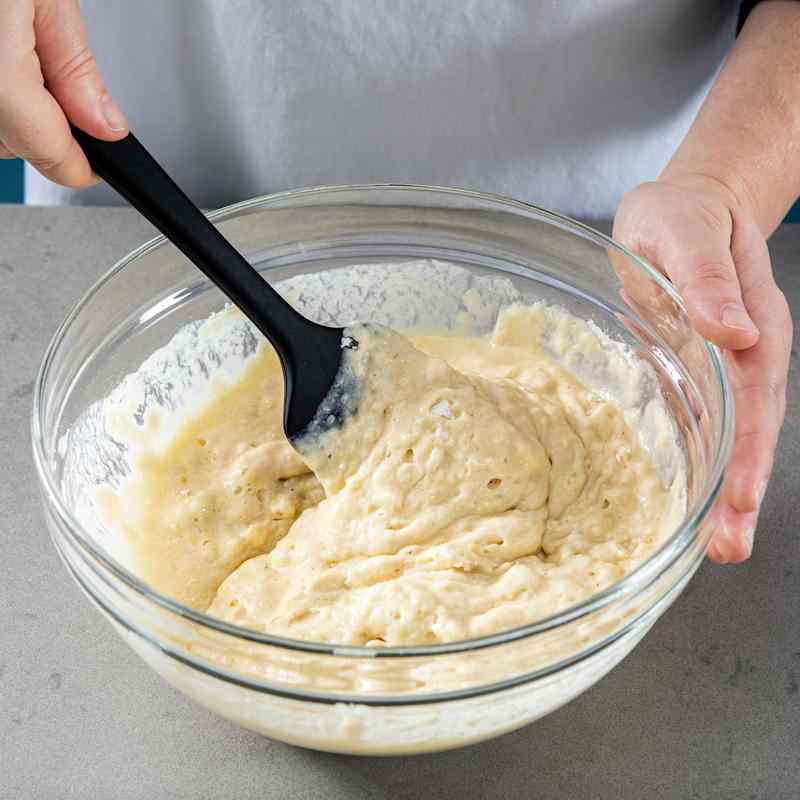
Leave the Batter Lumpy

Mixing the batter until it’s barely combined also makes for loftier pancakes. The lumps obstruct the flow of the batter so that it sits tall in the pan and retains more air instead of spreading out.
Preheat the Pan Low and Slow

How many times have you found that the first pancakes in a batch are spottily browned, but later batches are more evenly golden? That’s because your pan started out with hot spots that evened out over time. For uniformly golden pancakes from the get-go, preheat your pan over medium-low heat (high heat is a surefire way to create hot spots). This gentler, more gradual approach allows the surface to heat evenly.
Wipe Away Excess Oil

Uneven browning is another common pitfall. The solution is simple: After adding oil to the skillet, wipe it out until there is just a bare sheen remaining. Metal transfers heat better than oil, and wiping out the skillet will prevent oil from pooling under the pancakes and creating areas that cook more slowly and stay relatively pale.
Make a Test Pancake

Once you’ve got the batter ready, it’s tempting to start cooking as soon as possible. But it pays to carry out this test to make sure that your griddle is hot enough: Drop a tablespoon of batter in the center. If after 1 minute the pancake is golden brown on the bottom, the pan is ready. If it remains blond, keep preheating; if it burns, lower the heat.
Flip Low and Fast

Batter splatting messily onto the pan (or even onto another pancake) when you flip a partially cooked portion can mar its looks.You can minimize the splatter that leads to misshapen pancakes by sliding a thin spatula underneath the pancake and flipping it in a smooth, quick motion, keeping the spatula close to the cooking surface.
Hold Cooked Pancakes in the Oven

To keep cooked pancakes warm while preparing the rest of the batch, transfer them to a 200-degree oven on a wire rack coated with nonstick spray set in a rimmed baking sheet.
Minimize Batch-Cooking with a Griddle

If you have a griddle—stovetop or electric—this is the time to use it. They can cook at least 8 pancakes at a time, meaning you can churn out breakfast with minimal batch-cooking. If using an electric griddle, set the temperature between 325 and 350 degrees (use a lower temperature in that range if cooking pancakes in butter, which burns more easily than oil).