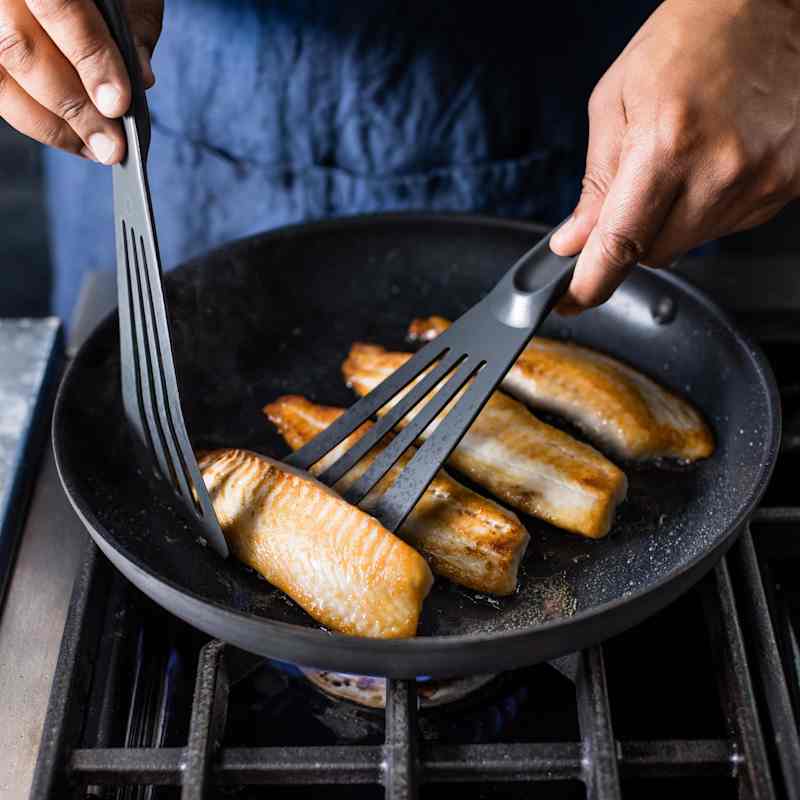
Buying and Storing White Fish

The first step in serving delicious white fish is getting it home from the seafood market or grocery store, and the second is storing it properly until you’re ready to cook.
Buying Fillets and Steaks
Fish fillets and steaks should be sold on (but not buried in) ice. Whenever possible, we portion individual fillets from larger center-cut fillets (ones measuring the total poundage called for in the recipe). Larger fillets keep longer and allow for more consistent sizing. Not only do precut portions often have different thicknesses, their proportions could be different, making for a less attractive presentation. Don’t be afraid to be picky at the counter; a ragged piece of hake or a tail end of sea bass will be difficult to cook properly. It’s important to keep your fish cold, so if you have a long ride, ask your fishmonger for a bag of ice. The fish should smell sweet like the sea (not “fishy” or sour)—though your chances of being able to pre-sniff your fish are slim. The surface should be shiny and bright and uniform in color. The flesh should be firm and elastic; when you press into it, the indentation shouldn’t remain.
Buying Frozen Fish
Around 85 percent of the seafood consumed in the United States is imported. Seafood’s high perishability means that a lot of the seafood you eat—yes, even the “fresh” fish you buy at the seafood counter—has been frozen. Does that make a difference? Modern flash-freezing methods cause less damage to tissue, leading to less moisture loss when thawed and better texture. Most fish is also frozen at the peak of freshness, so some argue that frozen fish is even “fresher” than fresh-caught fish that’s been sitting on ice for more than a day. However, this doesn’t always mean that you’ll be happy with the frozen fish you buy. Here are our recommendations for frozen fish.
Assess the quality of frozen fish.
Inspect the fillets for signs of poor handling: tears or punctures in packaging that could let in air, ice crystals on the fish (“freezer burn”) or in the packaging, liquid inside the packaging, discolored or soft (partially defrosted) flesh.
Ask for frozen fillets.
Instead of buying thawed previously frozen fish at the seafood counter, ask if you can get a frozen piece so you have control over how it is thawed. Store it in the coldest part of your freezer, and use it within four months.
Thin fish may freeze better.
Of the fish we tested (cod, halibut, tilapia, Atlantic salmon, and wild salmon), tilapia fared the best, with tasters unable to discern which fillets were fresh and which were frozen. Thin fish may freeze more rapidly, leading to less damage to tissues.
Don’t refreeze previously frozen fish.
Previously frozen fish may not always be labeled as such at the grocery store, but we don’t recommend refreezing previously frozen fish, as its quality will suffer more.
Defrost fish properly.
To defrost fish in the refrigerator overnight, remove the fish from its packaging, place it in a single layer on a rimmed plate, and cover it with plastic wrap. You can also do a “quick thaw” by leaving the vacuum-sealed bags under cool running tap water for 30 minutes. Do not use a microwave to defrost fish; it will alter the texture of the fish or, worse, partially cook it. Dry the fish thoroughly with paper towels.